Country:

 City:
City:



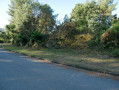

(S/E) From the car park at the entrance to the peninsula, take the coastal path.
Please note that there are some fairly steep steps on the first part of the route.
For those who have difficulty walking, I recommend taking the Route des Vénètes down towards the housing estate. Cross the estate, go to the end and turn right to reach the pier.
330 metres from the start, turn a quarter turn to the left to see the bell tower of Saint-Pierre de Baden church. It is a landmark for sailors entering the gulf.
There are magnificent views all along the path. Continue along the coastal path on the left.
The entrance to the Gulf is at km 1.4 with, from left to right: the 7 Islands, Reno Island, Port Navalo, Petit and Grand Huernic Islands and Locmariaquer.
(1) Continuing along the path, you will see a ruined building on the right that the people of Baden call the Hôtel des courants d'air (Hotel of the Draughts). It was built during the development of the Pointe du Blair deep-water port in the late 19th and early 20th centuries by Count Arthur Dillon.
The building was intended to house the administration of the new port. It was given a roof and, according to local residents, would also have had doors and windows. It was never used and was never completed. It is considered a landmark by sailors in the gulf. It is private property. Access is prohibited due to the risk of accidents.
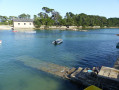
(2) At km 1.7 is a 114-metre-long jetty built between 1907 and 1909. It is Count Dillon's only achievement. Work was interrupted because the connecting railway line was never built. Count Dillon's son, Pierre, took over the project in 1920. However, the necessary funding was never found and the project was abandoned around 1924.
Breathtaking views await us.
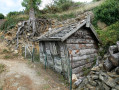
Continue along the path on the right. At km 2, there is a small private hut and above it a tree that somehow manages to stay upright!
At the end of the coastal path, turn right onto the Route des Vénètes.
(3) The Wall of the Veneti: contrary to what its common name suggests, the Veneti were not its builders! These remains are much older and date back to the Neolithic period (between 5000 and 2500 BC). It is a barrier spur located at the entrance to Pointe du Blair. It consists of a fortified structure whose pile of stones can be seen beneath the vegetation.
Roadworks and water supply works in the housing estate have uncovered a large quantity of pottery fragments, quartz hammers and millstones.
This site has been listed as a Historic Monument since 1970. Please respect this site, which is located on private property.
Return down the same road to reach the car park (S/E).




 Visorando Member
 Easy
Easy