Royal Castle
A strong military position since the Middle Ages, the royal castle was converted in the 13th century to house the court of the Kings of Majorca. The Royal Castle of Collioure has been listed as a Historic Monument since 1922. Reinforced many times over, the castle eventually pushed the town to the foot of the cape, which was transformed into a citadel in the 17th century. It is as inseparable from Collioure as the town is from the sea. To enter the heart of the Royal Castle of Collioure, don't forget to take a guided tour!
Faubourg
This neighbourhood has always been located outside the town's defences and inhabited by the poor population of Collioure, particularly fishermen and salt workers, while the bourgeoisie lived within the town. This neighbourhood is rich in heritage. You can see the customs tower along the beach or the Dominican cloister on your way to the Cortina mill. Protestantism is predominant in this neighbourhood, as evidenced by the Protestant church at its heart. You can explore these streets, steeped in history, at your leisure.
Museum of Modern Art
Collioure, a city of painters, has seen many great artists who have shaped the history of this city, which is the birthplace of Fauvism, including Henri Matisse, André Derain, Louis Valtat, Etienne Terrus, and others.
The Museum of Modern Art is a continuation of this history. It was created in 1934 on the initiative of Jean Peské (a Russian painter) thanks to donations from artists of the time. In this museum, you will find works by modern and contemporary artists, including Henri Matisse, Claude Viallat, Henri Martin, Jean Louis Vila, Augustin Hanicotte and Jean Capdeville.
La Glorieta
In the heart of the Pams Garden at the southern tip of Collioure, you will find the glorieta, a small colourful building offering a magnificent view of Collioure Bay and a perfect panorama for observing the entire town. Built by the politician Jules Pams, after whom the park is named, this gloriette was intended to provide a high-quality shelter with a beautiful view for smoking cigars.
Cortina Mill
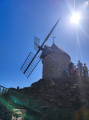
This windmill is quite rare in the region, as most mills are water mills. It ceased operation in the 19th century and fell into ruin. Perfectly restored in the traditional manner by the municipality in 2001, it is now in working order for the production of Collioure olive oil. Close to the town, it is a perfect destination for a lovely little walk.
Fort Saint-Elme
A superb fortress overlooking the coast and offering incredible views, Fort St Elme is steeped in history. Built between 1538 and 1552 under Charles V, this military fort is a historic monument of the Côte Vermeille. With its six-pointed star-shaped layout and tower in the centre, it heralds the fortifications of Vauban. From the top of its walls, you can see the entire coast from Collioure to Sète, as well as the Canigou, the Albères mountain range and the Corbières. Today, the museum housed within it presents a rich collection of weapons from the Middle Ages and Renaissance (halberds, lances, pikes, swords, shields, but also arquebuses, cannons, etc.). Cultural visits to be made!
Fort Dugommier
Fort Dugommier was built in 1893 as a fortress to watch over the towns of Collioure and Port-Vendres. It owes its name to General Dugommier, who recaptured the town of Collioure from the Spanish thanks to this strategic stronghold, which overlooks Fort St-Elme and the surrounding area. However, it was not spared during the Second World War, when much of the fort was destroyed. It now belongs to an association. A pleasant walk, but beware of the wind, as it blows hard there!
Puig de las Dainas (viewpoint)
Rising to 330 metres, the Puig (Catalan term for a peak or mountain) des Daines offers a magnificent panorama of the region's heritage. On the sea side, the towns of Collioure, Port-Vendres and Banyuls-sur-Mer are visible. The region's historical military heritage, such as Fort Béar, Fort Dugommier and Saint-Elme, can also be seen. On the mountain side, you can see the Massane tower, the Madeloc tower and the Taillefer battery. Here you have a magnificent view of the goal of your trip: reaching the Madeloc tower!
Vineyards
Collioure is a high-quality wine with an Appellation d'Origine Contrôlée (AOC) designation, produced in a 330-hectare vineyard in the municipalities of Banyuls-sur-Mer, Cerbère, Collioure and Port-Vendres. The vineyard, established by the Greeks and Phoenicians, underwent radical changes during the Middle Ages when the Knights Templar introduced a system for filtering and draining rainwater that is still in use today. This vineyard produces red, rosé and white wines. Winegrowers are required to maintain the low walls, terraces and benches that stabilise the soil and must comply with certain regulations set out in the AOC specifications, such as a row spacing of less than 2.5 metres, for example.
Taillefer Battery
Overlooking the Ravaner valley at an altitude of 472 metres, this defensive structure was built at the beginning of the Third Republic. This battery is part of a series of fortifications on the ridges (Taillefer, La Galline, Batterie des 500), designed to protect the border during a period of tension with Spain, which coveted the Roussillon region. Completed in 1886, this structure quickly became obsolete. Today it is occupied by two artisan workshops, an artistic cutler and a wood turner.
Madeloc Tower
Perched at an altitude of 656 metres, the Torre Madeloca offers visitors a view over the entire Côte Vermeille and a superb view of the sea. Built in the 13th century, it was part of an ingenious network of signal towers used by the Kings of Majorca. In case of danger, a fire was lit at the top of the tower so that it could be seen by the next tower, and so on, all the way up to the Kings of Majorca in Perpignan. Immerse yourself in history!
(Panorama) The Madeloc Tower watches over the Mediterranean along the Vermeille coast. It offers an impressive 360° view of the entire Vermeille coast, the Albères massif, the plain and the beaches of Roussillon.
Notre Dame de Consolation Hermitage
According to the oldest writings, the Hermitage of Notre Dame de Consolation dates back to 1496. Some believe that the building was constructed on the site of an ancient pagan place of worship. Numerous hermitages dot the Albères mountains, bearing witness to the rise of these buildings during the 17th century. This hermitage is also a very pleasant place to take a break during your hike. In the shade of the trees, you can enjoy a peaceful picnic.
Fort Carré and Fort Rond
Listed as a historic monument since 1991 and located on the heights of the town, this defensive complex was built in the 18th century to consolidate the defence of Fort Miradou, built by Vauban in the 17th century. Fort Carré, a powerful redoubt built on a steep slope and surrounded by deep moats, and Fort Rond, a crenellated bastion, were added in the 18th century to complete this defensive system and protect against invasions from the north.
Ouille Beach
Ouille Beach, between Collioure and Le Racou, is a real little paradise. This secluded beach is mainly frequented by locals and guests from nearby campsites. With its small pebbles, it stretches for about 100 metres below the cliffs of the Côte Vermeille. This beach, which is very quiet even in high season, is not supervised, however, and the car park to access it is quite far away. In short, it is an ideal place to get away from the crowds.
Coastal path
Part of the coastal path that runs along the sea for 32 km between Argelès-sur-Mer and Cerbère. The "Pla de las Fourques" trail begins with large steps carved into the schist cliff. Running alongside Fort Rond, Fort Carré and Fort Miradou in front of you, this trail is dotted with historical heritage sites such as the bunkers built by the German army during the Second World War.
Fort Miradou
In 1669, Vauban, who wanted to make Collioure a garrison town, decided to build Fort Miradou on the site of the old Fort Sainte-Thérèse, built around 1540 by Charles V. Due to its location, this fort was of paramount importance in the defence of the castle. Today, Fort Miradou, owned by the army, has become the National Commando Training Centre (CNEC).
Collioure's narrow streets
The narrow streets of Collioure's old town are full of charm. The narrow streets, harmoniously coloured house facades and vegetation make them very pleasant. They allow you to stroll between art galleries, small designer boutiques and ice cream parlours. These settings attracted many painters such as Matisse and Derain, and inspired the Fauvist movement, some of whose paintings can be found along the town's walls.
Chapel
Well known in the region despite its size, this chapel was built in 1642 when hermits and monks withdrew to isolated places that were still accessible to people seeking advice. A small rectangular chapel with a semicircular archway, it has a large wooden cross behind it bearing a martyred Christ facing the sea. Dedicated to Saint Vincent, patron saint of fishermen and the town, who gave his name to the chapel and is honoured during the Saint Vincent festivities around 15 August in the town.
Church and Bell Tower
Formerly a lighthouse that signalled the port of Collioure with smoke during the day and lights at night, then a defence tower under Spanish occupation, this building was converted into a bell tower during the construction of the Church of Our Lady of the Angels in 1691 under the orders of Vauban, who had razed the medieval parish church on the heights of Collioure a few years earlier. As the lighthouse was no longer needed because the neighbouring port of Port-Vendres was preferred, it was converted into a bell tower. Both buildings have been listed as historical monuments since 1923. Today, the bell tower is the main symbol of the town of Collioure.



 Country:

 City:
City:




 Visorando Member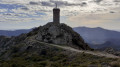

 Easy
Easy  Moderate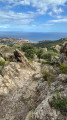
 Association / Club / Walk leader
