


 Country:
 City:
City:



In the description below, the names of streets and main attractions are written in German – that is, as they appear locally – and in italics. The letter ß, specific to the German alphabet, is pronounced like a double ‘s’ in French. See the section on place names under ‘Practical information’.
Access:
- Starting (or finishing) point: Eberwalder Straße Station: U-Bahn line 2; Tram lines M1, M10 and 12.
- Arrival (or departure) point: Nordbahnhof Station: S-Bahn lines 1, 2 and 25; Tram lines M8, M10 and 12.
- Intermediate point: Bernauer Straße Station: U-Bahn line 8; Tram line M10.
This relatively short and straightforward route is described in both directions to allow walkers to follow it in whichever direction they choose.
From Eberwalder Straße Station to Nordbahnhof Station (following the route shown on the map)
(S) The start of the route is a connecting path between the nearest underground station and the memorial route itself. From the station, cross Eberwalder Straße and head south along Schönhauser Allee on the right-hand pavement. After a few metres, turn right into Kastanienallee. Walk past the Prater on your right. At the next junction, turn right onto Oderberger Straße, an avenue with wide pavements. At the final junction, turn left immediately (do not continue as far as Bernauer Straße) and cross Schwedter Straße.
The memorial trail, featuring photographs, information boards and video kiosks, begins here. Throughout, it runs parallel to Bernauer Straße, at varying distances. The trail follows a path alongside blocks of flats; this path is either tarmacked, concrete-paved or covered with metal slabs. Further on, paths lead across lawns situated on what used to be no man’s land.
(1) Turn into an unnamed alleyway opposite. The signs at the start indicate that, according to the route map, we are in zone D. Cross three streets in succession, the second of which is cobbled. Continue with the buildings on your left and go round an area of a few dozen metres on the right that is off-limits to the public (pass through the fence on the right and follow the obvious path).
(2) Near the Bernauer Straße U-Bahn station, cross Brunnenstraße – which has a central reservation – and enter Zone C of the route. After about 150 metres, first turn right then left, cross a cobbled street (with a view of the Alexanderplatz tower on the left) and continue into Zone B across a lawn. Head slightly downhill and pass between the Kapelle der Versöhnung on the left and three bells on a wooden stand on the right. You will arrive at the foot of a façade made of tall, rusty metal panels.
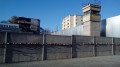
First turn left and take a path carved out between these panels and a low brick wall on your left. This takes you behind the remains of the Wall on the Soviet sector side, at the foot of a watchtower. Through the gaps in the Wall, you can see the expanse of no man’s land stretching all the way to the other Wall on the French sector side. Retrace your steps, then continue along the panels until you reach Bernauer Straße.
(3) Cross the road and, a little further on to the left, you’ll find the entrance to the memorial. Climb the steps of the metal tower to enjoy a panoramic view of the Wall in the foreground and the city. Retrace your steps and cross Bernauer Straße again.
(3) Then follow the road to the right, along the Wall. This gives way to a low brick wall: after a few metres, turn left and enter what used to be no man’s land and is now a vast lawn (Zone A). Continue along the path, keeping a model of the Wall (metal poles) on your right. At the end of the lawn, cross Gartenstraße and you will immediately come to the entrance to the Nordbahnhof S-Bahn station (E).
From Nordbahnhof Station to Eberwalder Straße Station (in the opposite direction to the route shown on the map)
(E) From the station, follow the signs for‘Wall Memorial’, emerge onto Gartnerstraße and cross this street.
The memorial trail, featuring photographs, information boards and video screens, begins here. Throughout, it runs parallel to Bernauer Straße, at varying distances. The trail initially follows paths through lawns situated on what used to be no man’s land. It then follows a path alongside blocks of flats, which is either tarmacked, cemented or covered with metal slabs.
Start by crossing a lawn with, in the distance on your left, a representation of the Wall (metal poles). The first information panels you come across indicate that, according to the route map, you are in Zone A. At the end of the lawn, turn left and go through a small gate leading onto Bernauer Straße. Follow this street to the right, walking alongside the remains of the Wall on your right.
(3) When you reach the memorial, cross Bernauer Straße and, a little further on to the left, you’ll find the entrance to the memorial. Climb the steps of the metal tower to enjoy a panoramic view of the Wall in the foreground and the city. Retrace your steps and cross Bernauer Straße again. Continue straight ahead at the foot of a façade made of tall, rusted metal panels and take a passageway between these panels and a low brick wall on your left. This will take you behind the remains of the Wall on the Soviet sector side, at the foot of a watchtower. Through the gaps in the Wall, look out over the expanse of no man’s land stretching to the other Wall on the French sector side. Retrace your steps.
(3) Turn right and head towards the lawn in Zone B of the route. Walk between the Kapelle der Versöhnung on your right and three bells on a wooden stand on your left. Walk slightly uphill and cross another large lawn. At the end, cross a cobbled street (with a view of the Alexanderplatz tower on your right). A little further on, first turn right then left and continue into zone C of the trail.
(2) Near the Bernauer Straße U-Bahn station, cross Brunnenstraße – which has a central reservation – and enter Zone D of the route. After about 50 metres, go round the left-hand side of an area several tens of metres long that is off-limits to the public (the path is obvious; at the end, rejoin the path via a gap in the fence). Then cross three streets in succession, the second of which is cobbled. You will reach the end of the memorial trail, Schwedter Straße.
(1) The end of the route is a connecting route between the memorial trail itself and the nearest underground station. Cross Schwedter Straße, then turn right onto Oderberger Straße, an avenue with wide pavements. At the next junction, turn left onto Kastanienallee. Walk past the Prater on your left. At the end of the street, turn left onto Schönhauser Allee. Cross Eberwalder Straße and you will immediately reach the Eberwalder Straße U-Bahn station (line D).
 Visorando Member
 Moderate
