Country:

 City:
City:


Access: Coming from Tarbes, in Bagnères-de-Bigorre (D935), at the first set of traffic lights, turn right onto Boulevard Carnot, pass the casino and the thermal baths, then at the end of the street, turn right onto Rue Prosper Noguès, heading towards the “Vallon du Salut”.
On the right (towards MGEN), head up the ‘Route de la Croix de Manse’, also known as the Chemin du Bédat. You’ll pass the mini-golf course and a tennis court. At the top, park alongside the fence, keeping as close to it as possible. Agricultural and forestry vehicles often use this route.
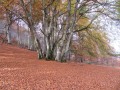
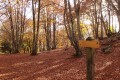
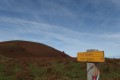
(S/E) Head up through the chestnut grove facing due south. Follow the yellow markings. The wide path winds its way up. Go through a wooden gate, then turn left. Pass to the right of a signpost and continue climbing up into the mountain pastures to follow the red and white markings ofthe GR®®78as well as the yellow ones. The well-marked path turns right, heading due west, then slopes due south.
(1) At a bend, leave the yellow, red and white markings. Head straight on, due south, into the abandoned mountain pasture. There are sections of steep animal tracks leading uphill. Aim for a small gap in the rocks. Do not cross this rocky spur. You must then find a well-marked path that climbs steeply towards the summit.
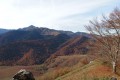
(2) You’ll reach Le Tucou (950 m). A magnificent view of the Tarbes plain and the mountain pass road awaits you. You must now descend a little, heading due south, keeping well to the left of another rocky spur. Join the red and white markings ofthe GR®®78and follow them for 150 metres.
(3) Leave the red and white markings. Head off, off the marked trail, straight ahead across the mountain pasture, south-southeast. A steep path cuts across all the hairpin bends. Pass at an altitude of 1074. Admire the superb wooded landscapes. Continue through the forest along a beautiful, fairly wide path heading south-south-east. It then becomes a track, still in the forest, and joins the red and white markings ofthe GR®®78. Turn left, eastwards, following the markings for 50 m, and arrive at Le Courret du Monné at around 1,100 m. Signpost.
(4) Follow the yellow markings towards Le Monné, heading due south through the forest. The well-marked path climbs gently.
(5) You’ll reach a flat area in the forest. A signpost indicates the direction of Petit Monné and Le Monné. Leave the forest and turn left (east) towards Petit Monné.
(6) Petit Monné (elevation 1,172). Enjoy the view of the various mountain ranges. Turn back and return to the flat area in the forest.
(5). Continue along the well-marked path due west, towards Le Monné. The path then climbs through the forest.
(7) You’ll reach an old orientation table below Le Monné (elevation 1259). Once again, this is a chance to admire the Hautes-Pyrénées. The path now descends through a mix of limestone rocks and beech leaves. Take care on the descent as you leave the forest. Follow the red and white markings ofthe GR®®78.
(8) Head straight on along a wide grassy track, following the yellow, red and white markings. A signpost indicates the Rond-Point d’Esquiou. Continue due west along this wide grassy track until you reach the Rond-Point d’Esquiou (elevation 1,034).
(9). There is a signpost showing several directions. A magnificent hut of the same name offers shelter in case of bad weather. Leave the red and white markings ofthe GR®®78and head straight ahead along the grassy track that runs alongside the forest. This track lies below the small road leading to Labassère. The track, marked with old yellow markings, takes you to a rusty wire fence alongside the road. Continue along the track towards the summit, which you can just make out.
(10) At around 1,032 m, a signpost indicates ‘Le Pic de Labassère’. There are still small pieces of wood with yellow markings lying on the ground. Follow these few markings to climb to the summit of the Pic de Labassère (elevation 1,164).
(11) From here, you’ll be treated to a magnificent 360° view. It’s a lovely spot to have a bite to eat, although it’s overrun with animals.
It’s now time to start thinking about the descent and the return journey. Head back to the Esquiou roundabout.
(9). At the Cabane d’Esquiou, turn left and follow the forest track for 300 m, following the yellow markings.
(12) Veer left just before a wide bend. A signpost indicates ‘Croix de Manse via Les Portes de Fer’. Head downwards along the edge of the forest. Follow the remaining yellow markings. When you reach the Ruisseau de Sarramea.
(13) Turn right, keeping to the right bank and well above the stream. Follow the yellow markings. The well-marked path descends gently through the forest. It then joins a grassy track and the route winds from one valley floor to the next.
You must follow the yellow markings carefully. The IGN map is not accurate: some paths have become tracks. There are numerous new tracks and paths. The track you should follow becomes a path again, well-shaded and lined with boxwood, which continues to descend. A black water supply pipe runs along this path. It disappears just before a signpost indicating ‘Croix de Manse’ on the right. Join a small road.
(14) Turn right, continuing to follow the yellow markings. Follow this small road for 500 m to an altitude of 691, at Cot de Ger, which takes you past an old, inhabited farmhouse, tucked away in the woods.
(15) At this point, the tarmac road ends. Turn right, heading down a very wide track that runs along the bottom of the valley: Ravin de La Tapère. Continue along this track, which climbs steeply and rejoins a tarmac section. Keep following the yellow markings. You’ll reach a junction of four small roads. You are now at the Croix de Manse. Vehicles are on the right, 150 m away (S/E).

 Visorando Member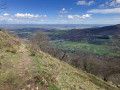

 Easy
Easy 
 Difficult