


Refine your search for walks in Le Thoureil
Le Thoureil walks


 From the Loire to the Forest
 Tourist office
 4.42 mi
 +243 ft
 -226 ft
 2h 15
2h 15
 Easy
Easy
 Departure from Le Thoureil (Maine-et-Loire)
Megaliths, priory, chapel, church, sailors' houses; the history of Thoureil can be discovered through its buildings and landscapes, linked in their history by the Loire. Hilly route.
Le Thoureil - Saint-Rémy-la-Varenne
 Visorando Member
 7.43 mi
+390 ft
-374 ft
3h 45
7.43 mi
+390 ft
-374 ft
3h 45
 Moderate
Departure from Le Thoureil (Maine-et-Loire)
Moderate
Departure from Le Thoureil (Maine-et-Loire)
A hike through varied landscapes: overlooking the Loire, vineyards, orchards, fields and forests, all between two villages steeped in history.
Between Saint-Rémy-La-Varenne and Saint-Maur
5.10 mi
+230 ft
-203 ft
2h 35
Easy
Departure from Le Thoureil (Maine-et-Loire)
A beautiful walk in the Anjou region on the slopes of the Loire. This hike takes you through woods and vineyards and offers superb views of the Loire.
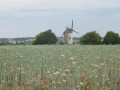
The old stones around La Sansonnière
 9.10 mi
+246 ft
-249 ft
4h 25
Moderate
Departure from Saint-Georges-des-Sept-Voies (Maine-et-Loire)
9.10 mi
+246 ft
-249 ft
4h 25
Moderate
Departure from Saint-Georges-des-Sept-Voies (Maine-et-Loire)
This route allows you to discover the remains of human activity scattered throughout the Anjou countryside (dolmens, menhirs, wash houses, mills, priories), as well as numerous troglodytic constructions of varying sizes.
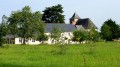
Around the Priory of Saint-Georges-des-Sept-Voies
 5.20 mi
+131 ft
-128 ft
2h 30
Easy
Departure from Saint-Georges-des-Sept-Voies (Maine-et-Loire)
5.20 mi
+131 ft
-128 ft
2h 30
Easy
Departure from Saint-Georges-des-Sept-Voies (Maine-et-Loire)
This walk, mainly along small roads, begins at the charming Priory of Saint-Georges-des-Sept-Voies, set in beautiful green surroundings. You will then see a fine example of a Bollée wind turbine and finally be able to visit the Hélice Terrestre de l’Orbière, a monumental sculpture in a troglodytic site.
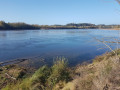
Route de l'Île Ollivier
 3.15 mi
+16 ft
-16 ft
1h 30
Easy
Departure from Les Rosiers-sur-Loire (Maine-et-Loire)
3.15 mi
+16 ft
-16 ft
1h 30
Easy
Departure from Les Rosiers-sur-Loire (Maine-et-Loire)
A family-friendly route to explore the banks of the Loire. You can extend your route with a heritage trail that will take you to the village’s most iconic spots.
Please note! The path along the banks of the Loire is impassable during periods of high water.
 Gennes-Val de Loire Route
18.45 mi
+755 ft
-758 ft
3 hrs
 Difficult
Departure from Gennes (Maine-et-Loire) (Maine-et-Loire)
Difficult
Departure from Gennes (Maine-et-Loire) (Maine-et-Loire)
A 30km mountain bike route between Gennes-Val de Loire, Saint-Georges-des-Sept-Voies and Le Thoureil. Dolmens, menhirs, cave dwellings and rural heritage can be explored along this undulating route, which is sure to delight mountain bikers. The route also offers beautiful views of the Loire.
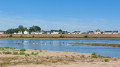
Amidst the Loire, vineyards, hedgerows and orchards in Saint-Rémy-la-Varenne
 7.01 mi
+548 ft
-571 ft
3h 40
Moderate
Departure from Saint-Rémy-la-Varenne (Maine-et-Loire)
7.01 mi
+548 ft
-571 ft
3h 40
Moderate
Departure from Saint-Rémy-la-Varenne (Maine-et-Loire)
This easy route will allow you to explore the varied landscapes around Saint-Rémy-la-Varenne. It alternates between open countryside and woodland along paths and roads with very little traffic. This route follows a Yellow route, then the GR®3 before branching off from it. During high water, the path along the Loire may be inaccessible.
From the Loire to Les Roches
 8.88 mi
+174 ft
-187 ft
4h 15
Moderate
Departure from Gennes (Maine-et-Loire) (Maine-et-Loire)
8.88 mi
+174 ft
-187 ft
4h 15
Moderate
Departure from Gennes (Maine-et-Loire) (Maine-et-Loire)
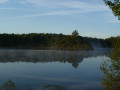
The settlement of Gennes dates back to the Neolithic period (4500 BC). Menhirs and dolmens, inherited from this distant era, stand proudly before the eyes of walkers. Its Gallo-Roman amphitheatre has also stood the test of time, offering a real journey through history. The Étang and the Forest of Joreau are a nature reserve and have been classified as a Natural Area of Ecological, Faunistic and Floristic Interest (Z.N.I.E.F.F.) since 1992.
The hillsides around Coutures
 5.53 mi
+203 ft
-207 ft
2h 45
Easy
Departure from Coutures (Maine-et-Loire) (Maine-et-Loire)
5.53 mi
+203 ft
-207 ft
2h 45
Easy
Departure from Coutures (Maine-et-Loire) (Maine-et-Loire)
Walk around the village of Coutures, passing through farmland and vineyards that change constantly with the seasons. There are numerous views of Montasabert Castle and the agricultural plain, which is dominated – particularly in May and June – by artichoke fields. The route follows almost entirely along dry, stony paths.
Views of the Loire at Cunault
 4.89 mi
+203 ft
-184 ft
2h 25
Easy
Departure from Chênehutte-Trèves-Cunault (Maine-et-Loire)
4.89 mi
+203 ft
-184 ft
2h 25
Easy
Departure from Chênehutte-Trèves-Cunault (Maine-et-Loire)
Dominated by its Romanesque church, a former Benedictine priory, the village of Cunault was a place of pilgrimage and renowned fairs in the Middle Ages and until the end of the 19th century, an important port on the Loire specialising, like its neighbouring (and twin) port of Trèves, in the shipment of tuffeau stone.
Steep slope at the start, then flat, shaded paths.
The Dolmen de Coutures and the Château de Montsabert
 4.52 mi
+144 ft
-148 ft
2h 10
Easy
Departure from Coutures (Maine-et-Loire) (Maine-et-Loire)
4.52 mi
+144 ft
-148 ft
2h 10
Easy
Departure from Coutures (Maine-et-Loire) (Maine-et-Loire)
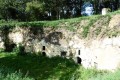
A beautiful walk through the vineyards where you can see two splendid dolmens and numerous troglodyte dwellings.
Between vineyards and forest in Grézillé
 7.69 mi
+223 ft
-203 ft
3h 45
Moderate
Departure from Grézillé (Maine-et-Loire)
7.69 mi
+223 ft
-203 ft
3h 45
Moderate
Departure from Grézillé (Maine-et-Loire)
A region of woods and heathland, sometimes infested with wolves, the commune of Grézillé has a history dating back to Antiquity, with turbulent periods, particularly during the Revolution. Primarily agricultural, the village was home to tuffeau quarries in the 19th century, which a few decades later became mushroom farms and wine cellars. A gently undulating route that winds through vineyards and woods.
Between the Loire and the hillsides between Trèves and Chênehutte
 5.90 mi
+249 ft
-230 ft
2h 55
Easy
Departure from Chênehutte-Trèves-Cunault (Maine-et-Loire)
5.90 mi
+249 ft
-230 ft
2h 55
Easy
Departure from Chênehutte-Trèves-Cunault (Maine-et-Loire)
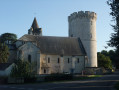
A hilly, wooded route between Trèves and Chênehutte, along the Loire and on the hillside. This route also winds through the historic streets of the village of Trèves.
The source of the Aubance
 8.73 mi
+387 ft
-358 ft
4h 20
Moderate
Departure from Louerre (Maine-et-Loire)
8.73 mi
+387 ft
-358 ft
4h 20
Moderate
Departure from Louerre (Maine-et-Loire)
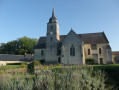
Hiking route in the forest with slight elevation gain.
From the Loire to the Authion
 8.14 mi
+20 ft
-20 ft
3h 45
Moderate
Departure from Saint-Martin-de-la-Place (Maine-et-Loire)
8.14 mi
+20 ft
-20 ft
3h 45
Moderate
Departure from Saint-Martin-de-la-Place (Maine-et-Loire)
A flat route between the banks of the Loire and the Authion. It allows you to explore the birthplace of Aristide du Petit Thouars and its heritage.
Please note: Paths along the banks of the Loire are impassable during periods of high water
South of Pompierre via Villemolle and Verrie
6.90 mi
+52 ft
-52 ft
3h 15
Easy
Departure from Chênehutte-Trèves-Cunault (Maine-et-Loire)
An easy walk along paths through meadows and woodland
⚠️ At certain times of the year, hunting may take place along this route, particularly between (5) and (6) in the Verrie area.Hikers are free to abandon or alter their route if they consider the conditions to be unsafe.
In the footsteps of Robrica in Chênehutte
 5.16 mi
+262 ft
-246 ft
2h 35
Easy
Departure from Chênehutte-Trèves-Cunault (Maine-et-Loire)
5.16 mi
+262 ft
-246 ft
2h 35
Easy
Departure from Chênehutte-Trèves-Cunault (Maine-et-Loire)
A hilly, wooded route. Situated on the left bank of the Loire, downstream from Saumur, this village in the Loire Valley is a former Gallo-Roman settlement and home to one of the most important archaeological sites in Maine-et-Loire. Finds made on the plateau prove human presence dating back to the Neolithic period (4500 to 4000 BC).