


Refine your search for walks in Lac Inférieur (Bois de Boulogne)
Lac Inférieur (Bois de Boulogne) walks


 From Parc de Saint-Cloud to Porte Maillot (circular route)
 Visorando Member
 13.82 mi
 +397 ft
 -397 ft
 6h 40
6h 40
 Difficult
 Departure from Saint-Cloud (Hauts-de-Seine)
A circular walk which, on the outward leg, follows the GR®1 from the Parc du Domaine National de Saint-Cloud to Porte Maillot, the starting point of the Tour de Paris. The GR®1 crosses the Seine before passing through the Bois de Boulogne. On the return leg, the route runs alongside the Lac Inférieur in the famous park and then follows the Seine to the Pont de Saint-Cloud.
From the Porte d’Auteuil to the Porte de la Villette
 10.29 mi
+105 ft
-102 ft
4h 50
10.29 mi
+105 ft
-102 ft
4h 50
 Moderate
Departure from Paris
Moderate
Departure from Paris
This walk, which forms part of the GR® 75, allows you to explore a large number of parks situated on the outskirts of Paris’s western and southern ring roads. It serves as the final stage. There are many remarkable spots along the GR® route as well as in the surrounding area, such as the Bois de Boulogne. As you pass through the many parks, you’ll feel as though you’re far removed from the city.
Walks near Lac Inférieur (Bois de Boulogne)
The Petite Ceinture in the 16th arrondissement and the Serres d'Auteuil
 3.28 mi
+26 ft
-69 ft
1h 30
3.28 mi
+26 ft
-69 ft
1h 30
 Easy
Departure from Paris
Easy
Departure from Paris
An eclectic journey through Paris's 16th arrondissement. After an initially urban start, the route takes you along the Sentier Nature trail, on the embankment of the former Petite Ceinture railway line. The walk ends with a stroll through the Square des Poètes and a visit to the Serres d'Auteuil, which will delight amateur botanists.
The village of Auteuil and Parc André Citroën
 2.75 mi
+16 ft
-52 ft
1h 15
Easy
Departure from Paris
2.75 mi
+16 ft
-52 ft
1h 15
Easy
Departure from Paris
An urban route in two stages. First, you stroll through the narrow streets of the Auteuil neighbourhood, which was for a long time a village outside Paris, encountering a variety of architecture. Then, after crossing the Seine on the famous Pont Mirabeau, you zigzag through Parc André Citroën, where plant, mineral and aquatic worlds intermingle.
The Petite Ceinture in Paris
 36.37 mi
+863 ft
-863 ft
10 days
Easy
Departure from Paris
36.37 mi
+863 ft
-863 ft
10 days
Easy
Departure from Paris
A tour of Paris following the route of the former Petite Ceinture railway line! A highly varied itinerary, reflecting the diversity of the arrondissements it passes through, which focuses on the converted sections of the old railway line, squares and gardens, and the narrow streets and passageways away from traffic.
From Porte Dauphine to Bercy
 10.25 mi
+105 ft
-138 ft
4h 50
Moderate
Departure from Paris
10.25 mi
+105 ft
-138 ft
4h 50
Moderate
Departure from Paris
A walk through Paris exploring the Left Bank and its quartiers.
The Bestiary of Les Ternes and La Plaine Monceau
 3.16 mi
+20 ft
-49 ft
1h 30
Easy
Departure from Paris
3.16 mi
+20 ft
-49 ft
1h 30
Easy
Departure from Paris
A south-west to north-east walk through the 17th arrondissement, featuring a variety of architectural styles, in search of depictions of animals.
Art Nouveau and Art Deco architecture in the 16th arrondissement
 5.12 mi
+210 ft
-148 ft
2h 30
Easy
Departure from Paris
5.12 mi
+210 ft
-148 ft
2h 30
Easy
Departure from Paris
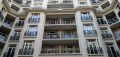
A route in the city to discover the iconic architectural inventiveness of two successive artistic movements: Art Nouveau, from the late 19th to the early 20th century, and Art Deco, between the two world wars.
The bestiary of the Trocadéro, the Gros Caillou and Chaillot
 4.26 mi
+121 ft
-148 ft
2h 05
Easy
Departure from Paris
4.26 mi
+121 ft
-148 ft
2h 05
Easy
Departure from Paris
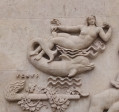
From the Trocadéro to the Étoile, on either side of the Seine, through the 16th, 7th and 8th arrondissements of Paris, discovering depictions of animals. The Arc de Triomphe at the Étoile alone features a great many of them!
The Bestiary of Passy and Dauphine
 3.60 mi
+16 ft
-66 ft
1h 40
Easy
Departure from Paris
3.60 mi
+16 ft
-66 ft
1h 40
Easy
Departure from Paris
An urban walk that winds its way through the northern half of the 16th arrondissement, in search of numerous depictions of animals. It also offers an opportunity to pay tribute to Victor Hugo, with a stop at the place where he lived, on the avenue that bore his name during his lifetime.
The Trocadéro esplanade and gardens, the Champs de Mars and the Invalides
 4.49 mi
+36 ft
-115 ft
2h 05
Easy
Departure from Paris
4.49 mi
+36 ft
-115 ft
2h 05
Easy
Departure from Paris
A route that takes you to some of Paris's famous monuments on both banks of the Seine. You will pass through numerous gardens, some well-known and popular, others more secluded and offering a welcome respite from the hustle and bustle.
From Porte Maillot to Saint-Nom-la-Bretèche following the GR®1
 18.84 mi
+1,319 ft
-988 ft
8 hrs
18.84 mi
+1,319 ft
-988 ft
8 hrs
 Very difficult
Departure from Paris
Very difficult
Departure from Paris
TheGR®1is a long-distance hiking trail stretching over five hundred kilometres that circles the Île-de-France region. This section is the first part of it. Thirty kilometres long, it passes through numerous parks and forests such as the Parc de Saint-Cloud, the Bois de Boulogne and the Forêt de Marly. It also passes close to some remarkable monuments and several charming spots, such as the village of Marnes-la-Coquette.