La Draye des Communaux and La Sure

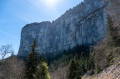
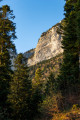
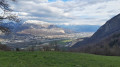
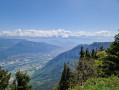
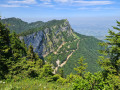
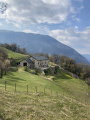
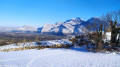
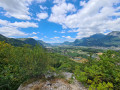
A physically demanding and challenging circular route just a few minutes from Grenoble. After climbing the Draye des Communaux, the route passes through the magnificent interlacing of sharp limestone pavement at the Gouffre Berger, then leads to the summit of La Sure, where the view of Mont Blanc, the Chartreuse, Belledonne and Grenoble is as striking as the sheer drop below the cliff.
We then head towards La Buffe (optional) and return via the (disused) Mortier tunnel.

Only to be attempted in very dry weather!

Details

1336486
Creation:
Last update:
Last review:
  • Walking
    Activity: Walking
  • ↔
    Distance: 15.32 km
  • ◔
    Duration according to the author: 7 hrs 
  • ▲
    Difficulty: Extremely difficult

  • ⚐
    Back to start: Yes
  • ↗
    Ascent: + 1,207 m
  • ↘
    Descent: - 1,203 m

  • ▲
    Highest point: 1,625 m
  • ▼
    Lowest point: 698 m

Photos

Description of the walk

Warnings:
- The IGN topographic map is completely out of date (even the online version is often years behind); there is a wide, vehicle-accessible track (usually closed to traffic) leading up from Carron to the Tunnel du Mortier; the OpenStreetMap hiking map shows part of it; the route follows part of this track on the descent. Furthermore, some of the tracks indicated by the IGN no longer exist or are in an impassable condition. Do not rely on the IGN in this area.
- It is essential to read the ‘Practical Information’ section to find your way to La Draye and gauge the difficulty.

Pascal Sombardier (whoinspired this circular loop as well as many others; see the excellent *Vercors secret*) has pointed out to me that there is a much easier alternative to the direct ascent between (1) and (4). Instead of turning right at (1), continue along the track to the south-east, and follow the approach route described in the Draye de Seblou approach guide on Pascal’s blog (you’ll need to download the PDF). Please note, the Draye de Seblou is a much tougher climb.

(S/E) From Carron, do not go through the barrier on the forest road but take a forest track on your right that climbs steeply into the forest between two huts (heading south-west).

(1) Just past these huts, turn right onto the Chemin des Bœufs (actually a forest track) for less than 100 m.

(2) Take the first forest track branching off to the left, heading south-west (note: there is another one a little further on heading in the same direction; see practical information). This track crosses the forest road near some small cairns. Continue climbing south-west along the track, which eventually disappears into the forest. Keep climbing in the same direction, following a few cairns.

(3) Cross the forest road where two cairns mark the route on either side of the road (the cairns are marked with fluorescent red; the top one is very small). Continue climbing in the same south-westerly direction, over increasingly steep terrain littered with moss-covered boulders. Near the edge of the forest (the cliff is partially visible), you’ll arrive beneath huge boulders from a rockfall.

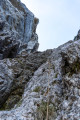
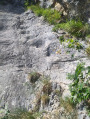
(4) At the boulders, turn left to climb a slightly less steep slope towards the mouth of the gully and the scree descending from it. Head for the foot of the cliff. At the mouth of the Draye des communaux (marked Draue on the IGN map), climb straight southwards and (very) steeply up the path, using the few rocks and grassy patches for support as best you can (see photo).

(5) When you reach the rope, follow it to get past the rocks, then climb to the right onto a grassy ledge, still following the rope (and some old cables). Step onto the top of the cliff where a good path joins. Turn left onto this path, heading south, and follow it through the undergrowth (numerous cairns) until you reach a clearer area, bordered by sharp limestone pavement.

(6) A large cairn marks the junction of the path branching off to the right (west) towards the Gouffre Berger. Follow this path to the chasm.

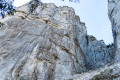
(7) The gouffre is situated in the middle of a sharp limestone pavement bordered by trees (see photo). Retrace your steps back to the large cairn.

(6) Turn right (south) onto the cairn-marked path. Continue along this path until you reach theGR® 9.

(8) Atthe GR® 9, a yellow sign points towards La Sure on the right (west). Follow this direction along the red and white markedGR®; pass a junction coming from the left to turn north and follow the sharp limestone pavement. The path turns west again and arrives at the hamlet of Malatra.

(9) Turn right towards La Sure, as indicated by the sign at Malatra, staying on theGR® which is now a track running along the top of the Autrans ski slopes. At a signpost, leave the track to head towards La Sure (north-east) and reach the edge of the cliff.

(10) At La Sure, continue along the path heading west along the cliff face, towards an emergency telephone relay, and rejoin the track. Turn right onto this track and, after a hairpin bend, turn right onto theGR® 9 to follow the sign for La Buffe (signpost). The path continues along the cliff towards La Buffe (see alternative routes) until it reaches the top of Le Mortier.

(11) A sign points towards the tunnel. Follow the path towards it until you reach the tarmac road to Les Feneys. Walk down this road for 500m to reach the entrance to the Mortier tunnel. Go through the tunnel until you emerge above the Isère valley. Turn right onto a track (blocked by large stones to prevent traffic). This track does not appear on IGN maps. It follows the foot of the cliff, initially heading south-east, then takes two hairpin bends before continuing down a long, gentle slope that passes the Seigneurets ridge. The track veers south to reach a junction at a hairpin bend.

(12) Do not continue in the direction you came from, but take the hairpin bend to the left towards the north, staying on the track, and this will lead you to the next hairpin bend.

(13) At the circular bend in the hairpin, turn left onto a forest track that descends more steeply into the woods. This is the old Chemin des Bœufs, marked (faintly) in blue. Continue along this path until you cross the forest road again.

(14) Cross the road to continue along the Chemin des Bœufs. Cross the forest road a second time to reach a junction with another logging track. Turn right (south) to go down this track and return to the original crossroads.

(2) Follow the route you took on the way there to return to the Carron car park (S/E)

Waypoints

  1. S/E : km 0 - alt. 699 m - Carron
  2. 1 : km 0.09 - alt. 713 m - Chemin des Bœufs junction
  3. 2 : km 0.18 - alt. 740 m - Crossroads of the circular loop
  4. 3 : km 1.12 - alt. 1,007 m - Cairns
  5. 4 : km 1.49 - alt. 1,200 m - Large rock
  6. 5 : km 1.97 - alt. 1,455 m - Rope
  7. 6 : km 2.69 - alt. 1,486 m - Cairn marking the path to the chasm
  8. 7 : km 3.07 - alt. 1,454 m - Gouffre Berger
  9. 8 : km 3.82 - alt. 1,506 m - Signpost indicating the Sure
  10. 9 : km 5.2 - alt. 1,574 m - Malatra
  11. 10 : km 7.6 - alt. 1,580 m - Summit - La Sure
  12. 11 : km 8.8 - alt. 1,541 m - Sign near Le Mortier towards the tunnel
  13. 12 : km 12.71 - alt. 1,176 m - Do not continue straight on at this hairpin bend
  14. 13 : km 13.4 - alt. 1,117 m - Descend onto the forest track at this hairpin bend
  15. 14 : km 14.19 - alt. 932 m - Crossing the forest road
  16. S/E : km 15.32 - alt. 698 m - Carron

Notes

Difficulty: the presence of a fixed rope at the bottom of the draye allows this route to be tackled as a hike. Without this rope, it would be a climb of at least grade 4b, and this does not fall within the scope of Visorando. If the rope is missing, turn back. At present – 2 August 2018 – the rope is securely fixed to bolts and quickdraws to prevent wear and tear. Knots and circular loops every 75cm provide a good grip. The rope is dynamic (elastic). Even with this rope, the hike remains extremely difficult, as the ascent between (3) and (5) takes place on very steep terrain, with no path, and sometimes over unstable scree. On this type of terrain, you must look for the few rocks anchored in the ground to use as footholds and do not hesitate to leave the scree to find more stable ground, whether on rock or a grassy ledge.

Direction:
(The left bank refers to the left side of a river or valley when descending)
There is no path leading up to the Draye des Communaux; at most, there are a few cairns, and it is easy to lose track of them. If you do not have the Visorando app, the easiest way to reach the point (3) without fail is to climb straight up on one side of the Fournel valley floor (for example, on its left bank). Once you reach the track near (3), simply turn left to find the cairns. The same applies when going from (3) to (4): after veering slightly right along the left bank of the valley, simply turn left when you reach the edge of the forest, go past the large rock(s) and climb up to the communal path.

Near Carron, if you have mistakenly taken the forest track leading up to Les Seys (you’ll realise this because it leaves the south-westerly bearing to head due west), there’s no need to turn back. Continue along this track until you reach the forest road. Cross this and follow the valley up until you reach the road again. Then follow the directions for the first alternative route below, following the road southwards to the cairns (3).

Equipment:

  • Trekking poles are very useful on the climb up to the draye, but you’ll need to be able to stow them in your rucksack to climb along the rope.
  • Long trousers help prevent scratches from the vegetation during the climb through the forest.
  • As this hike passes at the foot of cliffs and through a steep gully, a helmet is recommended to protect against rockfalls triggered by chamois or other walkers.

Water:
There are no water sources along this route.

This route passes through multiple protected areas, which may be subject to special regulations:

Worth a visit

Alternatives:
If the Carron barrier is open, it is possible to drive up to the point marked 877m on the IGN map. In this case, you reach the cairns (3) by continuing on foot along this forest road, generally heading south-east after passing the hairpin bend (you pass by the (14) – see the map). On the way back, at (14), turn left onto the forest road to descend to the hairpin bend.

At (11) you can extend the walk with a detour to the summit of La Buffe (1 km return, barely 100 m elevation gain). Coming down from La Buffe, it is possible to head directly towards the Isère valley side by crossing the Pas Mortier (elevation 1555 m on the IGN map). A series of grassy ledges and a short, easy climb down a chimney lead to the disused tunnel road. If you follow this road down, you can return via the Chemin Fontrasset (see map).

Notes:

  • A Draye (sometimes drovers' road) was a passage for herds in the Alps, but it is unlikely that herds could ever have passed through here.
  • The word ‘Sure’ indicates a cliff. It is found at Les Deux Sœurs in the Vercors (a corruption of ‘deux Sures’) and at La Grande Sure, a peak near the Chartreuse.

Always be cautious and plan ahead when you're outdoors. Visorando and the author of this route cannot be held responsible for any accidents occurring on this route.

The GR® and PR® markings are the intellectual property of the Fédération Française de Randonnée Pédestre.

Reviews and comments

4.5 / 5
Based on 4 reviews

Reliability of the description
4.3 / 5
Ease of following the route
4.3 / 5
Route interest
5 / 5
Charlie 38
Charlie 38

Overall rating : 4.3 / 5

Date of your route : Apr 14, 2024
Reliability of the description : ★★★★★ Very good
Ease of following the route : ★★★☆☆ Average
Route interest : ★★★★★ Very good
Very busy route : No

A superb hike, quite a challenge to make it all the way to Draye.

I struggled a bit to find the cairns; they’re small, so it’s tricky between points 1 and 3.
But you just need to keep the Draye in sight and carry on straight through the forest.

The scree at the foot of La Draye takes quite a bit of energy; all the stones are loose...

As for the Draye, a rope has been installed and is in fairly good condition, but it still takes some effort to climb.
"You mustn’t be afraid of heights." You also need a basic level of climbing experience.
Watch out for falling rocks!

A very beautiful view from the top.

The descent is quite long but pleasant; the forest paths are gradual.
Extremely difficult level; not recommended for beginners.

Machine-translated

AlbanDcl
AlbanDcl

Overall rating : 5 / 5

Date of your route : Apr 14, 2024
Reliability of the description : ★★★★★ Very good
Ease of following the route : ★★★★★ Very good
Route interest : ★★★★★ Very good
Very busy route : No

A superb hike, quite challenging right up to the end of La Draye; the rest of the ascent and the descent present no particular difficulties.

The path to La Draye is quite steep, but not exposed, so no worries there (though it is possible to slip quite a bit on the rocks).

As for La Draye, a rope (red and beige) definitely helps with the climb; we relied on it, but I’d advise bringing your own gear if you want to feel more comfortable.

Otherwise, the GPS track is good, far more accurate than the IGN map; the cairns are clearly visible (except for the ‘big cairn’ after the Draye heading west); quite a few trees have fallen across the paths but do not pose any problems for continuing.

As for the return journey, the recommended route after the Mortier tunnel has been subject to landslides, and taking it clearly doesn’t save any time compared to the road.

Thank you so much for this walk; I highly recommend it – there’s a magnificent view of Grenoble and the surrounding area!!!

Machine-translated

Laprune38
Laprune38
• Edited:

Overall rating : 4.7 / 5

Date of your route : Sep 10, 2020
Reliability of the description : ★★★★☆ Good
Ease of following the route : ★★★★★ Very good
Route interest : ★★★★★ Very good
Very busy route : No

Hello
We did this hike on 10 September 2020. The weather was glorious and the scenery magnificent. A real success.
I do, however, have two comments regarding the fixed rope.
1 – This rope is starting to show its age. I don’t know how old it is or how long it’s been there, but I found it hard to trust it.
2 – The second (or is it the third?) anchor point has come loose. This makes the climb more tricky.
For added safety, I therefore chose to double it with a rope I’d brought along after reading the reviews (thanks Lapuce45 ).
I can therefore confirm the warnings about the difficulty of this hike, which I would not recommend without climbing gear to secure the tricky section.
One final point: between sections 2 and 4, the risk of falling is limited, but the risk of getting hit by a rock is very real, even in the forest. Chamois seem to like the area and are the ones triggering rockfalls, which are all the more dangerous as you can’t hear them coming through the undergrowth. I would therefore advise climbing slightly to the left, onto a slight ledge that reduces the risks,

Machine-translated

bouvierjr
bouvierjr ★

Thank you for your feedback!

To improve this hike, I would need the following information:

  1. What can I do to improve the route on the map rated 4/5 (or more precisely, where does this route differ from the path I actually took, given that this is my GPS track)?
  2. What can I do to improve the description, which is rated 3/5?

I always try to ensure it’s possible to follow it with a map and compass (hence my directions regarding the cardinal points); it’s clear that without a GPS, map and compass, it’s not possible to follow this sort of hike. With a GPS, it’s much simpler.

Finally, having explored the terrain many times, I can confirm that there are no “trails” to make progress easier, apart from, of course, the very useful deer tracks.

Thanks in advance and happy hiking.

Machine-translated

lapuce45
lapuce45

Overall rating : 4 / 5

Date of your route : May 22, 2020
Reliability of the description : ★★★☆☆ Average
Ease of following the route : ★★★★☆ Good
Route interest : ★★★★★ Very good
Very busy route : No

The Draye des Communaux is spectacular.
However, the climb up through the forest straight up the slope isn’t the most pleasant. You’ll have to look around, but I think there’s a way to take a few more tracks to make the climb easier. Without a GPS, though, it’s impossible.
At the Draye, the rope was clearly visible. It’s getting old but is still in good condition. However, for safety’s sake and as we’re climbers, we took a short rope and six quickdraws (take two more for the ledge on the way out) and climbed with the rope taut. There’s a tricky move at 4c at the start, and after that it’s easier.
At the top, there’s a picturesque setting on the plateau.
The return journey, however, after the tunnel is straightforward but quite long.
Make sure it hasn’t rained for at least 3 or 4 days beforehand, as the walk through the forest would be even tougher.

Machine-translated

Mimizen38
Mimizen38

OK, thanks. I've added this hike to my favourites for the spring

Machine-translated

bouvierjr
bouvierjr ★

Hello,
The only risk between (2) and (4) is twisting an ankle or slipping on the loose gravel; there is no cliff below.
Happy hiking!
- jr

Machine-translated

Mimizen38
Mimizen38

Hello,
Regarding the section between (2) and (4), it is noted that there are loose scree: is the risk merely of twisting an ankle, or is there a risk of falling off a cliff?
Thank you in advance

Machine-translated

Other walks in the area

For more walks, use our search engine .

The GPS track and description are the property of this route's author. Please do not copy them without permission.