


Refine your search for walks in La Chapelle-Montligeon
La Chapelle-Montligeon walks


 Circular in the Réno Valdieu forest
 Visorando Member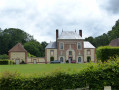
 14.34 mi
 +883 ft
 -896 ft
 7h 20
7h 20
 Difficult
 Departure from La Chapelle-Montligeon (Orne)
A lovely walk, mostly on good paths, which allows you to visit a magnificent forest, admire a few ponds and pass by some religious buildings. The only difficulty is the length.
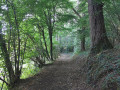
The Étang Chiot lake in Longny-au-Perche
 3.57 mi
+184 ft
-184 ft
1h 50
3.57 mi
+184 ft
-184 ft
1h 50
 Easy
Departure from Longny-au-Perche (Orne)
Easy
Departure from Longny-au-Perche (Orne)
This is an easy circular loop starting from Longny-au-Perche, which follows a small road and shaded paths.Étang Chiot is not a pond but the name of a stream and a hamlet!
Circular route from Longny-au-Perche to Étang du Chevreuil via Rainville
7.09 mi
+436 ft
-427 ft
3h 40
 Moderate
Departure from Longny-au-Perche (Orne)
Moderate
Departure from Longny-au-Perche (Orne)
A hike that combines villages, plains and forests. Without any particular difficulties, this hike is suitable even in wet weather. It can also easily be done by bike and with the family.
Mortagne-au-Perche – Bellême, alternative route via Mauves-sur-Huisne
 Association / Club / Walk leader14.60 mi
+627 ft
-709 ft
7h 15
Difficult
Departure from Mortagne-au-Perche (Orne)
Association / Club / Walk leader14.60 mi
+627 ft
-709 ft
7h 15
Difficult
Departure from Mortagne-au-Perche (Orne)
This section is a variant of the Tour des Collines du Perche. It links Mortagne-au-Perche to Bellême, both of which are former historic capitals of the Perche region. The first part of the route follows the old Alençon–Condé-sur-Huisne railway line, which has been converted into a greenway and now forms part of the Paris–Le Mont Saint-Michel cycle route.
You will then reach Bellême mainly via some very beautiful natural paths and very short stretches of tarmac.
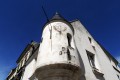
From Mortagne-au-Perche to La Perrière
 18.02 mi
+663 ft
-856 ft
8 hrs
18.02 mi
+663 ft
-856 ft
8 hrs
 Very difficult
Departure from Mortagne-au-Perche (Orne)
Very difficult
Departure from Mortagne-au-Perche (Orne)
This walk is the sixth stage of the Tour des Collines du Perche. It starts in an iconic town and ends in an iconic village of the Perche region, both of which are very popular with Parisians seeking historic architecture and beautiful scenery. As both are situated on high ground, the panoramic views are remarkable.
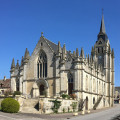
La Grande Brumardière
 3.64 mi
+56 ft
-56 ft
1h 45
Easy
Departure from Le Pin-la-Garenne (Orne)
3.64 mi
+56 ft
-56 ft
1h 45
Easy
Departure from Le Pin-la-Garenne (Orne)
Route starting from Saint-Barthélémy Church. You can explore the avenue of plane trees and the Manoir de la Pellonnière, part of the old railway line, the Jeandotterie Bridge, the countryside and the Château de la Courtinière. The route can be covered on foot or by mountain bike.
Mansonnière Cave
 3.83 mi
+249 ft
-249 ft
2h 00
Easy
Departure from Bellou-sur-Huisne (Orne)
3.83 mi
+249 ft
-249 ft
2h 00
Easy
Departure from Bellou-sur-Huisne (Orne)
A lovely walk along a former railway line, converted into a footpath and cycle route, through charming rolling countryside, then along paths and small tarmac roads with beautiful views over the Huisne Valley.
The Perche region and its hills as seen from Rémalard
 14.04 mi
+945 ft
-945 ft
7h 15
Difficult
Departure from Rémalard (Orne)
14.04 mi
+945 ft
-945 ft
7h 15
Difficult
Departure from Rémalard (Orne)
This walk through the Rémalard countryside will allow you to discover the Perche landscapes: hills, woods, streams, traditional houses and châteaux.
 Route des Étangs starting from Tourouvre au Perche
17.00 mi
+653 ft
-656 ft
2 hrs
Moderate
Departure from Tourouvre (Orne)
Mountain bike route alternating between forest tracks, narrow single tracks and a few sections of forest roads.
You’ll discover the Trappe Forest and its magnificent lakes.
From Tourouvre to Mortagne-au-Perche
 16.23 mi
+1,030 ft
-1,083 ft
8h 20
Difficult
Departure from Tourouvre (Orne)
16.23 mi
+1,030 ft
-1,083 ft
8h 20
Difficult
Departure from Tourouvre (Orne)
This hike is the fifth stage of an eight-day, 220 km route, the Tour des Collines du Perche.
The hike takes a long detour via Autheuil and the Réno-Valdieu forest before heading towards Mortagne-au-Perche, one of the three historic capitals of the former province of Perche.
Étang de la Herse lake at the start of Bellême
 6.18 mi
+525 ft
-522 ft
3h 20
Easy
Departure from Bellême (Orne)
6.18 mi
+525 ft
-522 ft
3h 20
Easy
Departure from Bellême (Orne)
A lovely walk in the beautiful Bellême national forest, where you can admire the Étang de la Herse lake and its fountain.
The spur at Bellême
 4.50 mi
+344 ft
-338 ft
2h 20
Easy
Departure from Bellême (Orne)
4.50 mi
+344 ft
-338 ft
2h 20
Easy
Departure from Bellême (Orne)
Discover Bellême, a Petite Cité de Caractère® (Small Town of Character), on this tour that highlights its rich heritage. Bellême charms visitors with its unique architecture, where the harmony between limestone and ochre and pink sand plaster, typical of Perche-style buildings, gives this town its incomparable charm.
From Moutiers-au-Perche to La Ferté-Vidame
 17.47 mi
+653 ft
-466 ft
8 hrs
Very difficult
Departure from Moutiers-au-Perche (Orne)
17.47 mi
+653 ft
-466 ft
8 hrs
Very difficult
Departure from Moutiers-au-Perche (Orne)
This hike is the third stage of an eight-day, 200 km route, the Tour des Collines du Perche.The route leaves the beautiful village of Moutiers-au-Perche, above the church, and immediately enters the woods. It then passes through a beautiful valley and a long stretch of forest before reaching the grain-growing plains of the Eure valley. It then reaches the woods of Neuilly and the forest of La Ferté-Vidame, which it crosses to reach the small town of La Ferté-Vidame.
The Bresolettes clearing
 4.32 mi
+125 ft
-125 ft
2h 05
Easy
Departure from Bresolettes (Orne)
4.32 mi
+125 ft
-125 ft
2h 05
Easy
Departure from Bresolettes (Orne)
A trail in the heart of the Perche Regional Nature Park, in the Bresolettes Forest Glade Regional Nature Reserve.
Around the drystone shelters in Soligny-la-Trappe
3.47 mi
+164 ft
-164 ft
1h 45
Easy
Departure from Soligny-la-Trappe (Orne)
A short, peaceful walk through the Perche countryside in Soligny-la-Trappe.
Perche heritage in Saint-Cyr-le-Rosière
 7.40 mi
+413 ft
-417 ft
3h 45
Moderate
Departure from Saint-Cyr-la-Rosière (Orne)
7.40 mi
+413 ft
-417 ft
3h 45
Moderate
Departure from Saint-Cyr-la-Rosière (Orne)
A countryside trail exploring the built heritage of the Perche region and its gems, notably the hamlet of Saint-Gauburge and its priory, the Manoir de l'Angenardière, the Manoir des Chaponnières, and the hamlet of Clémencé. Discover exceptional buildings constructed from cut stone and finished with lime plaster coloured with local sand.
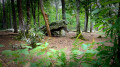
Manor houses and dolmens from the priory of Sainte-Gauburge
 8.78 mi
+571 ft
-574 ft
4h 30
Moderate
Departure from Saint-Cyr-la-Rosière (Orne)
8.78 mi
+571 ft
-574 ft
4h 30
Moderate
Departure from Saint-Cyr-la-Rosière (Orne)
Starting from the 13th-century priory of Sainte-Gauburge, this route leads along sunken paths to the Dolmen de la Pierre Procureuse, the site of several legends, then passes in front of a feudal motte at the Tour du Sablon and several fortified farms, before reaching the Angenardière manor house.
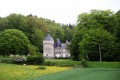
From La Perrière to Saint-Germain-de-la-Coudre via Igé
 17.09 mi
+951 ft
-1,214 ft
8h 40
Difficult
Departure from La Perrière (Orne)
17.09 mi
+951 ft
-1,214 ft
8h 40
Difficult
Departure from La Perrière (Orne)
This walk is one of two variants of the seventh stage of an eight-day, 220-km route, the Tour des Collines du Perche.
After leaving La Perrière, the walk enters the Bellême national forest, emerges to the south into very hilly countryside and arrives in the village of Vaunoise with its Cenomanian cuesta terrain. After Igé, the route continues along quiet country lanes, then some very beautiful sunken paths.
La Perrière – Saint-Germain-de-la-Coudre via Bellême
 18.14 mi
+1,211 ft
-1,453 ft
8 hrs
Very difficult
Departure from La Perrière (Orne)
18.14 mi
+1,211 ft
-1,453 ft
8 hrs
Very difficult
Departure from La Perrière (Orne)
This walk is one of two variants of the seventh stage of an eight-day, 220 km route, the Tour des Collines du Perche. It will take you along the edge of the Bellême Forest until you reach one of the jewels of the Perche region in the Orne, Bellême, which you’ll certainly want to visit. The route then heads south, passing through La-Chapelle-Souëf and then Saint-Germain-de-la-Coudre.
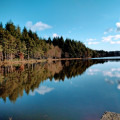
La Grande Trappe Abbey Circular Route
 5.22 mi
+167 ft
-171 ft
2h 35
Easy
Departure from Les Genettes (Orne)
5.22 mi
+167 ft
-171 ft
2h 35
Easy
Departure from Les Genettes (Orne)
The Abbey walk is the perfect summer walk as you are sheltered from the sun by the trees for most of the route, with magnificent hundred-year-old trees along the way, absolute tranquillity and plenty of greenery.
From frescoes to escapades in La Ferté-Vidame
 7.62 mi
+95 ft
-95 ft
3h 35
Moderate
Departure from La Ferté-Vidame (Eure-et-Loir)
7.62 mi
+95 ft
-95 ft
3h 35
Moderate
Departure from La Ferté-Vidame (Eure-et-Loir)
On this largely forest-based tour, discover the Chapelle de Réveillon and its frescoes, then the site of La Ferté-Vidame where Saint-Simon, the famous chronicler of the court of Versailles, wrote his memoirs, recounting the escapades of his time. Near his "favourite residence" in the Church of Saint-Nicolas, he had wanted to rest alongside his beloved wife. The revolutionaries decided otherwise and desecrated the tomb, scattering the remains and putting an end to their desire to be together forever, their coffins "bound so closely that no one could separate them". A beautiful love story, already romantic at a time when marriages were rather conventional.
Paradoxically, the wealthy Marquis de Laborde built a sumptuous palace on the site of the demolished medieval castle, where he wanted to invite the elite of his time and resume the escapades that the Duke had so strongly condemned. The Revolution passed and the Marquis, once so powerful, lost his property and his head!
Route de l'Iton in Bonsmoulins
2.70 mi
+46 ft
-49 ft
1h 15
Easy
Departure from Bonsmoulins (Orne)
An easy walk around the village of Bonsmoulins, crossing the Iton and passing in front of the old station. Wear waterproof footwear in wet weather.
The secret of Les Genettes
 3.46 mi
+174 ft
-174 ft
1h 45
Easy
Departure from Les Genettes (Orne)
3.46 mi
+174 ft
-174 ft
1h 45
Easy
Departure from Les Genettes (Orne)
This hike, known mostly only to locals, is a little gem for a relaxing walk with friends or as a couple. There are lots of animals along the way, including wild animals, but also donkeys, Percheron horses, sheep and goats.
The Forgotten Path of the Genettes
6.93 mi
+180 ft
-174 ft
1 hr
Easy
Departure from Les Genettes (Orne)
Paths lined with hedgerows, open spaces, wooded sections, a few roads, a picnic area, a car park; and, above all, sections unknown to the general public.
The Genettes countryside circular loop
 5.86 mi
+92 ft
-92 ft
2h 45
Easy
Departure from Les Genettes (Orne)
5.86 mi
+92 ft
-92 ft
2h 45
Easy
Departure from Les Genettes (Orne)
Circular walk that mainly follows paths or country lanes, with relatively few tall trees, perfect for enjoying the sunshine. Streams, stony paths, fields and little-known tracks.
Tour of the Perche Hills
 289.61 mi
+14,616 ft
-14,731 ft
8 days
Difficult
Departure from Nogent-le-Rotrou (Eure-et-Loir)
289.61 mi
+14,616 ft
-14,731 ft
8 days
Difficult
Departure from Nogent-le-Rotrou (Eure-et-Loir)
The Tour des Collines du Perche will take you on a journey through the Perche regions of Orne and Eure-et-Loir, with its bocage, hills, valleys and forests (offspring of the famous Forêt des Carnutes), all set against the backdrop of its many manor houses, churches, chapels and a thousand other sites.
You are sure to be amazed by the diversity of the landscapes you will pass through during a journey that takes you through typical Perche towns and villages, steeped in history.
From Nogent-le-Rotrou to Rémalard
17.21 mi
+902 ft
-814 ft
8h 40
Difficult
Departure from Nogent-le-Rotrou (Eure-et-Loir)
This walk is the first stage of an eight-day, 220 km route, the Tour des Collines du Perche.
This first stage, from Nogent-Le-Rotrou to Rémalard, will be your first taste of what characterises the splendid landscapes of the Perche: forests criss-crossed by sunken lanes, meandering rivers, and, along the way, chapels, fountains, wells and a few manor houses.
Nogent-le-Rotrou, town of the Counts of Rotrou
 Tourism professional
 2.25 mi
+157 ft
-171 ft
1h 10
Easy
Departure from Nogent-le-Rotrou (Eure-et-Loir)
2.25 mi
+157 ft
-171 ft
1h 10
Easy
Departure from Nogent-le-Rotrou (Eure-et-Loir)
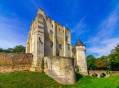
A historical and heritage tour of the capital of the Perche region, following in the footsteps of Rotrou III, Count of the Perche, Maximilien de Béthune, Duke of Sully, and Rémy Belleau, poet of the Pléiade.
Chapelle-Fortin loop via La Ferté-Vidame
 7.15 mi
+89 ft
-89 ft
3h 20
Moderate
Departure from La Chapelle-Fortin (Eure-et-Loir)
7.15 mi
+89 ft
-89 ft
3h 20
Moderate
Departure from La Chapelle-Fortin (Eure-et-Loir)
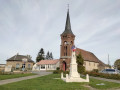
This loop, on the edge of the Perche region, leads from La Chapelle-Fortin to La Ferté-Vidame. Close to the Perche, it is divided between two types of landscape, both of which are represented by the painter Maurice de Vlaminck: vast expanses of crops under cloudy skies and woods with gnarled trees.
Living in La Tourillière near Rueil-la-Gadelière from 1925 to 1958, the artist frequently visited the neighbouring villages in search of inspiration: churches, villages buried under snow, paths lined with bare trees.
The circuit leads to La Ferté-Vidame, a town with a rich historical past: a medieval fortress where the Duke of Saint-Simon wrote his memoirs, which became the palace of the Marquis de Laborde, Louis XV's wealthy banker, a small château converted by Louis-Philippe into outbuildings and recently restored by the Eure-et-Loir Departmental Council, the new owner of the site.
La Ferté-Vidame is also home to horse races held in summer at the Pipe-Souris racecourse.
Circular Rohaire in the footsteps of a "Fauve"
 3.96 mi
+69 ft
-66 ft
1h 55
Easy
Departure from Rohaire (Eure-et-Loir)
3.96 mi
+69 ft
-66 ft
1h 55
Easy
Departure from Rohaire (Eure-et-Loir)
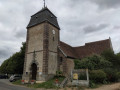
The painter Maurice de Vlaminck lived here, near Rueil-la-Gadelière, from 1925 until his death in 1958. This year marks the centenary of his arrival in the area. A three-day itinerary already allows you to cross his country from Verneuil-sur-Avre station to La Loupe station. Walkers who are unable to undertake this crossing can take one or more of the short circulars "In the footsteps of a Fauve". These allow you to discover the landscapes that inspired the painter."I love the countryside, not by accident, but continuously, and I spend my life there" This route, around the village of Rohaire, mainly crosses farmland. It partly follows the Buternay stream, coming from the ponds near the Chapelle de Réveillon and heading towards Rueil-la-Gadelière. After a stretch that is sometimes underground, it reappears at the Sources de la Vigne, where the streams from the vicinity of La Ferté-Vidame converge. Their waters are collected there and piped to Paris.
Walk from Mahéru to Château de Fay
3.23 mi
+299 ft
-318 ft
1h 45
Easy
Departure from Mahéru (Orne)
A walk offering a wide variety of environments and terrain (woodland, country lanes, sandy paths, etc.) as well as some steep climbs, rewarded with beautiful views.
Around Mahéru
 10.60 mi
+945 ft
-945 ft
5h 40
Moderate
Departure from Mahéru (Orne)
10.60 mi
+945 ft
-945 ft
5h 40
Moderate
Departure from Mahéru (Orne)
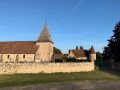
A lovely, unpretentious walk through charming, rolling countryside. There are many old houses, often beautifully restored.
The route follows very narrow tarmac roads and wide paths through fields or woods. In places, however, it consists of simple, narrow footpaths.
More walks in La Chapelle-Montligeon
Select a point of interest below: