

Refine your search for walks in Hippodrome d'Auteuil
Hippodrome d'Auteuil walks


 From Longchamp to Auteuil, from one racecourse to another
 Visorando Member
 6.10 mi
 +79 ft
 -36 ft
 2h 50
2h 50
 Easy
Easy
 Departure from Boulogne-Billancourt (Hauts-de-Seine)
A short hike that starts on a little-known path along the Seine. It then runs alongside the Longchamp racecourse and the Suresnes and Longchamp ponds. After a brief stop at the Grande Cascade, it reaches Lac Supérieur and explores its southern tip. The route ends with a crossing of the Auteuil racecourse, on days when there are no horse races, of course.
Over hill and dale in the Hauts-de-Seine
 207.73 mi
+9,721 ft
-9,551 ft
43 days
Easy
Departure from Hauts-de-Seine
207.73 mi
+9,721 ft
-9,551 ft
43 days
Easy
Departure from Hauts-de-Seine
Although densely urbanised, the Hauts-de-Seine department offers wonderful opportunities for walkers, with a rich heritage and often a little elevation. This series of hikes, almost all of which are accessible by public transport, takes you on a journey of discovery through this department, avoiding major roads as much as possible and favouring footpaths and alleys, public parks and wooded areas.
Walks near Hippodrome d'Auteuil
From the Porte d’Auteuil to the Porte de la Villette
 10.29 mi
+105 ft
-102 ft
4h 50
10.29 mi
+105 ft
-102 ft
4h 50
 Moderate
Departure from Paris
Moderate
Departure from Paris
This walk, which forms part of the GR® 75, allows you to explore a large number of parks situated on the outskirts of Paris’s western and southern ring roads. It serves as the final stage. There are many remarkable spots along the GR® route as well as in the surrounding area, such as the Bois de Boulogne. As you pass through the many parks, you’ll feel as though you’re far removed from the city.
The village of Auteuil and Parc André Citroën
 2.75 mi
+16 ft
-52 ft
1h 15
Easy
Departure from Paris
2.75 mi
+16 ft
-52 ft
1h 15
Easy
Departure from Paris
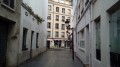
An urban route in two stages. First, you stroll through the narrow streets of the Auteuil neighbourhood, which was for a long time a village outside Paris, encountering a variety of architecture. Then, after crossing the Seine on the famous Pont Mirabeau, you zigzag through Parc André Citroën, where plant, mineral and aquatic worlds intermingle.
The Petite Ceinture in Paris
 36.37 mi
+863 ft
-863 ft
10 days
Easy
Departure from Paris
36.37 mi
+863 ft
-863 ft
10 days
Easy
Departure from Paris
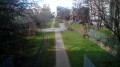
A tour of Paris following the route of the former Petite Ceinture railway line! A highly varied itinerary, reflecting the diversity of the arrondissements it passes through, which focuses on the converted sections of the old railway line, squares and gardens, and the narrow streets and passageways away from traffic.
Art Nouveau and Art Deco architecture in the 16th arrondissement
 5.12 mi
+210 ft
-148 ft
2h 30
Easy
Departure from Paris
5.12 mi
+210 ft
-148 ft
2h 30
Easy
Departure from Paris
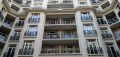
A route in the city to discover the iconic architectural inventiveness of two successive artistic movements: Art Nouveau, from the late 19th to the early 20th century, and Art Deco, between the two world wars.
A stroll through Paris’s cemeteries
 17.55 mi
+505 ft
-420 ft
14 days
Easy
Departure from Paris
17.55 mi
+505 ft
-420 ft
14 days
Easy
Departure from Paris
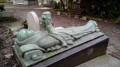
This section brings together a selection of relatively short routes that allow you to visit the 14 public cemeteries located within the city limits of Paris, one of which actually falls under the jurisdiction of the neighbouring municipality of Charenton-le-Pont. Varying in size, they are the final resting places of a varying number of notable figures. You will also find a wide variety of monument styles, depending on the simplicity or fame of those buried there and the financial means of their families.
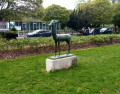
The Bestiary of Auteuil and Passy
 5.00 mi
+105 ft
-30 ft
2h 25
Easy
Departure from Paris
5.00 mi
+105 ft
-30 ft
2h 25
Easy
Departure from Paris
From the Porte de Saint-Cloud to the Place du Trocadéro, from one work by the sculptor Paul Landowski to another, an urban walk exploring depictions of animals in Paris’s 16th arrondissement and several beautiful Art Nouveau and Art Deco buildings.
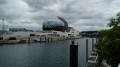
From Port de Javel to Pont de Saint-Cloud
 6.22 mi
+20 ft
-23 ft
2h 55
Moderate
Departure from Paris
6.22 mi
+20 ft
-23 ft
2h 55
Moderate
Departure from Paris
From the Port de Javel, the banks of the Seine are not particularly suitable for a stroll… So you head away from the river to cross three large parks: André Citroën, Suzanne Lenglen and Île Saint-Germain. You then rejoin the towpath with its many moored barges. The walk ends with a brief detour into Saint-Cloud Park before crossing the Seine via the bridge of the same name.
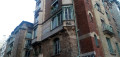
The wildlife of Ranelagh and La Muette
 4.05 mi
+115 ft
-23 ft
2h 00
Easy
Departure from Paris
4.05 mi
+115 ft
-23 ft
2h 00
Easy
Departure from Paris
This urban route crosses the 16th arrondissement of Paris, from south to north and then from west to east, to discover animal representations and a certain architectural diversity specific to this arrondissement.
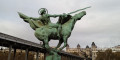
The wildlife of Grenelle and Vaugirard
 6.07 mi
+125 ft
-20 ft
2h 55
Easy
Departure from Paris
6.07 mi
+125 ft
-20 ft
2h 55
Easy
Departure from Paris
This urban route crosses the 15th arrondissement of Paris from west to east and then from north to south, discovering numerous animal representations. The sculptures in Georges Brassens Park recall the past of the Vaugirard slaughterhouses.