


Refine your search for walks in Gare de Chars
Gare de Chars walks


 Loop departing from Chars
 Association / Club / Walk leader
 6.31 mi
 +341 ft
 -338 ft
 3h 10
3h 10
 Easy
Easy
 Departure from Chars (Val-d'Oise)
Walk starting from Chars SNCF station passing the Château de Saint-Cyr-sur-Chars.
On the way back to Chars there is a narrow pedestrian passage that starts with a staircase.
The Viosne Valley around Chars
 Visorando Member
 7.64 mi
+341 ft
-361 ft
3h 50
7.64 mi
+341 ft
-361 ft
3h 50
 Moderate
Departure from Chars (Val-d'Oise)
Moderate
Departure from Chars (Val-d'Oise)
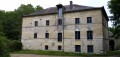
A pleasant and varied hike in the heart of the French Vexin. The route begins with a circular route north of Chars, between fields, meadows and small woods. After the beautiful church of Chars, there are alternating ascents and descents on the slopes of the south bank of the Viosne. The church and old mill in Brignancourt are a heritage stop before heading up the right bank of the Viosne along the edge of a wetland.
To the west of Marines
7.47 mi
+243 ft
-230 ft
3h 40
Moderate
Departure from Val-d'Oise
A pleasant walk through fields and woods. Walkers will be surprised by the changing landscapes and colours.
From Chars to Santeuil via the Buttes de Rosne
 14.60 mi
+801 ft
-830 ft
7h 25
Moderate
Departure from Chars (Val-d'Oise)
14.60 mi
+801 ft
-830 ft
7h 25
Moderate
Departure from Chars (Val-d'Oise)
The Buttes de Rosne are the highest natural points in the Île-de-France region. Situated in the Vexin, this easily accessible area can be comfortably explored on foot with the family over half a day or a full day. This route starts in Chars and returns via Santeuil, offering a variety of landscapes along the way. The first part of the route takes you mainly through fields. The second part is more wooded.
In the heart of Chars, a Vexin town nestled by the water’s edge
1.66 mi
+82 ft
-69 ft
0h 50
Easy
Departure from Chars (Val-d'Oise)
In the heart of the French Vexin, Chars has developed amidst the river, farmland and thoroughfares. This circular walk invites you to discover its history, from the station to the old village centre, taking in Saint-Sulpice Church, the former Hôtel-Dieu, the vicarage, a washhouse and several old farmhouses. Still in operation today, the Chars mill supplies nearly a quarter of Paris’s flour and perpetuates the village’s historic link with the Viosne. As you walk along the route, Rue de la Gloriette, the farrier’s sign and the limestone cliffs reveal further facets of Chars’ history and landscape.
Grand tour of Île-de-France in 34 stages on the GR®11
 528.35 mi
+22,037 ft
-22,156 ft
34 days
528.35 mi
+22,037 ft
-22,156 ft
34 days
 Difficult
Departure from Paris
Difficult
Departure from Paris
This marked GR® route around the Île-de-France region (with a few forays into neighbouring departments and regions) complements its "little brother", the GR®1, by forming a circular route around Paris, generally with a slightly larger radius.
It follows the same overall pattern: first, a radial section starting from Paris (more precisely from the Pont d'Austerlitz, near the former confluence of the Bièvre and the Seine), going up the entire Bièvre valley, then continuing to Villiers-Saint-Frédéric, in the Yvelines. From there, it is a circular route that loops around the Île-de-France region, close to its borders with neighbouring regions.
The route passes through beautiful regions, often untouched by intensive urbanisation, regional nature parks and other protected natural areas, and takes in some architectural wonders.
From Chars to Bornel via the Rosne hills
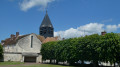 21.42 mi
+1,191 ft
-1,257 ft
10h 55
21.42 mi
+1,191 ft
-1,257 ft
10h 55
 Very difficult
Departure from Chars (Val-d'Oise)
Very difficult
Departure from Chars (Val-d'Oise)
This is the eighth stage of the Grand Tour de l'Île-de-France on the GR®11, starting from Chars station in the Val d'Oise and heading towards Bornel-Belle-Église station in the Oise, through the north-eastern part of the French Vexin and the borders of the Pays de Thelle. This stage is unique in that it runs along the border between the Val d'Oise and Oise departments, with roughly 50% of the route on each side. The proposed itinerary passes through the Buttes de Rosne, the highest natural point in Île-de-France, although it deviates slightly from the GR® for this.
From Genainville to Chars in the heart of the French Vexin region.
18.42 mi
+988 ft
-1,040 ft
9h 20
Very difficult
Departure from Genainville (Val-d'Oise)
Seventh stage of the Grand Tour of Île-de-France on the GR®11, starting from the village of Genainville, in the heart of the French Vexin, and heading towards Chars station further east. This stage goes hand in hand with the previous Mantes-Genainville stage, with a night in Genainville or the surrounding area necessary to walk between Mantes and Chars stations. This beautiful stage continues the crossing of the equally magnificent French Vexin Regional Nature Park, heading generally eastwards. It joins andthen climbs up the Aubette de Magny valley, crosses a series of agricultural plateaus between Oise and Val d'Oise before descending into the Viosne valley to reach Chars.