


Refine your search for walks in Fort de Planoise (Besançon)
Fort de Planoise (Besançon) walks


 The Fort of Planoise
 Visorando Member
 3.92 mi
 +869 ft
 -850 ft
 2h 35
 Easy
 Departure from Avanne-Aveney (Doubs)
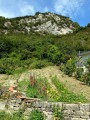
Starting from the church in Avanne, you will walk along the river, climb up to the cabordes, old dry stone winegrowers' huts, then on to Fort de Planoise or Fort Moncey, built in 1877, the first defensive rampart of the city of Besançon. You will pass numerous batteries and fortifications at a military pace, then stop at the superb viewpoints, one overlooking Besançon and its hills, the second to the south, overlooking the Doubs valley and the Jura mountains.
The Cabordes Trail
 6.22 mi
+1,795 ft
-1,821 ft
4h 25
 Moderate
Departure from Besançon (Doubs)
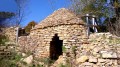
Present on the hills of Besançon since the 16th century, these dry stone constructions without mortar are a reminder of a time when vineyards stretched across the hillsides. A niche, a bench, a fireplace, they allowed the winegrower to store his tools, shelter in case of a storm and perhaps sleep there for a night, as the city gates closed every evening at 10:45 p.m. until 1875. Along the way, you will discover no fewer than five belvederes and the forts of Rosemont and Planoise.
The Planoise Coast
 5.04 mi
+958 ft
-948 ft
3h 10
Moderate
Departure from Besançon (Doubs)
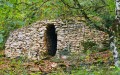
See Practical Information. Besançon, France's first green city, surrounded by wooded hills, is a city in the countryside. This route, from the Malcombe sports complex to Fort de Planoise, will convince you. You will climb picturesque and peaceful paths to two belvederes and cabordes, dry stone huts that bear witness to a time when vineyards stretched across our hillsides.
Fort Moncey
 3.82 mi
+1,073 ft
-1,079 ft
2h 40
Moderate
Departure from Besançon (Doubs)
Info: Fort Moncey, better known to the people of Besançon as Fort de Planoise, was built between 1877 and 1892. Surrounded by shelters, four large batteries and barracks, it is open to the public but should be visited with caution. Walkers less interested in military history will appreciate this leafy setting and can stop off at the superb viewing points – one overlooking Besançon and its hills, the other to the south, looking out over the Doubs valley and the Jura mountains – before returning via the bucolic vineyard paths of Les Équegney.
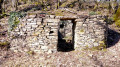
The winegrowers’ huts and Planoise Fort
 4.08 mi
+1,230 ft
-1,250 ft
2h 55
Moderate
Departure from Avanne-Aveney (Doubs)
See Practical Information. You will climb towards the ‘cabordes’, these dry-stone winegrowers’ huts. Stop off at the viewing points of Fort de Planoise to take in the views of the Besançon hills, then southwards over the Doubs valley and the Jura mountains. Despite its military past, the fort offers a charming walk with its many paths winding through the ruins. You’ll return by following the cliffs through a wild, moss-covered wood that feels like a haunted and sinister forest.
The Cabordes des Équegney
 4.35 mi
+1,093 ft
-1,112 ft
2h 55
Moderate
Departure from Avanne-Aveney (Doubs)
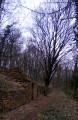
See information from Avanne Town Hall. From there, you’ll climb towards the ‘cabordes’, the dry-stone huts used by winegrowers. Then, at Fort de Planoise – the first rampart of the city of Besançon – you’ll march past the gun emplacements in military formation. You’ll stop at superb vantage points overlooking Besançon and its hills, the southern Doubs Valley and the Jura Mountains. After squeezing through a small tunnel inside a small fort, you’ll enter a wild, moss-covered wood that feels like a haunted forest.
Walks near Fort de Planoise (Besançon)
Saône to Besançon with return by train
7.73 mi
+364 ft
-837 ft
3h 50
Moderate
Departure from Saône (Doubs)
A touch of holiday spirit as you take the train. A varied route passing through the Marais de Saône (information about the marsh), exploring the Creux sous Roche, and the Notre-Dame de la Libération viewpoint.