


Refine your search for walks in Étang des Ibis
Étang des Ibis walks


 Ponds, lakes, the banks of the Marne: natural spaces in the heart of Marne-la-Vallée
 Visorando Member
 17.06 mi
 +322 ft
 -282 ft
 7 hrs
7 hrs
 Very difficult
 Departure from Lognes (Seine-et-Marne)
An easily accessible hike via the RER A, almost entirely on footpaths, trails or pedestrian routes. A highly flexible route: a circular 19 km loop, which can be shortened to 14 km or less thanks to several shortcut options, or extended to almost 30 km if you take all the suggested options.
Beautiful waterside scenery, with numerous birds, some remarkable trees and the listed architectural sites of the former Menier chocolate factory and the Ferme du Buisson.
Walks near Étang des Ibis
From Lognes to Noisiel
 7.13 mi
+207 ft
-180 ft
3h 30
7.13 mi
+207 ft
-180 ft
3h 30
 Moderate
Departure from Lognes (Seine-et-Marne)
Moderate
Departure from Lognes (Seine-et-Marne)
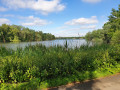
This hike takes you through the various parks and gardens, woods and ponds of Val Maubuée (Lognes, Torcy, Noisiel and Champs s/Marne), from station to station between Lognes and Noisiel.There are some beautiful views along the way, including ponds, the Menier chocolate factory and Noisiel Park.
Please note: check the opening times of Noisiel Park (see "Practical Information" below).Picnics are permitted in the park.
Along the banks of the Marne from Noisiel to Neuilly-Plaisance
 7.07 mi
+13 ft
-197 ft
3h 15
Moderate
Departure from Noisiel (Seine-et-Marne)
7.07 mi
+13 ft
-197 ft
3h 15
Moderate
Departure from Noisiel (Seine-et-Marne)
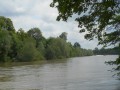
A beautiful walk from station to station (RER line A) along the landscaped banks of the Marne. This walk can be done in either direction.
From Noisiel to Sucy-en-Brie via Bois St-Martin and Forêt Notre-Dame
 14.10 mi
+105 ft
-262 ft
6h 35
14.10 mi
+105 ft
-262 ft
6h 35
 Difficult
Departure from Noisiel (Seine-et-Marne)
Difficult
Departure from Noisiel (Seine-et-Marne)
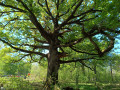
An easy walk along very good paths or trails, with no significant elevation gain. The main attraction lies in passing through several beautiful, varied deciduous forests, whose most remarkable inhabitants are majestic oak trees. The oldest is at point (8). There are also a few castles along the route, and the church at Sucy, which is usually open and well worth a visit.The map shows several urban areas, but for much of these urban sections, the walk takes place along tree-lined avenues or through green corridors, making it easy to forget that you are ‘in town’.
From Noisiel to Saint-Maur via the Bois Saint-Martin
 8.09 mi
+39 ft
-203 ft
3h 45
Moderate
Departure from Noisiel (Seine-et-Marne)
8.09 mi
+39 ft
-203 ft
3h 45
Moderate
Departure from Noisiel (Seine-et-Marne)
A hike in three very different parts. From Noisiel station to Yvris station, the route is mainly wooded and damp in places. Then you cross Le Plessis-Trévise, avoiding the main roads but remaining in a very urbanised area. Finally, you follow the paths and lanes of Champigny before walking along the Marne.
From Roissy-en-Brie to Ozoir-la-Ferrière via the Ferrières Forest
 9.35 mi
+39 ft
-30 ft
4h 20
Moderate
Departure from Roissy-en-Brie (Seine-et-Marne)
9.35 mi
+39 ft
-30 ft
4h 20
Moderate
Departure from Roissy-en-Brie (Seine-et-Marne)
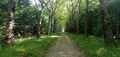
A hike from station to station, crossing the Ferrières Regional Forest and then the Armainvilliers National Forest. Wide paths alternate with more winding trails. There are a few ponds along the way.
The sprawling plain: from Le Plessis-Trévise to Chennevières-sur-Marne
 Local authority
 6.20 mi
+20 ft
-236 ft
2h 50
6.20 mi
+20 ft
-236 ft
2h 50
 Easy
Departure from Le Plessis-Trévise (Val-de-Marne)
Easy
Departure from Le Plessis-Trévise (Val-de-Marne)
Discover or rediscover the Grand Paris Sud-Est Avenir area by exploring its various walking routes, which showcase the main points of interest and the often-overlooked treasures of our 16 municipalities, each with their own unique and distinctive histories.
From Noisy-le-Grand to Villiers-sur-Marne via the Arènes de Picasso
 3.91 mi
+30 ft
-82 ft
1h 50
Easy
Departure from Noisy-le-Grand (Seine-Saint-Denis)
3.91 mi
+30 ft
-82 ft
1h 50
Easy
Departure from Noisy-le-Grand (Seine-Saint-Denis)
A short urban walk taking us from Seine-Saint-Denis to Val-de-Marne. Along the way, the Arènes de Picasso with two buildings featuring cylindrical façades, residential areas and two public gardens.
From Noisy-le-Grand to Gagny and Mont Guichet
 11.80 mi
+338 ft
-453 ft
5h 45
Moderate
Departure from Noisy-le-Grand (Seine-Saint-Denis)
11.80 mi
+338 ft
-453 ft
5h 45
Moderate
Departure from Noisy-le-Grand (Seine-Saint-Denis)
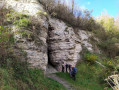
A surprising walk which, on the map, looks very urban, but which, with very few exceptions, avoids tarmac roads. You’ll come across many remarkable buildings, passing from one green space to another – some landscaped (the Croissant Vert) and others wild (the Haute-Île) – and finish with a circular route along well-marked trails through the former gypsum quarries of Mont Guichet, which have been abandoned for decades.
From Lagny-sur-Marne to Meaux
 Association / Club / Walk leader
 12.82 mi
+141 ft
-141 ft
6h 00
Difficult
Departure from Lagny-sur-Marne (Seine-et-Marne)
12.82 mi
+141 ft
-141 ft
6h 00
Difficult
Departure from Lagny-sur-Marne (Seine-et-Marne)
The Chemin de Saint-Colomban leaves the built-up areas behind to take more rural paths dotted with typical Brie villages between Lagny and Meaux. The route crosses the pleasant countryside of Brie, running alongside the canals and banks of the Marne.
Along the Marne from Thorigny to Noisiel
 6.69 mi
+197 ft
-26 ft
3h 15
Moderate
Departure from Thorigny-sur-Marne (Seine-et-Marne)
6.69 mi
+197 ft
-26 ft
3h 15
Moderate
Departure from Thorigny-sur-Marne (Seine-et-Marne)
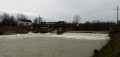
A hike dominated by water, with a long stretch along the Marne towpath and crossing two wetlands on boardwalks. After a nice touch of industrial heritage at the former Menier chocolate factory, you cross Noisiel Park on wide paths in search of some remarkable trees.