


Refine your search for walks in Église Saint-Étienne (Briarres-sur-Essonne)
Église Saint-Étienne (Briarres-sur-Essonne) walks


 The mills of the upper Essonne valley
 Visorando Member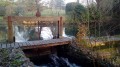
 6.68 mi
 +66 ft
 -69 ft
 3h 10
3h 10
 Moderate
 Departure from Briarres-sur-Essonne (Loiret)
Before motorisation, milling was highly developed along the banks of the Essonne. This hike sets out to discover no fewer than five old water mills, whose presence has been documented since the 18th century. The route along the river is full of charm and the numerous reed beds add a touch of natural heritage to this very diverse hike.
Following the Essonne
 97.78 mi
+3,153 ft
-3,136 ft
10 days
Moderate
Departure from Corbeil-Essonnes (Essonne)
97.78 mi
+3,153 ft
-3,136 ft
10 days
Moderate
Departure from Corbeil-Essonnes (Essonne)
Named after Acionna, the Gallo-Roman goddess of rivers, the Essonne flows through the north of the Loiret department and the south of the Île-de-France region. The first five stages follow its course downstream, while the last four follow it upstream. These nine stages are accessible by train. One stage, which is not accessible by train, forms a circular route upstream. The route alternates between paths along the river, passages through woods and those across cultivated plateaus.
Chemin du Larris from Briarres sur Essonne (45)
 Association / Club / Walk leader4.23 mi
+157 ft
-154 ft
2h 05
Association / Club / Walk leader4.23 mi
+157 ft
-154 ft
2h 05
 Easy
Departure from Briarres-sur-Essonne (Loiret)
Easy
Departure from Briarres-sur-Essonne (Loiret)
A pleasant trail through woods and fields that climbs to the heights of Briarres-sur-Essonne, where the sheep pastures offer a magnificent panorama of the Essonne valley. A bucolic passage along the banks of the Essonne.
Walks near Église Saint-Étienne (Briarres-sur-Essonne)
From Malesherbes to Boutigny-sur-Essonne via the GR®1
16.44 mi
+686 ft
-843 ft
8 hrs
 Very difficult
Departure from Malesherbes (Loiret)
Very difficult
Departure from Malesherbes (Loiret)
Taking place almost entirely in the Gâtinais Français Regional Nature Park, this stage follows the course of the Essonne river for quite a long time, sometimes on the right bank, sometimes on the left bank. The only section through fields is when leaving Buno-Bonnevaux. The rest of the route is unique in that it runs through woodland, with some parts reminiscent of the Forest of Fontainebleau with pine trees, sandstone outcrops and sandy areas. This hike can be divided into four sections as it passes not far from the stations of Boigneville, Buno-Gironville and Maisse.
From Malesherbes to Maisse via the Menhir de la Pierre Droite
 10.16 mi
+404 ft
-577 ft
5h 00
Moderate
Departure from Malesherbes (Loiret)
10.16 mi
+404 ft
-577 ft
5h 00
Moderate
Departure from Malesherbes (Loiret)
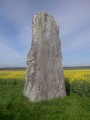
On the edge of the Ile-de-France region, this hike from station to station follows the Essonne Valley from south to north. It takes forest paths, small roads with little traffic and paths between fields. This route allows you to discover an interesting heritage: mills, churches and castles, as well as a menhir and a polisher that attest to the ancient human occupation of the area.
From Le Vaudoué to Malesherbes
9.40 mi
+417 ft
-292 ft
4h 40
Moderate
Departure from Le Vaudoué (Seine-et-Marne)
After crossing the Rambouillet Forest in the previous stage, this section is a restful one. It takes you to Malesherbes station. This is one of the easiest stages of the GR®1. The start is at Le Vaudoué. It is the only stage of the GR®1 that does not start at a station. The hike alternates between sections in the woods and more rural sections. The first interesting sight on the route is the church in Le Vaudoué. The path then leads to the former Templar Commandery before crossing woods and fields towards the Essonne and Saint-Martin Church in Malesherbes.
From Gironville to Boigneville via Malesherbes
11.74 mi
+272 ft
-269 ft
5h 40
Moderate
Departure from Buno-Bonnevaux (Essonne)
A hike from Gironville-sur-Essonne station to Boigneville station via Malesherbes, following the Essonne river on a route with very little elevation gain. Malesherbes is located on the border of Seine-et-Marne and is crossed by the Essonne river. On the agenda: castle, wash house, river, narrow streets, ponds and mills, passing through the pretty villages of Buno-Bonnevaux and Rouville, following the GR®1.
From Maisse station to Coquibus via the Cyclop and the Moulin Grenat
 9.96 mi
+423 ft
-246 ft
4h 55
Moderate
Departure from Maisse (Essonne)
9.96 mi
+423 ft
-246 ft
4h 55
Moderate
Departure from Maisse (Essonne)
A day or a weekend in the Fontainebleau Forest, without a car, starting from Maisse station (RER D). Visit the “Cyclop”, a kinetic metal sculpture partly covered in mirrors, as tall as a seven-storey building, which stands proudly in the heart of the Milly Forest. Monumental yet hidden away, it surveys its surroundings with its single golden eye.
From Maisse to Malesherbes via the Moulin de Vicq and the Chemin de Grimery
 12.53 mi
+456 ft
-279 ft
6h 10
12.53 mi
+456 ft
-279 ft
6h 10
 Difficult
Departure from Maisse (Essonne)
Difficult
Departure from Maisse (Essonne)
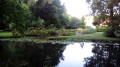
In the south of the Essonne department, this station-to-station hike alternates between forest paths, quiet country lanes and paths through the fields. Along the way, there is a wealth of heritage to discover: a mill, churches, a castle and a Neolithic grinding stone.
From Maisse to La Ferté-Alais via Ile Ambart
 11.82 mi
+486 ft
-469 ft
5h 50
Difficult
Departure from Maisse (Essonne)
11.82 mi
+486 ft
-469 ft
5h 50
Difficult
Departure from Maisse (Essonne)
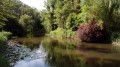
A hike from station to station in the Essonne Valley. After climbing up through the Bois de Saint-Médard and crossing a cultivated plateau, you pass through the charming hamlets of Courdimanche. You walk alongside the river several times, cross a small island, and the Marais de Jarcy may be of interest to nature lovers. Several churches and a few wash houses are also along the way.
From Milly-la-Forêt to Ballancourt-sur-Essonne through the Gâtinais region.
 20.81 mi
+758 ft
-781 ft
10h 15
Very difficult
Departure from Milly-la-Forêt (Essonne)
20.81 mi
+758 ft
-781 ft
10h 15
Very difficult
Departure from Milly-la-Forêt (Essonne)
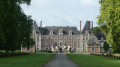
This is the twenty-eighth stage of the Grand Tour of Île-de-France via the GR®11, connecting Milly-la-Forêt to the Ballancourt-sur-Essonne train station after crossing the French Gâtinais region. It is designed to follow on fromthe previous stage coming from Fontainebleau, after a night's stay there.This stage begins in the École valley, which boasts a rich heritage: Milly-la-Forêt, Moigny-sur-École, Courances and its château, and Dannemois, dear to Claude François. It continues through the fields of the Gâtinais, then the ridges and sandstone plateaus of the Grands Avaux forest, ending at Ballancourt-sur-Essonne in the valley of the same name.The stage is very beautiful but very long, and undoubtedly the most physically demanding of all those on the GR®11, especially in its second part. However, it is possible to split it in two by staying overnight and/or shorten it in several places by simplifying it.
From Nemours to Souppes-sur-Loing along the canal
 8.76 mi
+118 ft
-108 ft
4h 10
Moderate
Departure from Saint-Pierre-lès-Nemours (Seine-et-Marne)
8.76 mi
+118 ft
-108 ft
4h 10
Moderate
Departure from Saint-Pierre-lès-Nemours (Seine-et-Marne)
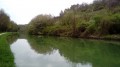
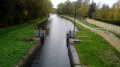
A hike from station to station that mainly follows the towpath of the Canal Loing. Before reaching the canal, you cross a municipal park and a small maze of rocks. Along the way, the canal's surroundings become increasingly bucolic and reveal an interesting industrial heritage.
From Nemours to Montigny, following the Loing river closely.
 9.35 mi
+131 ft
-66 ft
4h 25
Moderate
Departure from Saint-Pierre-lès-Nemours (Seine-et-Marne)
9.35 mi
+131 ft
-66 ft
4h 25
Moderate
Departure from Saint-Pierre-lès-Nemours (Seine-et-Marne)
A hike from station to station that starts along the Canal du Loing and the river that gave it its name. A circular hike around the Étang de la Clarette allows you to observe numerous birds before admiring the rich heritage of the commune of Grez-sur-Loing. The hike ends mainly through fields.