From Sallertaine to the Moulin de Rairé

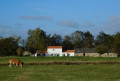
A pleasant walk through the marshes from Sallertaine to the Moulin de Rairé, the only windmill to have been in continuous operation since 1560.

Details

640352
Creation:
Last update:
Last review:
  • Walking
    Activity: Walking
  • ↔
    Distance: 1.05 mi
  • ◔
    Average duration: 0h 30 
  • ▲
    Difficulty: Easy

  • ⚐
    Back to start: No
  • ↗
    Ascent: + 3 ft
  • ↘
    Descent: - 10 ft

  • ▲
    Highest point: 13 ft
  • ▼
    Lowest point: 3 ft
  • ⚐ Country: France
  • ⚐ City: Sallertaine (85300)
  • ⚑
    Start: N 46.860171° / W 1.960366°
  • ⚑
    End: N 46.863546° / W 1.979511°
  • ❏
    IGN map(s): Ref. 1125OT
  • Hour-by-hour weather

Photos

Description of the walk

(S) Leave the car park at Place de la Liberté by taking the D103 towards Saint-Urbain (north-west). The route heads away from the old Saint-Martin Church on Place de la Liberté.

The road passes through Les Bouillères towards a bridge spanning the Grand Étier de Sallertaine.

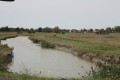
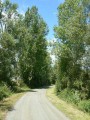
(1) As soon as you cross the bridge, turn left onto the path that runs alongside the Grand Étier de Sallertaine. Just as the stream bends to the left, the path veers to the right to follow a small stream (on the left-hand side of the path) and thus heads further into the marshes.
Further on, the path crosses the stream and continues to run alongside it, changing sides, before coming out onto a road at the hamlet of La Béchée.

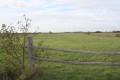
(2) Turn left onto the Route de la Béchée. The road winds around the hamlet with houses on the right and the marsh on the left. Pass near the hamlet of Les Èves and continue in the same direction.

Further on, leave the farm track leading to La Francinière on your left.
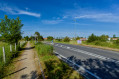
At the next crossroads, turn right onto the farm track which leads directly to the Moulin de Rairé.

Arrival at Moulin de Rairé marks the end of this route (E).

Waypoints

  1. S : mi 0 - alt. 13 ft - Car park at Place de la Liberté in Sallertaine
  2. 1 : mi 0.09 - alt. 7 ft - Exit the bridge onto the D103
  3. 2 : mi 0.44 - alt. 7 ft - Croisemeny path – road at a place called La Béchée
  4. E : mi 1.05 - alt. 7 ft - Car park at Place de la Liberté in Sallertaine

Notes

Parking is available in the car park on Place de la Liberté, on the D103 at the entrance to Sallertaine.

This walk is not circular. You can return to the starting point via the same route, making a total of 3.4 km and just under an hour’s walk.

For more experienced walkers, there is a circular route starting from Sallertaine, which takes you through the countryside to the north via Le Creuset and Les Bouchauds, and passes by the Moulin de Rairé: the route is called "In the Footsteps of Jean Nesmy in Sallertaine" (see Visorando)

Although this walk is not particularly difficult, you will still need to wear suitable footwear.

Worth a visit

Sallertaine
The commune of Sallertaine is divided almost equally between the Bocage to the north and the Marshes to the south.
The former Île de Sallertaine is separated from the riverbank by the Grand Etier de Sallertaine.
The hydrography naturally plays an important role in the life of the commune, which is almost entirely bordered by waterways: to the north, the Marais Blanc stream separates it from Châteauneuf, and then the Grant Taizan stream from Saint-Urbain. To the south, a major embankment, the Chaussée de Marconnais, flanked by a canal, separates the Sallertaine marsh from that of Le Perrier.
For a long time, with no means of communication other than cart tracks and drainage ditches, the marsh has been crossed since Napoleonic times by the straight main road linking Le Perrier to Saint-Urbain.
The forest has almost completely disappeared; all that remains are a few scattered clumps of trees, mainly around Les Groisardières, Le Petit Bois and La Sause, amidst land that has been entirely converted to cultivation.
Sallertaine takes its name from two words, one of which is the Latin ‘sal’, meaning salt, and the other the Greek ‘artana’, meaning a body tied up to pull it towards oneself. This can be explained as follows: as the salt marshes were situated below the village, when salt was needed, it had to be hoisted up using a rope.
In the early Middle Ages, Sallertaine enjoyed its heyday with the establishment of three religious houses, which spurred significant economic activity: the extraction and trade of salt. Until the time of the Wars of Religion, the history of the parish was inextricably linked with that of these religious houses.
The Wars of Religion (1562–1598) brought bloodshed to the marshlands, and Sallertaine was not spared the atrocities.

The monuments of Sallertaine consist mainly of two churches:
• The 12th-century Church of Saint-Martin, the jewel in the crown of the architectural heritage of north-western Vendée, is a marvel of Angevin Romanesque art and bears witness to the area’s significance.
• A second church was built here and inaugurated in 1911.

Sallertaine holds the ‘Ville et Métiers d’Art’ label, with around forty artisans present during July and August.
Every year, the Île aux Artisans association organises four summer evening events featuring: late-night openings of artisans’ workshops, street performances, shows, concerts…

The Rairé Mill
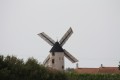
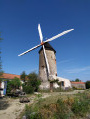
The Moulin de Rairé has been powered by wind, without interruption, since 1560. The mill has a traditional mechanism and produces flour from maize, barley, oats and wheat. It is the last of the 14 mills in the commune.
Of the 15,000 windmills in France, the Moulin de Rairé remained for several decades the only one still operating by wind power. The farming community has always remained loyal to these determined millers who never wanted to abandon the wind as their sole source of energy.
Even today, Rairé remains a symbol of attachment to traditional techniques and respect for the expertise of our forebears. Here, then, there is no electric motor to turn the sails
It is therefore both a genuine working tool (custom milling for animal feed takes place all year round) and a unique guardian of memory, far removed from dubious and slapdash restorations. The family that maintains it continues to believe that it is still possible to combine respect for tradition with tourism.

Reviews and comments

4.7 / 5
Based on 4 reviews

Reliability of the description
4.8 / 5
Ease of following the route
5 / 5
Route interest
4.3 / 5
riquet89
riquet89

Overall rating : 5 / 5

Date of your route : Jun 01, 2026
Reliability of the description : ★★★★★ Very good
Ease of following the route : ★★★★★ Very good
Route interest : ★★★★★ Very good
Very busy route : Yes

A place you simply must visit. The owner is incredible and utterly passionate about what he does.

Machine-translated

Delbadibul
Delbadibul

Overall rating : 4.3 / 5

Date of your route : Apr 18, 2025
Reliability of the description : ★★★★☆ Good
Ease of following the route : ★★★★★ Very good
Route interest : ★★★★☆ Good
Very busy route : No

Beautiful scenery, lovely walk. It’s a bit tricky navigating the watercourses as there are no paths or signposts. Best done after visiting the lovely artists’ village and the flower-filled Jardin de Vaulieu. There are tables at the start of the walk, so it’s handy to stop there on the way back

Machine-translated

pgetrochon
pgetrochon

Thank you for your message.
Enjoy your walks

Machine-translated

edamain
edamain

Overall rating : 4.7 / 5

Date of your route : Jul 13, 2020
Reliability of the description : ★★★★★ Very good
Ease of following the route : ★★★★★ Very good
Route interest : ★★★★☆ Good
Very busy route : No

A lovely walk for the whole family. No particular difficulties. The mill makes a great destination for the walk. Thank you.

Machine-translated

xbeaudoin
xbeaudoin

Overall rating : 4.7 / 5

Date of your route : Sep 23, 2017
Reliability of the description : ★★★★★ Very good
Ease of following the route : ★★★★★ Very good
Route interest : ★★★★☆ Good

A lovely little stroll after a meal.

Machine-translated

Other walks in the area

For more walks, use our search engine .

The GPS track and description are the property of this route's author. Please do not copy them without permission.