Country:

 City:
City:


(S/E) Start the hike by leaving the car park and taking the yellow marked trail on the left. Turn right after the entrance to the campsite and stadium. The path is tarmac for 200 metres, then gives way to a dirt track which then branches off to the left. Continue along the path marked with signs for "route de Saint-Estèphe" until you reach the yellow sign for "circular des Malibas".
(1) Turn right and follow this signposted direction, which leads to a small tarmac road. Follow the signs by taking this road on the left, then turn into the first road on the left at the entrance to the hamlet of Chevalarias. Cross the hamlet of Mérigaud and continue straight ahead to reach the junction with the D91E3 departmental road.
(2) At the junction of this road, there is a yellow sign pointing towards "circular de Fixard et boucle des Malibas". Follow this direction by taking a small tarmac road opposite, which gives way to a path and leads to Badeix.
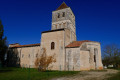
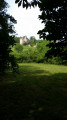
(3) Take a break at this crossroads to look at the long building on the left. This is the Priory of Badeix, home to monks of the Order of Grandmont. The church to the left of the convent buildings was shortened in the 17th century.
Resume your walk and turn left to pass in front of the priory entrance, which is private.
Continue along the road for 200 metres, then leave the marked trail and take a smaller road on the right which, after 150 metres, leads to a departmental road which you should also take on the right.
On the next section of the departmental road, ignore the road on the right that leads to Fixard and continue to the next crossroads.
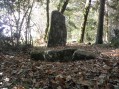
(4) Turn right and take a yellow-marked path indicated by a small "menhir" sign. The menhir is 100 metres away; it is one of the few menhirs in the Périgord, authenticated by the curator of the Geneva Museum. It dates from between 5000 and 2000 BC.
Continue along the yellow-marked path, which leads to a small tarmac road. Turn left and follow the markings to the hamlet of Fixard.
(5) At the end of the second bend, turn right onto the path, still marked in yellow. At the two small ponds, turn right onto the path, which then makes a first turn right then left. Keep right at the next two junctions, then turn right again at the first houses.
Take the second road on the right and immediately turn left at the next fork.
(6) 150 metres before reaching the D91, leave the yellow markings that go to the right and turn left to join the departmental road. Turn right onto the road and, 80 metres further on, turn right onto a path marked with yellow and white and red (GR®) markings. Descend to the sports complex and follow theGR® to the Tour de Piégut.
(7) To leave the site, follow the double markings and turn into a small lane on the right of the exit. Turn right into Rue Jean Petit and right again at the next fork to take the old Roman road. Leave the access to a pond on your left and continue along the path, which winds several times and eventually leads to a road not far from the hamlet of Bridarias. On this section, which is more than two kilometres long, the remains of a Roman road can be seen at the beginning.
(8) Follow the road to the left, then leave the double markings and take the first road on the right. Continue to the hamlet of Chevalarias.
(9) At the first group of houses on the left, leave the road and turn left onto a paved road suitable for vehicles. Opposite the road is a large building with white shutters and a well.
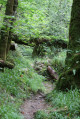
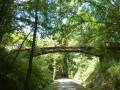
This tarmac road is only about a hundred metres long. When it turns sharply, take a path on the left which slopes upwards at the start and stays on the ridge until it reaches the wooden footbridge over the marshy part of the large Saint-Estèphe pond and joins the campsite car park (S/E).
End of hike




 Visorando Member
 Average