Country:
 City:
City:


Depart from Boulevard du Mal de Lattre de Tassigny, where it diverges from the coastline.
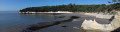
(S) Leave the boulevard at the beach restaurants, then walk up the beach towards Pointe de Vallières. As you approach the cliff, look for an access point that leads to Boulevard de la Corniche.
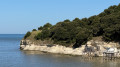
(1) Turn right to follow the boulevard, which runs close to the coastline. Pass Île aux Mouettes, a rock detached from the cliff that marks the northern end of the point, then continue along the coastal path until you reach the Vallières lighthouse.
(2) The path leading to the lighthouse is temporarily closed. Cut left through the car park of the "Tarte aux Prunes" restaurant, then continue downhill until you reach the slipway to the dry dock located at the foot of the lighthouse.
(3) When you reach the slipway, take the Charles Martel promenade, which starts on the right and follows the water's edge. Be careful during high tides or rough seas, as it may be preferable to take the Corniche path that runs along the top of the cliff, otherwise you risk getting sprayed by the waves. Continue along the water's edge until you reach Boulevard de la Côte de Beauté.
(4) When you reach the coastal road, turn right to start crossing the beach. Depending on the tide, you can either take the pavement along the boulevard or walk along the beach. The wet sand is particularly suitable and pleasant for walking.
(5) When the coastal boulevard leaves the beach at a right angle, continue along the top of the beach if the tide is high, and head towards the large white building at the foot of the cliff. If it is not possible to go around the nearby point, turn left before the building and go up the access road at its foot. Otherwise, pass under the headland and then go around it on the right.
(6) At the end of the cove behind the point, find the steps leading to the coastal path at the top of the cliff. This is the path to take when it is not possible to pass by the point. At the path, turn right and continue until you pass under the Parc de l'Estuaire.
(7) Continue straight ahead, then after passing a more or less abandoned property, follow the path on the right that runs closest to the cliff, passing one after another the various bunkers that mark this point. The most challenging part of this section of the route takes place in what remains of the old Suzac fort, the importance of which will be better appreciated on the way back.
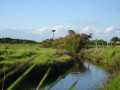
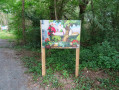
(8) At the penultimate casemate, leave the edge of the cliff and go further into the fort. You will soon find remains that are older than the concrete bunkers, which are those of the old fort. An explanatory panel provides a better understanding of the various fortifications that were built on this strategic site. The entrance to the fort is located along a path that runs along the edge of a vast meadow. Turn right and follow this path downhill to enter the holm oak wood that separates the meadow from the cliff. A well-marked path follows the cliff edge. At its lowest point, you can see the entrance to the passageway that leads to the two fisheries below, which you will pass a little further on
(9) Continue along this path, taking in the views from the several lookout points overlooking Suzac beach as you approach it. At the road, turn right to go around the beach restaurant and take the path leading down to the sand. (E)
 Visorando Member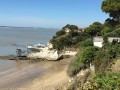
 Moderate