


Refine your search for walks in Château de Dourdan
Château de Dourdan walks


 The Dourdan via Ouye abbey
 Visorando Member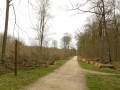
 8.40 mi
 +528 ft
 -551 ft
 4h 20
4h 20
 Moderate
 Departure from Dourdan (Essonne)
A lovely woodland walk with a cultural touch.
Forests of Saint-Arnoult and Dourdan via Sainte-Mesme
 12.61 mi
+538 ft
-551 ft
6h 15
12.61 mi
+538 ft
-551 ft
6h 15
 Difficult
Departure from Dourdan (Essonne)
Difficult
Departure from Dourdan (Essonne)
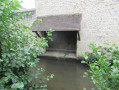
Discover Dourdan and its national forest.
The Orge Valley between the source and Dourdan
 13.73 mi
+381 ft
-374 ft
6h 40
Difficult
Departure from Dourdan (Essonne)
13.73 mi
+381 ft
-374 ft
6h 40
Difficult
Departure from Dourdan (Essonne)
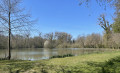
A long walk through forests, ponds and the banks of the Orge river, passing through the beautiful villages of Sainte-Mesme and Saint-Martin de Bréthancourt. Includes a visit to Dourdan, which you cross via parks and walking trails along the Orge river or the old fortifications, avoiding the suburbs and their buildings.
From Étréchy to Dourdan through the fields and woods of Hurepoix
 14.03 mi
+801 ft
-682 ft
7h 10
Difficult
Departure from Étréchy (Essonne) (Essonne)
14.03 mi
+801 ft
-682 ft
7h 10
Difficult
Departure from Étréchy (Essonne) (Essonne)
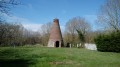
A hilly route from station to station, mainly through farmland for the first two-thirds, then through more wooded areas. Beautiful churches and rural heritage can be found in the villages along the way. In Dourdan, the walk along the Orge river, the 12th-13th century church and the fortified castle provide a superb finishing touch.
Chemin Charles Péguy: overview
 Association / Club / Walk leader
 58.91 mi
+1,775 ft
-1,549 ft
3 days
Difficult
Departure from Palaiseau (Essonne)
58.91 mi
+1,775 ft
-1,549 ft
3 days
Difficult
Departure from Palaiseau (Essonne)
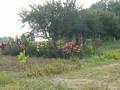
This marked route follows as closely as possible the path taken by Charles Péguy in 1912 and then 1913 from his home in Lozère (Palaiseau) to Chartres, via Dourdan.
The walking route is 94 kilometres long and is marked with blue and white signposts.
The trail was created by the Amitié Charles Péguy association. It received support from the Eure-et-Loir General Council. Visorando was responsible for its first publication on the Internet.
Chemin Charles Péguy: Saint-Cyr-sous-Dourdan - Ablis
 16.19 mi
+482 ft
-236 ft
7h 50
Difficult
Departure from Saint-Cyr-sous-Dourdan (Essonne)
16.19 mi
+482 ft
-236 ft
7h 50
Difficult
Departure from Saint-Cyr-sous-Dourdan (Essonne)
This route is the second of four sections of the Charles Péguy Trail: Lozère (Palaiseau) - Chartres via Dourdan. It follows in the footsteps of the poet Charles Péguy, who celebrated his two pilgrimages (made in 1912 and 1913, each lasting four days there and back) in a poem that remains famous to this day. This is the transition stage: from the valleys and rolling hills of Hurepoix to the Beauce plateau.
Following the Orge from Dourdan to Saint-Chéron
 9.18 mi
+407 ft
-554 ft
4h 35
Moderate
Departure from Dourdan (Essonne)
9.18 mi
+407 ft
-554 ft
4h 35
Moderate
Departure from Dourdan (Essonne)
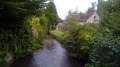
A hike from station to station in the upper Orge valley, following the river. Discover the rich heritage of Dourdan town centre (fortified castle, 12th-13th century church, wash houses, etc.) as well as beautiful churches along the way.
 Dourdan – Sainte-Mesme
 12.45 mi
+538 ft
-522 ft
2 hrs
Difficult
Departure from Dourdan (Essonne)
12.45 mi
+538 ft
-522 ft
2 hrs
Difficult
Departure from Dourdan (Essonne)
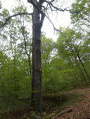
A total immersion in the Dourdan State Forest, where oak is the dominant tree species. There are also chestnut, ash, beech and birch trees. In some sandy areas, these are replaced by pine trees. The legend of Sainte-Mesme and the medieval heritage of Dourdan.
Grand Tour of Paris: from station to station
 343.64 mi
+13,451 ft
-13,451 ft
26 days
Difficult
Departure from Cergy (Val-d'Oise)
343.64 mi
+13,451 ft
-13,451 ft
26 days
Difficult
Departure from Cergy (Val-d'Oise)
This route, comprising 26 walks from station to station – generally long (averaging 21 km) – allows you to gradually circumnavigate the Île-de-France region and discover its full diversity. The route passes through several large forests, winds its way through cultivated fields and runs alongside numerous rivers. Apart from certain stages that are predominantly through woodland, there is a wealth of heritage to be discovered along the way.
From Dourdan to Rambouillet
21.04 mi
+640 ft
-476 ft
10h 35
 Very difficult
Departure from Dourdan (Essonne)
Very difficult
Departure from Dourdan (Essonne)
This stage is the last of the GR®1 and is over 30 km long. It crosses the western part of the Rambouillet Forest. The entire stage is through forest, except for the crossing of Saint-Léger-en-Yvelines. The route connects two towns with a rich history: Dourdan and Rambouillet. There are many straight lines on this route, which is mainly flat. There are a few notable ponds at the end of the route, such as the Étang de la Tour and the Étang d'Or.
From Lardy to Dourdan
20.31 mi
+1,322 ft
-1,260 ft
10h 30
Very difficult
Departure from Lardy (Essonne)
This stage of the GR®1 is one of the most difficult on this GR®. It is 32 km long and has an elevation gain of over 400 m. It is also one of the most beautiful. Starting from Lardy, this hike takes you past magnificent monuments such as the Church of Saint-Sulpice, the Church of Saint-Yon, the Church of Sermaise and the Château de Dourdan. There are other monuments to visit in this town. Most of the route is in the countryside, with several ascents and descents into the valleys. The route passes through numerous villages of varying sizes.
GR®1: Tour of Île-de-France
 363.31 mi
+17,464 ft
-17,103 ft
21 days
Very difficult
Departure from Paris
363.31 mi
+17,464 ft
-17,103 ft
21 days
Very difficult
Departure from Paris
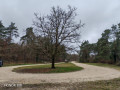
Over 500 km long and with more than 4,000 m of elevation gain, this hike is accessible to everyone if broken down into several stages. Beautiful, rural and fairly close to Paris, it is suitable for anyone who wants to try their hand at hiking. There are many points of interest along this route. History and heritage enthusiasts, as well as nature lovers, will find something to enjoy.
Following the Orge
 80.26 mi
+3,734 ft
-3,868 ft
10 days
Moderate
Departure from Dourdan (Essonne)
80.26 mi
+3,734 ft
-3,868 ft
10 days
Moderate
Departure from Dourdan (Essonne)
The Orge river flows through the Essonne department, first from west to east and then diagonally from south-west to north-east. This route follows the valley as closely as possible, where it is accessible by train. The route alternates between paths along the river, including a promenade in the downstream section, passages through the undergrowth, residential areas and urban routes.