


Refine your search for walks in Cèdres de la Lavière
Cèdres de la Lavière walks


 The Druyes Viaduct and the Panama Valley
 Visorando Member
 10.00 mi
 +341 ft
 -358 ft
 4h 55
4h 55
 Moderate
 Departure from Sougères-en-Puisaye (Yonne)
Marked route No. 11.
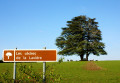
This route takes you to the small village of Druyes-les-Belles-Fontaines, passing through wooded areas and farmland. The return journey follows an old railway line. Between Les Roches and Pesselière, you can admire the cedars of La Lavière, and in Pesselières, the Sully tree as well as the ruins of the old castle.
From the Church to Le Sully via the Cèdres de la Lavière
 8.21 mi
+404 ft
-417 ft
4h 05
Moderate
Departure from Sougères-en-Puisaye (Yonne)
8.21 mi
+404 ft
-417 ft
4h 05
Moderate
Departure from Sougères-en-Puisaye (Yonne)
Marked trail No. 10.
Discover the local heritage: ponds and old drinking troughs, crosses and calvaries, the Sully lime tree, and the cedars of La Lavière. Beautiful views of varied, rolling countryside punctuate this route, the length of which can be adapted to suit.
Although classified as a walking route, this route is also one of the most beautiful routes for mountain biking, hybrid cycling and horse riding.
The leisure trail along the old tracks
8.08 mi
+371 ft
-390 ft
4h 00
Moderate
Departure from Sougères-en-Puisaye (Yonne)
Route closed by municipal order dated 9 July 2026.
Marked walk No. 12.A route themed around recreational sport, following a section of an old railway line and a section of an ancient Roman road, with some wonderful heritage sites to discover.
Walks near Cèdres de la Lavière
From Thury to Lainsecq via the Montagne des Alouettes
 9.19 mi
+699 ft
-617 ft
4h 50
Moderate
Departure from Thury (Yonne) (Yonne)
9.19 mi
+699 ft
-617 ft
4h 50
Moderate
Departure from Thury (Yonne) (Yonne)
Pass by the Moulery wash house and the Roman road with panoramic views of Puisaye, Forterre, Frétoy Forest and Druyes Castle.
Between the Fossés Noirs and the Pierre Noire
 4.30 mi
+262 ft
-194 ft
2h 10
4.30 mi
+262 ft
-194 ft
2h 10
 Easy
Departure from Thury (Yonne) (Yonne)
Easy
Departure from Thury (Yonne) (Yonne)
Starting from St Julien church, follow the paths to reach the Moulin de Hausse Côte.
Les Quatre Arpents
 4.03 mi
+295 ft
-121 ft
2h 05
Easy
Departure from Sainpuits (Yonne)
4.03 mi
+295 ft
-121 ft
2h 05
Easy
Departure from Sainpuits (Yonne)
A pleasant route in all weathers, with plenty of springs at the end of the route. This route partly follows the path once taken by the ox-herders to drive the oxen from the Morvan to Paris.
From the Côte de Labert to the bell tower
 4.14 mi
+312 ft
-240 ft
2h 10
Easy
Departure from Sainte-Colombe-sur-Loing (Yonne)
4.14 mi
+312 ft
-240 ft
2h 10
Easy
Departure from Sainte-Colombe-sur-Loing (Yonne)
From the village, this path follows part of the ridges of the hill separating the two natural regions of Puisaye to the west and Forterre to the east.
Treigny - Druyes-les-Belles-Fontaines
 Association / Club / Walk leader15.94 mi
+869 ft
-1,079 ft
8h 05
Association / Club / Walk leader15.94 mi
+869 ft
-1,079 ft
8h 05
 Difficult
Departure from Treigny (Yonne)
Difficult
Departure from Treigny (Yonne)
From castle to castle from the village of Treigny, taking in Ratilly and Guédelon, via Perreuse and its former barony, to reach Druyes-les-Belles-Fontaines and the view of its fortified castle.
 Entrains - Ouanne via the Roman road
15.69 mi
+1,234 ft
-1,033 ft
2 hrs
Moderate
Departure from Entrains-sur-Nohain (Nièvre)
Route along part of the Roman road linking Bourges to Auxerre, starting from Entrains-sur-Nohain (formerly Intaranum in Gallo-Roman times) in the Nièvre department to Ouanne (Odoana) in the Yonne department.From the vast expanses of woods and forests and the large plains of cultivated land, passing through two of the highest points in this region (367m and 368m), discover new spaces, views, fauna and flora on these limestone plateaus and hills.