Loop of Rocher and Croix du Vellan from Plan-de-Baix

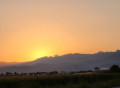
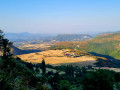
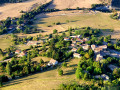
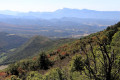
At the gateway to the Vercors, at the end of a long ridge at an altitude of 1,000 metres, this rocky promontory is visible for dozens of kilometres around. The site offers a remarkable panorama of the village, which it overlooks by nearly 200 metres, the Rieussec and Gervanne valleys and the high plateaus of the Vercors, the Diois, the Trois Becs and the Montagne Saint-Pancrace. The place is peaceful at sunrise and offers an interesting view of the plateau stretching around the village with its farms, temple, chapel and castle. The elevation gain is modest and the distance is short. The loop makes the climb less difficult. We chose to start from the Church of Notre-Dame, at the bottom of the village, to discover this well-renovated Romanesque heritage site.

Details

83906360
Creation:
Last update:
Last review:
  • Walking
    Activity: Walking
  • ↔
    Distance: 4.65 km
  • ◔
    Average duration: 2h 10 
  • ▲
    Difficulty: Moderate

  • ⚐
    Back to start: Yes
  • ↗
    Ascent: + 297 m
  • ↘
    Descent: - 294 m

  • ▲
    Highest point: 940 m
  • ▼
    Lowest point: 679 m

Photos

Description of the walk

Head to Plan-de-Baix and park in the small car park in front of Notre-Dame Church in the hamlet of La Combe. The hike begins after passing the church, which is open to visitors, allowing you to discover this monument of early Romanesque architecture. Information panels in front of the entrance explain its history. Behind you, when facing the gate, is the old cemetery, which is also worth a visit.

(S/E) Carefully cross the Plan-de-Baix road, the D70, and head towards the village centre, passing through the Chabas neighbourhood.
At Place de la Mairie, turn right onto Rue du Vialaret.

(1) Go straight ahead at the crossroads (return route on the left). Continue along this road for 1 km, passing through the hamlet of Les Perriers on the way to the hamlet of Le Vialaret. You will reach the house at number 961.

(2) Turn left and pass between the house and the garage, staying on the path and following the signs for "Le Vellan". Go around the house to the north and then head south-west. The path goes around the Plateau and the Rocher du Vellan to the east, then south, then west, at the foot of the cliffs. It joins the Chemin de Rimont at a fork.

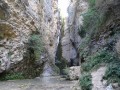
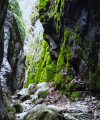
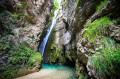
(3) Turn right and continue uphill. Pass through an impressive natural rocky gorge. Join a tarmac road at a hairpin bend. Continue for a few metres.

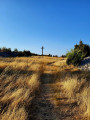
(4) Take the well-marked path on the right towards Croix de Vellan. Walk 200 metres along the plateau on a small path and reach the highest point of Roche and Croix de Vellan at 963 m.

(5) From there, enjoy the remarkable panoramic view of the surrounding area, from the Cévennes to the Vercors. Unfortunately, an old orientation table is of no help.
In addition to the 360° view described in the "Introduction" section, you can see theChâteau de Montrondbelow on the left,overlooking the Ravin de la Gervanne on a rocky spur, and the entire Plan-de-Baix plateau with its agricultural activity.
To return, retrace your steps, but not without making a few detours from the path to walk on these strange piles of stones, like collapsed clapas. These could be the remains of the ramparts of the medieval fortress that once stood here. A ruined tower still stands on the edge of the cliff, above the fork in the path (3).

(4) Continue along the road for a few metres, then turn left onto the path leading uphill through the rocky gorge to the next crossroads.

(3) To return, continue straight ahead on Chemin de Rimont without turning off. This neighbourhood is aptly named "Sous le Vellan" (Under the Vellan). Pass close to the hamlet of Rimont.

(6) Shortly afterwards, at an elevation of 795 metres, turn left at a 90° angle onto the beautifully shaded Chemin de la Pâquerette and return to the village centre via Impasse de la Pâquerette. Return to the intersection of the loop

(1) Turn right downhill and return to the car park (S/E) via the same route you took on the way there.


Waypoints

  1. S/E : km 0 - alt. 679 m - Notre-Dame de Plan-de-Baix Church
  2. 1 : km 0.54 - alt. 735 m - Crossroads of the loop
  3. 2 : km 1.47 - alt. 764 m - Le Vialaret - Turn left
  4. 3 : km 2.21 - alt. 886 m - Round trip to the viewpoint
  5. 4 : km 2.42 - alt. 936 m - Common intersection on the way there and back
  6. 5 : km 2.65 - alt. 914 m - Croix du vellan
  7. 6 : km 3.42 - alt. 794 m - Fork in the road - Take the left
  8. S/E : km 4.65 - alt. 679 m - Notre-Dame de Plan-de-Baix Church

Notes

The description is based on a family summer hike in mid-August 2025.

Parking at the start
The car park chosen for the start (S/E) is further away and only has 2 or 3 spaces, which may all be occupied.
In this case, there are 5 or 6 parking spaces in the centre of the village, at the foot of the Town Hall; this is an official car park, marked on road maps and village signage. It is free of charge.

Quality of trail maintenance and facilities
In August 2025, all the trails are perfectly maintained, with perfect mowing. The ruins on the Plateau de Vellan are themselves in good condition and safe, except for the nearby precipice. The bench for resting at the foot of the cross could do with a refresh and the orientation table needs replacing.

Time indicated
We completed this route in about 2½ hours without rushing, including photo breaks.

Difficulty
Hike classified as Medium, Visorando rating.
The IBP index is 42 HKG, which corresponds to an Easy route for a hiker with average physical fitness.

Water sources
There are no drinking water points along the route, except in the village centre (near the crossroads (2)). Bring at least 0.5 litres per person and/or a filter or purification tablets.

Shelter
There is no other shelter on the route apart from the Church of Our Lady (S/E) if it is open.

Equipment
In summer, bring the usual equipment for hiking in the lowlands, light hiking or sports shoes, suitable clothing, possibly rainwear, sunglasses, hat, sun cream and UV-protective lip balm.

Visitor numbers
The circuit is fairly busy in the height of summer, unless – like us – you choose to walk at sunrise. Whatever the season, don't forget to tell your friends and family your exact route and keep them informed of any changes by text or phone.

Check the weather forecast

Maps
If you notice any errors in the signposting or place names along your route or on the map you are using, you can become a contributor and report them:
- marking errors, safety issues, usage conflicts, environment: click here.
- mapping errors, place names: click here.

Worth a visit

(S/E) The Church of Notre-Dame de Plan-de-Baix ( incorrectly labelled "Chap." on the IGN map)
Dates from the 12th century. Romanesque architecture. Its 12th-century structure features a wide nave, originally timber-framed and vaulted only after 1644.
The smaller transept is covered by a dome on squinches, whose recent restoration highlights the details of the masonry.

(S/E) History of Plan-de-Baix and the Château de la Bâtie, then Montrond
Located in the Vercors Regional Nature Park, the commune covers 1,939 hectares and ranges in altitude from 500 to 1,500 metres. It is surrounded by the Gervanne and Rieussec valleys.
At the mouth of the rocky Brudoux valley lies the village with its listed Notre Dame church, school and town hall. The privately owned Château de Montrond dates from the 12th century. It overlooks the Gervanne Valley.
The village is dominated by the Rocher du Vellan, an iconic site and major landmark on the southern edge of the Vercors. It rises to 963 metres.
The population reached 750 inhabitants in 1793 and currently stands at 164 (2022). See detailed history.
Sources: Wikipedia and gervanne-sye.com

(5) At Rocher de Vellan
This rocky outcrop resembles the bow of a ship planted in this mountainous landscape. The Croix du Vellan, built in 1903, was originally made of wood. The current cross, 11 metres high , was made in 1934 by a craftsman from Crest using puddled iron . It is the result of a collective contribution, symbolising the fraternity between Catholics and Protestants in Plan-de-Baix.
Source: Wikipedia

The plateau conceals the remains of the walls of a Gallic oppidum, which became the site of an ancient castle, with the remains of a square tower at its highest point, or the ruins of a priory? A strong medieval wall bars the spur. Source: frederic-morin-salome.fr

Nearby

- The Druise Waterfall, the Moulin de la Pipe, the Omblèze Gorges, the Pissoire Waterfall.

- The village of La Baume-Cornillane
The village was established in the Middle Ages around an early Christian church, which became a Cluniac priory of Marcigny under the patronage of Saint Stephen and was fortified in the 11th century. The village adopted the Protestant religion in the 16th century.

- Tourist attractions in the Drôme

Other walks in the area

For more walks, use our search engine .

The GPS track and description are the property of this route's author. Please do not copy them without permission.