Country:
 City:
City:


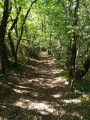
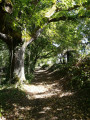
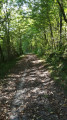
Park near the church.
Please note: much of this route is signposted with signs and markers from the Departmental Council, sometimes green, sometimes yellow and sometimes both green and yellow. The colour is not important for this route. A few markers are missing at junctions.
Note: during wet weather, some paths can become very muddy.
(S/E) Set off by following the D124 on the left-hand side (heading north) for about 200 metres, before turning left onto a small road leading to Lac de Sigalens, which is about 1 km away.
(1) “When you reach the lake, take a moment to have a stroll; there are several picnic tables available in the shade.” Then leave the lake via the wide path on the left that runs alongside it. When you reach a post with several signposts indicating various circular loops, turn left towards “Pays de Grignols” (marked in yellow). The path then climbs through the woodland before reaching the plateau.
Turn right and walk along the edge of a field, then zigzag a little before reaching the D124. Cross it carefully and follow it to the right (south) for about 200 metres.
(2) Turn left onto the very narrow road, which soon becomes a dirt track, descending through woodland and joining a small road that more or less follows the course of a river (the Lisos). Follow this road to the right for about 400 m.
(3) At this point, let a forestry track branch off to the right. Take a small, unmarked path starting on the left, running alongside a fence, which quickly leads to the river. Ford the river (sandy bed); otherwise, simply veer slightly to the right to reach a sturdy footbridge formed by several concrete posts laid across the river. After crossing, walk back 15 metres to the left to find the continuation of the path.
Then climb the hillside through the woodland. The well-marked path winds slightly before climbing steeply until it runs alongside the hamlet of Le This. Continue along the path, which widens and runs along the edge of the plateau.
(4) At the next junction, where you’ll see the markings for the departmental paths, take the path opposite. Continue along this pleasant route along the edge of the plateau, still in the shade, and you’ll emerge in another hamlet (Les Rochereaux) onto a small road at a junction well signposted. You can just make out Campin Church on the right, so head in that direction.
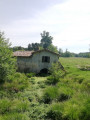
(5) Campin Church is distinctive and very old. To visit it, you’ll need to ask for the keys; in the meantime, the view of the surrounding area is remarkable. Set off again, retracing your steps along the same small road until you reach the signposts, then head towards Sigalens, keeping to the right for 500 metres.
(6) There are signposts for Sigalens. Follow a well-maintained path to the left through the woodland, running alongside a large pidgeon hunting hut which crosses the path via a bridge. Still in the woodland, head down the hillside to reach another small road; follow this to the right as far as the hamlet of Laverrière on the banks of the Lisos (an old mill?), then on to a crossroads.
(7) Take the road slightly to the left for about 150 m, and leave it at the next bend to take a dirt track heading straight on and climbing through the woodland. On emerging from the woodland, walk along fields bordered by beautiful trees (the hamlet of La Traverse) before reaching Sigalens and the church (S/E).




 Visorando Member
 Moderate
 Difficult