Country:

 City:
City:


Coming from Nice, turn left and head towards Utelle. Park at the end of the bridge over the Vésubie in the car park known as "Place Damiano": there are benches and a drinking water tap.
(S/E) Cross the bridge , taking care to watch out for traffic. At the end of the bridge, cross Avenue Louis Thaon and take Montée de l’Église, opposite and on the right. It is only a few metres to the church.
(1) Take the steps on the left, just after the church, at the entrance to the cemetery: sign for “Chemin du Collet du Monde” and yellow markings. Then follow this path, which is a series of concrete steps, climbing through the village. Reach marker 130.
(2) Continue left, towards Saint-Pierre, passing a wash house and leaving the residential area. After a short flat section, this path enters the forest. Paved slanting street almost all the way to the summit, it is extremely well preserved from the past.
(3) At this crossroads, continue straight ahead. This south-facing area is a former farming area. There are numerous terraces here. The path runs alongside the source of the Peïra, then winds its way through ruins before emerging from the woodland and reaching the hamlet of Saint-Pierre (alt. 1012 m).
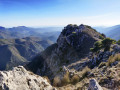
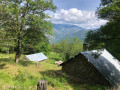
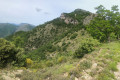
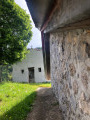
(4) This hamlet lies at the foot of the rocky massif known as Suc de Cabagne. The chapel is open; do have a look inside, and please remember to close the door behind you. Just past this building, look out for marker 129 and follow the signs for “Le Suquet”. The start of the descending path is across open fields. You’ll soon reach, at the edge of the forest, another small hamlet called La Valetta, which has a spring below the two renovated barns.
(5) Continue due north through this magnificent forest of oak and beech trees. Follow the yellow markings and reach the crossroads marked by marker 128 after following an irrigation channel.
(6) Turn left. The path passes a few chalets and houses before joining the tarmac road M2565.
(7) Turn right and walk along the road with caution: there is heavy traffic. Cross the bridge over the Vésubie, then take the track on the left at marker 18: the markings change to white and red (GR®510). Follow the signs for “Le Suquet” and you will reach a large concrete pylon.
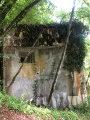
(8) The markings indicate that you should turn right. The area is quiet, but the path leading to the banks of the Riou du Figaret is clearly visible and the markings are very well maintained. Once on the bank, look across to the opposite bank where the markings continue. Find a place to cross the river and continue along the path. After two bends, a long-forgotten military structure resembling a blockhouse runs alongside the path.
(9) Cross the road with care. Climb onto the low stone wall directly opposite, where marker 17 is located: the short path resumes here, heading towards Saint-Honorat. Return to the road and follow it to the right , taking the same care. Continue to the crossroads.
(10) Change of markings: the route reverts to yellow markings. At this junction, marker 16 indicates “Église Saint-Honorat”, the next destination. Turn left onto Avenue Olivari (Route du Figaret). This tarmac section should be taken with care until you reach Église Saint-Honorat.
(11) This religious building, rebuilt in the early 1800s, stands out against a green and peaceful landscape dominated by olive trees. The path, marked in yellow, begins opposite the main entrance and leads to the junction marked by marker 14.
(12) Continue straight on towards Saint-Jean-la-Rivière; the wooded path follows the Vésubie Gorges from above. You will reach another three-way junction at marker 13.
(13) Go straight on, following the signs for Saint-Jean-la-Rivière.
(14) Pass in front of a waterfall and continue along the path, which turns 180°. Join a track at a hairpin bend.
(15) Continue to the right and you will soon reach a hairpin bend on the Route d’Utelle.
(16) Turn left downhill: watch out for traffic. You’ll reach the bridge and the car park where you started (S/E).


 Visorando Member
 Moderate