(S/E) The Espace Saint-Exupéry currently houses the Tourist Information Point, the Saint-Exupéry Municipal Library, the Ivry-Gitlis School of Music and Dance, the cultural department of the town of Andrésy, as well as the eponymous leisure centre.
(2) The Oratory of Our Lady of Denouval was erected during the plague epidemic of 1638, as a sign of the parish of Andrésy’s participation in the Vow of Pontoise, an annual pilgrimage to the Church of Notre-Dame de Pontoise.
(3) The Manoir de Denouval was built between 1904 and 1908 by Pierre Sardou, chief architect of Historic Monuments and son of the playwright Victorien Sardou, at the request of Sarah Hershey Marsch. The Chalet de Denouval, meanwhile, is a municipal building; it now houses the Centre Yvelinois des Arts de la Marionnette.
(4) It is said that this holiday home is the modified Norwegian pavilion from the 1900 World’s Fair, dismantled and rebuilt in Andrésy…
(5) Saint-Germain-de-Paris Church: construction of this church, dedicated to Saint Germain, Bishop of Paris in the 6th century, began in the 13th century. The church was listed as a Historic Monument by decree on 25 April 1949.
The Royal Gate: this gate formed part of the ‘King’s Wall’ separating the cultivated lands of Andrésy from
hunting grounds of the Forest of Saint-Germain-en-Laye, which at the time began just opposite, on the other side of the Seine. In 1794, the authorities deemed it ‘urgent to destroy anything that might be associated with despotism’. The Royal Gate was sold to the highest bidder for 100 livres and subsequently partially demolished.
Town Hall: this villa, known as the Villa des Tilleuls, was built by Jean Anatolie and belonged to Jean-Baptiste de Dosme (1794–1869), a dressmaker during the Empire. It was purchased by the municipality in 1946 and became the current Town Hall in 1948. The previous town hall was formerly located in what is now the Espace Saint-Exupéry.
The Maison du Moussel: built in 1864 for Jean Anatolie (buried in Andrésy Cemetery),
the Maison du Moussel changed hands several times among private owners before being purchased by the local council in 1990. The Maison du Moussel hosts part of the contemporary art exhibition ‘Sculptures en l’île’, serving as an art centre closed to the public and displaying, inside, the works of guest artists of honour.
The old railway station: now the Maison des associations, this building was once a railway station. In 1912, the Department of Seine-et-Oise built a railway line between Pontoise and Poissy. This station consisted of a raised platform, an office, a goods shed and a small residence for the stationmaster.
The Villa Rêve Cottage and its Chinese pavilion: This stately home, built of millstone and rockwork and known as Rêve Cottage, was constructed in the late 19th century. In the property’s garden stands a Chinese pavilion, octagonal in plan, with facades clad in ceramic tiles, which was added in the early 1920s. Its origin is uncertain, but tradition has it that the Chinese pavilion was featured at the 1900 World’s Fair. The Eiffel Bridge, the tugboat district and the boatmen’s houses… The Fin-d’Oise district developed thanks to ‘industrial’ river transport at the confluence of the Seine and the Oise in the mid-19th century.



 Country:
 City:
City:



 Visorando Member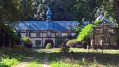
 Moderate

 Association / Club / Walk leader
