Let's go and see if the rose...

From the Botanical Garden of Tours to the Priory of Saint-Cosme, home of Ronsard (admission fee), via the Château du Plessis built by Louis XI and the banks of the Loire, take a walk to discover the green spaces of western Tours and La Riche.

Details

562597
Creation:
Last update:
Last review:
  • Walking
    Activity: Walking
  • ↔
    Distance: 8.06 km
  • ◔
    Average duration: 2h 20 
  • ▲
    Difficulty: Easy

  • ⚐
    Back to start: Yes
  • ↗
    Ascent: + 5 m
  • ↘
    Descent: - 5 m

  • ▲
    Highest point: 52 m
  • ▼
    Lowest point: 43 m
  • ⚐ Country: France
  • ⚐ District: Tours (37100|37200|37000)
  • ⚑
    Start/End: N 47.382408° / E 0.666135°
  • ❏
    IGN map(s): Ref. 1822SB
  • Hour-by-hour weather

Description of the walk

Park in the Hangar car park on Rue Saint-François or along the roadside on Rue de la Parmentière.

Please note! This route is not signposted.

(S/E) Take Rue Saint-François northwards. Pass Rue Richer on your right and continue to the junction with Rue d'Entraigues. Cross the road and turn right. Shortly afterwards, you will see one of the entrances to the Botanical Garden (known simply as the Botanique by the locals) on your left.

(1) Enter and go down to the right. Walk past the medicinal plant garden and then to the left of the playground. At the fork, turn left towards the pond. Immediately afterwards, make a short round trip to the entrance of the pond to observe the flamingos. Then continue north-west, turn right and cross two small footbridges over the river. Turn north-west and walk between the mini farm and the duck enclosure. Shortly afterwards, you will find a refreshment bar (only open in summer), then, on the left, the 40 écus tree (Ginkgo Biloba), classified as a remarkable tree. Pass the entrance to the Botanical Garden on your right and turn left. Take the large path on the right and, immediately afterwards, push open the gate to enter the Garden of Evolution. Explore it at your leisure as you head north. Do not exit onto the main path, but go through another gate to visit the perennial garden (peony collection). At the end of this garden, turn west to exit onto the main path. Cross it in front of the greenhouses and continue straight ahead to enter the themed garden (collection of dahlias). Continue straight ahead, leaving the collection of oleanders on your right to exit the park. You will then find yourself on Rue Saint-François.

(2) Follow this street to the left along the wall of the Botanical Garden. Further on, on the right, you will see an old manor house, La Rabaterie (to see the back of the building, take the path on the right). Continue south, still on Rue Saint-François, for a few more metres.

(3) Turn right onto Rue Louis XI, following the yellow markings. Continue along this street, past houses and then between two large meadows. Further on, you will reach Rue du Plessis. Turn left, still following the yellow markings. At the crossroads with Rue de Lignier, continue straight ahead until you reach the gate of the Château du Plessis park, the residence of Louis XI.

(4) Enter and stroll through the park (the château is not open to visitors), then exit through the same gate and turn left. Immediately after, turn right and continue along this lane, which veers left and quickly leads to the cemetery car park. Turn right in the car park, then take the lane on the left and you will soon find the cemetery entrance on the right. Enter, cross this small cemetery and exit through the opposite gate. Continue straight ahead and you will come to Rue des Hautes Marches. Cross it and follow it to the left, passing a roundabout and leaving Rue Paul Bert on your right.

(5) Turn right onto Rue Léon Bourgeois. Further on, cross Rue de la Mairie and continue straight ahead at the roundabout. Ignore an alley on the left and you will find the entrance to the Prieuré de Saint-Cosme car park on the left.

(6) Enter and continue straight ahead to the end of the car park, then turn right, then right again to enter the priory. Six euros later, visit Rabelais's lodgings, the old priory buildings and the gardens with the help of a smart leaflet.

When you leave the priory, take the same route you took on the way in, but before exiting through the car park entrance, take the path on the left. Follow it through a wooded park. The lawns of this small green space are ideal for a picnic or a nap. Further on, you will find an exit on the right. Take it to wind your way through a more recent park, between houses and the cycle path. Further on, the path ends abruptly. Turn left to rejoin the cycle path and follow it on the right.

(7) Go through the barrier and continue left on a small road, the old Levée de la Loire. At the end of this road, turn left to cross Avenue Proudhon. Opposite, you will find a staircase and an information panel about the inhabitants of the banks of the Loire. Go down and turn right. Continue along this path through the woods with the Loire on your left. Further on, you will find a ramp on the right. Go up to reach Avenue Proudhon. Turn right and follow the avenue to the traffic lights, go down a few steps and cross.

(8) On the other side, turn right for a short return trip to the Cité des Bords de Loire. Back at the crossroads, turn right onto Rue du Docteur-Charmier. Ignore Rue de la Mairie on your right, which leads into La Riche. Note the old Mame printing works on your left, which has been renovated to house French Tech and the School of Fine Arts, and continue to the north-east entrance of the Botanical Gardens.

(9) Enter the Botanical Garden again via the Jardin des Deux Mondes. Head south and enter the greenhouses. The first greenhouse is dedicated to useful tropical plants. Visit the South African flora greenhouse on the right and the tropical undergrowth flora greenhouse on the left, then exit. Turn left immediately, then left again to go around the greenhouses. Continue straight ahead, leaving the exit to Rue Saint-François, which you took earlier, on your right. Note the collection of dahlias (in late summer) in the themed garden on your left. Turn right to climb the small hill. Find the spring and descend following the river. Cross the azalea collection (in spring) and you will come to the front of the old botanical school building. On your left, you will see a brand new Asian-inspired garden. Continue straight ahead. Further on, walk past the emu enclosure, then the wallaby enclosure and finally the turtle enclosure. Continue north to pass by the pond again, find the entrance to the garden you used on the way in, and exit.

(1) Turn right, then left onto Rue Saint-François to return to the Hangar car park (S/E).

Waypoints

  1. S/E : km 0 - alt. 47 m - Hangar car park
  2. 1 : km 0.3 - alt. 47 m - Jardin botanique de Tours
  3. 2 : km 1.06 - alt. 48 m - Botany outing
  4. 3 : km 1.51 - alt. 47 m - Rue Louis XI
  5. 4 : km 2.11 - alt. 49 m - Château du Plessis
  6. 5 : km 3.08 - alt. 47 m - On the right, Rue Léon Bourgeois
  7. 6 : km 3.55 - alt. 47 m - Prieuré de Saint-Cosme
  8. 7 : km 4.92 - alt. 52 m - On the embankment - La Loire
  9. 8 : km 6.13 - alt. 51 m - Return trip to Cité des Bords de Loire
  10. 9 : km 6.87 - alt. 48 m - Jardin botanique de Tours
  11. S/E : km 8.06 - alt. 47 m - Hangar car park

Notes

It is not always easy to park near Botanique during the week as the spaces are taken by hospital users and employees. By bus, take line 15 or line 4 to the Tonnellé (la Riche) stop.

The time indicated does not take into account time spent strolling through the various gardens.

Please note! The Château du Plessis park is only open Monday to Friday from 10:00 to 17:30. The château is not open to visitors. It is occupied by a theatre company.

The Botanical Garden is open from 7:45 a.m. to 5:30 p.m. from 1 November to 28 February; from 7:45 a.m. to 7:30 p.m. from 1 March to 30 April and from 1 September to 31 October; and from 7:45 a.m. to 9:30 p.m. from 1 May to 31 August. The greenhouses are open every day from 2pm to 5pm.

Admission to the Priory of Saint-Cosme is €6 at full price. The priory is open every day except Tuesday. For more information, follow this link.

Worth a visit

Discover more hikes in this area with a description or the Visorando app here

Between (1) and (2) then between (9) and (1) The Botanical Garden.
Covering an area of 5.8 hectares, it is located on a former wetland connecting the Loire and Cher rivers. It was built between 1831 and 1843 thanks to the tenacity and generosity of pharmacist Jean-Anthyme Margueron, who wanted to create a botanical school for students at the new School of Medicine and Pharmacy. The grand avenue of magnolias planted in 1857 still exists today, although it has been renovated. Animal parks were designed in 1869 within the arboretum, with a few exotic animals alongside the greenhouses. These have since been rebuilt and transformed into the current Biodivers collection greenhouses. The construction of a new Orangery greenhouse in 2008 allows plants to be overwintered in containers.

The medicinal plant garden. It focuses on phytotherapy, heir to the herb gardens of medieval monasteries. It was laid out in 1985. The plants are grouped according to their therapeutic properties. This garden also features some beautiful poisonous plants. Due to the theft of certain plants, this garden is only open at certain times during the week: Monday to Thursday, from 8 a.m. to 12 p.m. and from 2 p.m. to 5 p.m.

Animal parks. Wallabies share their enclosure with emus and peacocks. An aviary is home to parrots and parakeets. A few turtles can be seen during the summer. A mini farm is home to donkeys, Asian pigs, sheep, goats, rabbits, guinea pigs, ferrets and poultry. The river is home to various species of ducks and flamingos at the water's edge.

The arboretum. Among the 200 species of trees is the Ginkgo Biloba, which was planted in 1845. This tree is one of the most impressive in Europe, with a circumference of 7 metres. You will also discover the Virginia tulip tree, the bald cypress, the sharp-leaved magnolia and many other beautiful trees, as well as flower beds, shrubs and perennials.

The Garden of Evolution. This is a scientific garden that highlights the chronic evolution of plants. It is organised like the design of a flower with its petals around a central point: the central point is a pond representing the first living organisms (cyanobacteria and algae) that appeared in the water 4 billion years ago. The plants bordering the pond are the first to have colonised the earth (mosses, lichens) 450 million years ago, then rose above the ground (ferns) 100 million years ago, to break free from the aquatic environment (conifers). Then, in the two large sections on either side of the pond, flowering plants (angiosperms, 65 million years ago) appeared, whose seeds are contained in ovaries. The main families are arranged in two groups: monocotyledons (in the north) and dicotyledons (in the south).

The themed garden: Redesigned between 1981 and 1983, this landscaped area brings together collections such as: the bog, Mediterranean plants, aquatic plants, etc.

The perennial garden. This garden is home to numerous species and varieties of herbaceous perennials, fragrant flowering shrubs and bulbous plants. Emblematic of the diversity of perennials, the peony occupies a prominent place in this garden, also symbolising the link between Tours and China.

The garden of two worlds. This garden was added to the botanical garden in 2009. It is laid out along the south-north axis of the botanical garden, which crosses the new Orangery greenhouse and ends at the contemporary façade of the technical building. The plant life is divided on either side of this axis, marked by lines of plants: American plants to the west and Asian plants to the east. Climbing plants cover metal structures made of giant grasses.

The Biodivers greenhouses: Completely restored in 2009, these greenhouses feature three themes:
Tropical utility plants: plants that are used to make products for everyday use in the food, cosmetics and pharmaceutical industries.
The flora of South Africa. The source of many ornamental plants, they sometimes struggle to cope with the threats to them in their region of origin: fires, human exploitation and invasions of foreign plants.
The flora of tropical undergrowth. The high density of this environment forces plants to devise original strategies to survive far from the sun.

Remarkable trees in Tours distinguished by the A.R.B.R.E.S. association. In addition to the 40-écu tree (Ginkgo Biloba) in the Botanical Garden, the trees in the Jardin des Prébendes d'Oé have been awarded the same distinction. From (1), you can access this garden by following Rue d'Entraigues on the left for 1 km. Then turn right onto Rue Georget, follow it for 130 m, then turn left onto Rue Roger Salengro and reach the Jardin des Prébendes 160 m further on (2.6 km round trip). The Lebanese cedar in the courtyard of the Museum of Fine Arts is also classified as a remarkable tree. You can discover it on the Tours Architectural Heritage walking tour. Finally, a weeping sequoia is located in the park-and-ride car park at 16 Rue des Bordiers, north of Tours, but it is further away.

Between (2) and (3) La Rabaterie, at 77 Rue Saint-François. This residence dates back to the early 16th century. You can see the front and rear of the building.

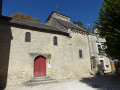
(4) The Château du Plessis. The seigneury of Montils-lès-Tours, which would later take the name Plessis, was purchased in 1468 by Louis XI to build a new residence. The château became the king's favourite residence, and he died there in 1483.
Louis XI's successors also stayed there frequently, remodelling and embellishing the original buildings. Then, in the 17th and 18th centuries, the manor house was abandoned and, after the Revolution, almost entirely destroyed.
The part of the building that remains today, restored in the 19th and 20th centuries, corresponds to the southern part of the former royal residence, built of brick and stone.

(6) The Priory of Saint-Cosme. An enchanting place, now owned by the General Council, Saint-Cosme is closely linked to Ronsard, who was prior there from 1565 to 1585. He wrote many of his works there and received illustrious visitors such as Catherine de Medici.
You can visit his lodgings, where you can still see his study, the monks' refectory (12th century) and the ruins of the priory church.
The gardens are famous for their roses. The best time to visit is at the end of May, when the roses are in full bloom. The Saint-Côme estate is not very large, but it is designed as a place for rest and relaxation. It is therefore possible to spend quite a long time there.

Between (7) and (8) The old Loire embankment and the banks of the Loire.

(8) The Cité des Bords de Loire. This is one of the oldest workers' housing estates in Tours, consisting of twenty-four detached houses on the corner of Avenue Proudhon and Rue du Docteur-Charmier. Built in 1928 on the former site of the municipal slaughterhouses, this workers' housing estate was designed to evoke holiday resorts, summer camps and rest and relaxation for workers. In 1979, chimneys and coal stoves were abandoned in favour of individual town heating, and the first bathrooms even made their appearance. The layout of this housing estate was thirty years ahead of its time, foreshadowing the tower blocks of the 1970s. Another workers' housing estate in Tours, the Cité Mame, can be seen on the Tours Architectural Heritage walking tour.

Between (8) and (9) French Tech Loire Valley. Listed in the supplementary inventory of Historic Monuments, this 14,500 m² building, formerly the Mame printing works, has undergone a high-quality renovation under the leadership of architect Franklin Azzi. Since the start of the 2015 academic year, it has been home to the École Supérieure des Beaux-arts de Tours (Tours School of Fine Arts). Around forty start-ups and companies have already moved into this exceptional location. Several large national groups have also set up offices there.

Reviews and comments

3.8 / 5
Based on 4 reviews

Reliability of the description
3.8 / 5
Ease of following the route
3.8 / 5
Route interest
3.8 / 5
Le Claude 37
Le Claude 37

Overall rating : 3.7 / 5

Date of your route : Nov 09, 2022
Reliability of the description : ★★★★☆ Good
Ease of following the route : ★★★☆☆ Average
Route interest : ★★★★☆ Good
Very busy route : No

Review the signage at Château du Plessis.

Machine-translated

pascal37520
pascal37520

Overall rating : 3.7 / 5

Date of your route : Feb 21, 2021
Reliability of the description : ★★★☆☆ Average
Ease of following the route : ★★★★☆ Good
Route interest : ★★★★☆ Good
Very busy route : No

too many car parks closed due to Covid

Machine-translated

Kremento
Kremento

Overall rating : 4 / 5

Date of your route : Sep 13, 2017
Reliability of the description : ★★★★☆ Good
Ease of following the route : ★★★★☆ Good
Route interest : ★★★★☆ Good

A very beautiful walk, accessible to all.
Too bad the park was closed.
Thanks to the author.

Machine-translated

The user account associated with this content has been deleted.

Other walks in the area

For more walks, use our search engine .

The GPS track and description are the property of this route's author. Please do not copy them without permission.