


Refine your search for walks in Albas
Albas walks


 The geologist in Albas with panoramic variations
 Visorando Member
 6.18 mi
 +1,004 ft
 -1,024 ft
 3h 45
3h 45
 Moderate
 Departure from Albas (Aude)
This hike offers fascinating geological discoveries, fossils and minerals, and splendid panoramic views. The route leads through diverse landscapes, from windmill ruins to green valleys, dotted with information panels on the geological history of the region. This geological experience and the flora open your eyes to the beauty and richness of the Corbières. On the square in front of the town hall in the village of Albas, several information panels tell you about the geological evolution of the area.
Above Coustouge
 5.58 mi
+810 ft
-830 ft
3h 15
Moderate
Departure from Coustouge (Aude)
5.58 mi
+810 ft
-830 ft
3h 15
Moderate
Departure from Coustouge (Aude)
In the heart of the Corbières, a circular route north of the small village of Coustouge. This hilly and shaded route is particularly pleasant in summer. Through pine forests and heaths, we will come across some ruins of old sheepfolds.
Between Coustouge and Fontjoncouse
 11.80 mi
+1,430 ft
-1,444 ft
6h 40
11.80 mi
+1,430 ft
-1,444 ft
6h 40
 Difficult
Departure from Coustouge (Aude)
Difficult
Departure from Coustouge (Aude)
In the heart of the Corbières, an unpretentious walk, simply for the pleasure of strolling through the heath and beneath the pine trees. Several beautiful viewpoints, the pretty village of Fontjoncouse, a lovely church, an old mill and the remains of an ancient lime kiln punctuate this route through a little-visited area. On the way back, a fairly long flat stretch through the heath may seem monotonous to some. But once you reach the end, the view opens up once more onto the rolling hills of the Corbières, the Montagne d’Alaric and the Pyrenees. You’ll therefore need to be patient to enjoy it to the full.
Roca Dansaïra
 8.55 mi
+1,106 ft
-1,086 ft
4h 55
Moderate
Departure from Talairan (Aude)
8.55 mi
+1,106 ft
-1,086 ft
4h 55
Moderate
Departure from Talairan (Aude)
A curious rock that dances, at least according to legend, a comprehensive botanical trail and an orientation table offering a magnificent 360° panorama: this is what you can expect on this easy hike through the sweet scent of pine trees. Not to mention the numerous ridge passages that offer beautiful views of the surrounding villages, the Corbières vineyards and, at the very end of the route, the great peaks of Occitanie.
Pic Saint-Victor from Fontjoncouse
 6.86 mi
+1,581 ft
-1,572 ft
4h 30
Moderate
Departure from Fontjoncouse (Aude)
6.86 mi
+1,581 ft
-1,572 ft
4h 30
Moderate
Departure from Fontjoncouse (Aude)
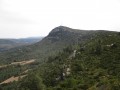
The hike involves climbing the normal route up Pic Saint-Victor, the highest point in the County of Durban. At the summit, there are orientation tables and a thousand-year-old hermitage.
There is a sweeping view of the lakes and the sea, as well as the Pyrenees mountain range stretching to the peaks of Luchonnais.
La Combe Paradis
 8.70 mi
+1,234 ft
-1,211 ft
5h 05
Moderate
Departure from Fontjoncouse (Aude)
8.70 mi
+1,234 ft
-1,211 ft
5h 05
Moderate
Departure from Fontjoncouse (Aude)
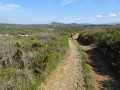
A large circular route starting from Fontjoncouse, crossing the limestone plateaus (Selve and Blaquière) and the "secret" Combe Paradis, taking the old Gallo-Roman road from Donos to Fontjoncouse.
The route is picturesque, following old paths that have been lost and rediscovered, with magnificent views of Mont Saint-Victor, the Mediterranean and La Clape, as well as the borders of the Hautes Corbières and the blue line of the Pyrenees.
A very wild route (Combe Paradis), home to golden eagles.
The sublime tour of Fontjoncouse
 11.23 mi
+1,273 ft
-1,250 ft
6h 15
Moderate
Departure from Fontjoncouse (Aude)
11.23 mi
+1,273 ft
-1,250 ft
6h 15
Moderate
Departure from Fontjoncouse (Aude)
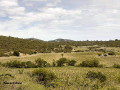
Fontjoncouse is enclosed by four large limestone plateaus: to the north, the Selve plateau; to the south, the La Mulgue plateau; to the west, the Devès and Monedières plateau; to the east, the Pic Saint-Victor (the highest point in the municipality). This hike takes you across these large plateaus to discover the wonders of botany and geology, as well as the historical traces left by humans from the Neolithic period to the Middle Ages.
The Lost Ark and Pic Saint-Victor
 10.43 mi
+1,240 ft
-1,227 ft
5h 55
Moderate
Departure from Fontjoncouse (Aude)
10.43 mi
+1,240 ft
-1,227 ft
5h 55
Moderate
Departure from Fontjoncouse (Aude)
This is a sunny hike between heathland and rock formations, best avoided on hot days. Hike through the heathland, which combines natural geological, plant and man-made formations: arches, mills, sheepfolds, a fountain, a 12th-century church, a hermitage and a lookout point. The goal is to reach the 360° viewpoint over the Corbières at the top of the Ermitage Saint-Victor.
The Gourg Goutonniet and Notre-Dame de Lère in Talairan
 5.40 mi
+607 ft
-604 ft
3h 00
5.40 mi
+607 ft
-604 ft
3h 00
 Easy
Departure from Talairan (Aude)
Easy
Departure from Talairan (Aude)
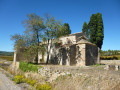
The Gourg Goutonnier, an enormous giant’s kettle carved out over millennia in the bed of the Nielle, is the destination of this hike. You reach it after a charming walk through vineyards and heath. The return route takes you past the Chapel of Notre-Dame de Lère, which stands in a secluded spot amidst a sea of vines over which it seems to watch jealously. All the charm of the Corbières in a relatively short route, ideal for a half-day outing.
Villerouge-Termenès – Lagrasse
 11.57 mi
+1,496 ft
-2,146 ft
6h 35
Moderate
Departure from Villerouge-Termenès (Aude)
11.57 mi
+1,496 ft
-2,146 ft
6h 35
Moderate
Departure from Villerouge-Termenès (Aude)
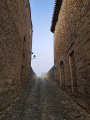
The second stage between Villerouge-Termenès and Lagrasse begins on the heights of the Corbières and then descends gradually towards the superb medieval village of Lagrasse and its abbey.
Around Bonnafous
 Association / Club / Walk leader5.67 mi
+679 ft
-682 ft
3h 10
Easy
Departure from Villesèque-des-Corbières (Aude)
Association / Club / Walk leader5.67 mi
+679 ft
-682 ft
3h 10
Easy
Departure from Villesèque-des-Corbières (Aude)
Walk around Bonnafous, through the vineyards.
The red earth and two chapels
 5.91 mi
+1,007 ft
-1,030 ft
3h 35
Moderate
Departure from Villerouge-Termenès (Aude)
5.91 mi
+1,007 ft
-1,030 ft
3h 35
Moderate
Departure from Villerouge-Termenès (Aude)
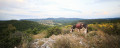
Starting from the small medieval village of Villerouge-Termenès, this route offers a wide variety of views over the vineyards of the plain, the scrubland, the woods and the wild canyons of the Hautes Corbières. At an altitude of 500 metres, you can see the Montagne Noire and the magnificent Pyrenees mountain range in the distance.
Roc Malpas
 3.70 mi
+738 ft
-722 ft
3 hrs
3.70 mi
+738 ft
-722 ft
3 hrs
 Very difficult
Departure from Fontjoncouse (Aude)
Very difficult
Departure from Fontjoncouse (Aude)
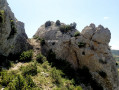
A circular hike to climb Roc Malpas via Pech Fourcan.
A wild and narrow summit.
Extensive panoramic views: in the foreground, Mont Saint-Victor, as well as the Roc de Tautavel, the sea, the lakes and Île Sainte-Lucie, the Pic des 3 Seigneurs and the Thézan plain.
See practical information.
Loop around Villesèque-des-Corbières
 5.77 mi
+840 ft
-840 ft
3h 25
Moderate
Departure from Villesèque-des-Corbières (Aude)
5.77 mi
+840 ft
-840 ft
3h 25
Moderate
Departure from Villesèque-des-Corbières (Aude)
A circular loop to the east of the picturesque little village of Villesèque-des-Corbières. After passing through the vineyards, the first challenge is the climb up to the plateau where, amidst the heath and a field of wind turbines, you’ll reach the Col de Gléon. On the descent, we’ll pass very close to the Janfestre spring before tackling the second challenge – a steep but short climb – to return to the starting point via the Chemin de la Cabayride.
Termes and Villerouge-Termenès circular loop
 12.55 mi
+1,972 ft
-1,978 ft
7h 30
Difficult
Departure from Félines-Termenès (Aude)
12.55 mi
+1,972 ft
-1,978 ft
7h 30
Difficult
Departure from Félines-Termenès (Aude)
This circular walk, starting from Félines-Termenès, passes through woodland and heath, leading first to Termes and then to Villerouge-Termenès, two charming villages boasting exceptional architectural heritage. Numerous sections through the woodland or alongside small, fast-flowing streams provide welcome shade and coolness during the hot season. Once on the ridge, the view stretches as far as the Pyrenees and Mont Canigou, as is particularly the case at the Col de Termes.
Prat de Labat Plateau and Pech de Guilloumet
 11.55 mi
+1,834 ft
-1,844 ft
6h 55
Moderate
Departure from Félines-Termenès (Aude)
11.55 mi
+1,834 ft
-1,844 ft
6h 55
Moderate
Departure from Félines-Termenès (Aude)
The Prat de Labat Plateau is now a vast, unspoilt natural area used for rearing sheep and pigs in semi-free-range conditions. However, it was once a major centre for the extraction and processing of iron ore, as evidenced by the numerous excavations still visible today. This walk, which partly follows the ‘Sentier des Mines’, allows you to discover this ancient heritage, culminating in the climb to the Puech de Guilloumet to enjoy its exceptional panoramic views.
Les Terres Rouges in Tournissan
 6.99 mi
+1,106 ft
-1,093 ft
4h 10
Moderate
Departure from Tournissan (Aude)
6.99 mi
+1,106 ft
-1,093 ft
4h 10
Moderate
Departure from Tournissan (Aude)
A walk in the hills above Tournissan, surrounded by pine trees, vineyards and heath. Geology enthusiasts will particularly enjoy the section through the Terres Rouges, where you follow part of the Sentier Francis Lastenouse trail, which is full of informative signs. Not to mention the magnificent natural surroundings, rich in striking colour contrasts, which are sure to delight other walkers.
The Cirque de Viviès via the Plat de l'Aven
 8.22 mi
+814 ft
-807 ft
4h 30
Moderate
Departure from Thézan-des-Corbières (Aude)
8.22 mi
+814 ft
-807 ft
4h 30
Moderate
Departure from Thézan-des-Corbières (Aude)
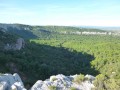
Starting from Thézan-des-Corbières, this hike through pine trees and heathland leads to the natural amphitheatre of the Cirque de Viviès, a geological curiosity of the Corbières. After a somewhat challenging descent to the wild valley floor, the landscape opens up and vineyards appear everywhere. At the end of the route, the magnificent Château de Caraguilhes wine estate is a tempting invitation to end the day on a delicious note.
Mont Tauch Circular Route
 10.24 mi
+2,493 ft
-2,510 ft
6h 55
Difficult
Departure from Maisons (Aude)
10.24 mi
+2,493 ft
-2,510 ft
6h 55
Difficult
Departure from Maisons (Aude)
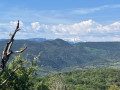
The distinctive shape of Mont Tauch makes it easily recognisable during hikes, whether from the Catalan Pyrenees, the Caroux or various peaks in the Corbières. It catches the eye to such an extent that it makes you want to explore it. From the village of Maisons, a gentle, steady climb takes you up the 555 metres to this plateau, which is interesting for its geographical position as it offers spectacular views of the Pyrenees, from the Albères to the Madrès massif, via the Corbières hills to the highest peaks of Capcir. Whilst the first part of this hike presents no difficulties, the descent on the other side of the plateau is best left to seasoned hikers capable of navigating using the Visorando GPX track.
Notre Dame du Carla
 6.60 mi
+922 ft
-958 ft
3h 50
Moderate
Departure from Lagrasse (Aude)
6.60 mi
+922 ft
-958 ft
3h 50
Moderate
Departure from Lagrasse (Aude)
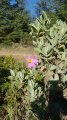
This hike, a little longer than Charlemagne's buttocks, takes you to a chapel and a viewpoint overlooking the surrounding area, all surrounded by wild vegetation.
Charlemagne's buttocks
 3.23 mi
+551 ft
-551 ft
2h 00
Easy
Departure from Lagrasse (Aude)
3.23 mi
+551 ft
-551 ft
2h 00
Easy
Departure from Lagrasse (Aude)
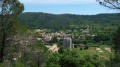
This short hike takes you up to a vantage point where you can admire the village of Lagrasse and its listed abbey. The name "fesses de Charlemagne" (Charlemagne's buttocks) comes from a legend which tells how Charlemagne's horse stumbled, throwing him onto the hill where he landed on his backside.
Lagrasse – Mayronnes
 10.62 mi
+1,880 ft
-1,430 ft
6h 30
Difficult
Departure from Lagrasse (Aude)
10.62 mi
+1,880 ft
-1,430 ft
6h 30
Difficult
Departure from Lagrasse (Aude)
The third and final stage runs between the medieval village of Lagrasse and the village of Mayronnes, passing by the Notre-Dame du Carla Chapel and the Roman bridge at Rieux-en-Val.
Sarrat de Germa and the old Montgaillard Mines
 5.96 mi
+955 ft
-961 ft
3h 35
Moderate
Departure from Montgaillard (Aude) (Aude)
5.96 mi
+955 ft
-961 ft
3h 35
Moderate
Departure from Montgaillard (Aude) (Aude)
A hike in the heights of the Corbières, in a rather rugged natural environment where the hand of man is still visible. Beautiful views along the way, mining heritage, and a still-thriving wine industry.