


 Country:
 City:
City:



Park on the small square at the top of Rue du Xon in Lesménils.
(S/E) Start by heading north on the Chemin de Norroy, which climbs up opposite. After the fountain in the old hamlet of Norroy, you will come to a sign recounting the history of this hamlet, which was completely destroyed in 1914 and of which only a few stone walls remain today.
(1) Continue left along the stony path until you reach the next intersection.
(2) Turn opposite (south-west). At the end of this path (slippery and muddy in wet weather), you will come to a small tarmac road. Turn right and follow it to the Xon cross.
(3) This is where fierce fighting took place from 13 to 18 February 1915, resulting in nearly 2,000 deaths.
We are on the French side and will now head to the German side on the Froidmont hill.
We will then head back down the path.
(2) Turn left at the ruins of the 14th-century Pochard fountain and head towards Bouxières-sous-Froidmont.
On this path, cross the TGV line bridge at the spot where the train set its speed record on 3 April 2007 at 574.8 km/h. When you reach the D42, turn right and then left after the farm.
(4) Continue along this path until you reach a grave.
(5) At the tomb, turn left until you reach the edge of the forest.
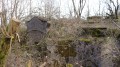
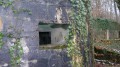
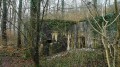
From this point onwards, we are entering the German military zone where 115 fortified structures were erected after the annexation of 1870 to protect the new Franco-German border. The oldest structures are built of stone, while the more recent ones (from the start of the war in 1914 until 1917) are made of reinforced concrete. These structures are not signposted and are therefore difficult to find, especially when the trees are in leaf. The following explanations will help you to find the best known of them.
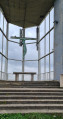
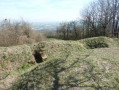
In front of you, you can see two old observation and firing structures facing Le Xon and, behind them, a mission cross built in 1827 on the site of the former Notre Dame du Froidmont church, which was destroyed after 1747. On this subject, if you turn left immediately at the entrance to the forest, you will find the Froidmont chapel, which housed the Virgin of Notre Dame du Froidmont and was the site of numerous pilgrimages until 1973.
We will retrace our steps and turn left onto the upper path, which is none other than theGR®5F, and after 100 metres we will reach a new firing range on your left. We will take the path opposite this firing range and walk 400 metres to our left, looking for barely visible tracks leading into the forest.
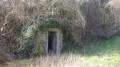
(6) Follow these tracks to discover military structures that were probably used as ammunition depots. Drawings are still visible on the walls. 200 metres further on, behind the quarry, on the edge of the forest, is a rather unusual artillery shelter dating from 1917 (Westphalenblick).
(7) After retracing your steps tothe GR®5F trailabove the chapel, turn right and walk 400 metres to the metal artwork, which marks one of the hikes available in the area. Everyone will appreciate the artwork for what it is and can admire the Moselle valley.
(8) To see the important military structures in the area, namely the Grauer Bär (the grey bear in English), you will need to retrace your steps for about 50 metres and take a trench line on the left. Go behind the structure and walk around it to reach its beautiful main façade. On the way back, before leaving the forest, you will see an old stone structure on your right.
(9) Back at the metal structure, continue alongthe GR®5Ffor about 100 metres and turn right onto the path that leads to a structure that was probably a military hospital, strangely resembling that of the Grauer Bär.
(10) Return to theGR®5Fand follow it to the right for 300 m until you reach a path that climbs to the right, which you will use to make a round trip. It will lead you to a metal cistern on the left and a beautiful stone structure further to the right.
(11) You can follow the various tracks on the ground around you, which will probably lead you to discover other structures.
Back on theGR®5F, follow it to the right until you reach the limestone meadow of Mardigny. There, continue to the right along the edge of the forest until you reach the barbed wire fence. Follow it to the left, staying on its left side, and after 1,200 metres, turn right onto the Chemin du Bois le Comte.
(12) 400 m further on, after the long right-hand bend, you will come to a junction. Turn left and, 20 m further on, turn left again to reach another impressive firing or command post.
(13) You will see that it faces the Seille valley.
Go back 20 metres to the furthest point of our hike. Continue along the forest path in front of you, which leads to the limestone meadow we took on the way there.
Follow the fence again, this time leaving it on your right. After crossing the fence, continue straight ahead, leaving two firing positions on your left (two others are visible below in the field).
(14) After crossing a gap in the fence, you will see the well-maintained grave of soldier Fortuné Pouget about a hundred metres further on.
(15) Continue past the grave on the right and take the stone path further on the left (the one leading to the quarry) and finally the one 400 metres further down on the right, which runs along the hedge and leads to a water reservoir and a cross.
(16) Turn left towards the church of Bouxières-sous-Froidmont, then right onto the main road (Route de Pont-à-Mousson). You will soon arrive at the point (4) and the farm you passed on the way there.
All that remains is to retrace our steps to Lesménils (S/E).







 Visorando Member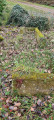
 Easy
Easy 


 Difficult
