Country:
 City:
City:


The vehicle remained parked in Granville. The crossing to Chausey is made by boat with a specialised company or by private pleasure boat.
(S/E) From the wooden jetty on stilts, built over the Sund, head towards the mainland, leaving the Grande Cale on your right and following the small road up to the first houses. Immediately head east towards the old fort (construction began in 1859 on the orders of Napoleon III and was completed in 1866).
(1) Go around it to the north-east, leaving the pyramid-shaped tower, known as Lambert, on your left, then follow the road to the lighthouse (built in 1847).
In front of the entrance to the lighthouse property, take a very good path on the left, which passes between the houses and runs along the south coast. The south-western part of the island belongs to the town of Granville.
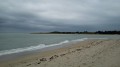
Walk along the old fort to the west and reach Port-Marie beach. At low tide, it stretches far out.
Continue along the path that skirts the beach to the north.
Head for Pointe de Bretagne, sticking to the coastline rather than cutting across the numerous tracks. To do this, always take the paths on the left at the forks. However, the thick scrub of broom and other thorny plants sometimes prevents you from getting too close to the shore here. Leave the monument on your right and continue along the path on the western shore of the island. Keep the imposing Château-Renault building in your sights.
(2) Walk along the sea side of the château, leaving its granite-carved swimming pool on your right and passing by Port Homard beach, which faces south-west. Then head north to reach Grande Grève beach, which faces west, where fishing boats used to run aground for hull maintenance, depending on the direction of the winds.
Walk along the beach towards the northern tip of the island, which you can quickly reach by passing to the left of the large house. At low tide, you can even reach Île de la Genêtaie from the beach. Take the same path back and, before crossing the beach, take the left fork towards Gros Mont.
(3) At the summit stands the island's old semaphore, built in 1867. You can walk freely across the summit plateau, but there is no easy way to get back down to the eastern shore other than by the same path you took on the way up. So take this path and head for the eastern side of the Grande Grève.
Note: in October 2025, a chain blocked the path to the semaphore and a sign explained that the summit plateau was closed to pedestrians to prevent erosion. Please do not cross this barrier!
(4) This cove is known as Havre de Gros-Mont (also called Anse à Gruel or Anse à la Truelle); here lie the skeletal hulls of a few trawlers that ended their long careers here. To the north-east of the cove, you can take a detour to the old ruined station where wagons filled with granite from the quarries were mechanically lifted onto boats bound for the mainland, and the equally ruined Renault garage (the same as the castle).
Head to the southern end of the harbour and take a path due east that goes around the north side of a large house, right at the high-water mark. Continue around this other cove, which is littered with rocks, and cross the dyke that blocks the south-eastern end.
(5) This will take you to the village of Les Blainvillais. Here you will find numerous fishermen's houses (or old houses), the old farm and a holiday centre. The pretty cove of Les Blanvillais opens onto the Sound; the site is picturesque. You can make a detour to the north-east slipway that leads into the channel and even walk along it at low tide.
(6) Continue the loop, making sure to visit the island's chapel and its small dolmen, which was uncovered about twenty years ago by Abbé Delaby, the last priest to reside on the island. A little further on, on the right, on a large lawn, walk around the typical, well-restored houses. After this pleasant tour, return to the starting point of the route (S/E).



 Visorando Member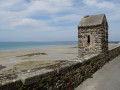

 Moderate
 Association / Club / Walk leader