Refine your search for walks in Préval
Préval walks
The sunken lanes of Préval
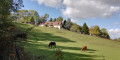
Discover this peaceful village, its countryside and its hedgerows by following its sunken lanes, which offer beautiful panoramic views of the Même valley and the hills of the Perche.
Village of Gemages at the start of the Chêne Vert
A hike through woods, sunken paths and hills that will introduce you to the Même valley, a panoramic view of Saint-Germain-de-la-Coudre and the church of Gemages. Along the way, you will admire the charming village of L'Hermitière, its castle and its church perched proudly on a hill.
Panoramic view over the Téné meadow.
This route offers panoramic views of the Huisne valley on the outskirts of Nogent-le-Rotrou.
The Chéronne stream
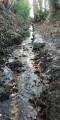
The route through the countryside around Tuffé takes us to the Château de Chéronne and the church of Saint-Denis-des-Coudrais. The Chéronne, which feeds the Tuffé lake, crosses and recrosses the sunken paths several times.
This route is best enjoyed in good weather as the dirt tracks can be quite wet.
The spur at Bellême
Discover Bellême, a Petite Cité de Caractère® (Small Town of Character), on this tour that highlights its rich heritage. Bellême charms visitors with its unique architecture, where the harmony between limestone and ochre and pink sand plaster, typical of Perche-style buildings, gives this town its incomparable charm.
Étang de la Herse lake at the start of Bellême
A lovely walk in the beautiful Bellême national forest, where you can admire the Étang de la Herse lake and its fountain.
Les Terres Douces
The "Terres Douces" countryside reveals a heritage full of charm: the former Priory of Les Châtaigniers and the Manoir de la Guillerie.
The ore route in Vibraye
Rated as easy, this hike crosses the Vibraye Forest. To make it a circular route, allow about 3 hours and do not leave the marked trail, which is public. Unlike the forest, which is private, the route is marked with round signs 10 cm in diameter reminiscent of the work of the forge. You are in the Haut Maine region. In the Middle Ages, this region was home to a significant metallurgical industry, made possible by the presence of iron ore, extracted from flint clay and quartz sand, as well as the large quantities of wood needed for the forges. The forest was managed by cutting down coppice wood every 18 years to renew the resource. The dominant species is oak, but the forest also consists of aspens, birches, chestnuts and pines. This pleasant route describes a craft activity through the display boards scattered around the former mining sites.
The Étang des Panses
The Étang des Panses lake can be seen along a path where it is not uncommon to encounter forest animals. After the forest, you will discover Percheron fruit trees at the Miermaigne conservation orchard; in mid-November, you can take part in the Apple Festival.
Circular in the Réno Valdieu forest
A lovely walk, mostly on good paths, which allows you to visit a magnificent forest, admire a few ponds and pass by some religious buildings. The only difficulty is the length.
Lutin route
This route owes its name to the shape of its route, which evokes the silhouette of a leprechaun for dreamers. It offers a path between Jalais, a bocage plain on the Soulitré side, and the Huisne valley.
From Moutiers-au-Perche to La Ferté-Vidame
This hike is the third stage of an eight-day, 200 km route, the Tour des Collines du Perche.The route leaves the beautiful village of Moutiers-au-Perche, above the church, and immediately enters the woods. It then passes through a beautiful valley and a long stretch of forest before reaching the grain-growing plains of the Eure valley. It then reaches the woods of Neuilly and the forest of La Ferté-Vidame, which it crosses to reach the small town of La Ferté-Vidame.
Yvré-l'Évêque route and its "Nature Boulevard"
During this hike, you will have the opportunity to admire the Yvré countryside, its Roman bridge, the Gérence fountain and catch a glimpse of the beautiful Château de Vaux as you walk along the trails and part of the "Boulevard Nature".
Circular of the ponds starting from Perruchet
Although many birds can be found here despite global warming, parakeets have not yet colonised the site! Discover these ponds, an integral part of the Perche landscape. Although medium-sized (20 hectares), they constitute a wetland of great importance. Starting from the hamlet of Perruchet between the ponds, the route offers beautiful views of the lakes from the small road overlooking the valley. A road, believed to be Roman, the Chemin de Jules César, approaches the Étang de Perruchet. Leave it to go around it to the south. The route then leads to the Touraille farm and returns via Haut Coudray and the heights of the Teillière Pond, where an information board provides a better understanding of these landscapes between Beauce and Perche.
The medieval paths of Sargé-lès-le-Mans
Walk along the sunken paths on the outskirts of Le Mans.
Saint-Éliph circular: Be open to Vaufermé
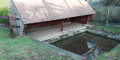
This circular loop takes you along the most beautiful paths in the commune, but returns via roads. Don't hesitate to take this route, as the beautiful site of the Saint-Éliph wash house with its picnic area, the pretty hamlet of Vaufermé, the sunken path leading up to La Haisonnière, and the views of the Perruchet and Théllière ponds, a protected bird sanctuary, make for a varied and enjoyable walk.
Touraille circular starting from Saint-Éliph
This route, starting from the wash house in Saint-Éliph, allows you to discover the two aspects of the countryside around the village. It passes through Auberdière and Grande Cour, then Petite Butte and follows Chemin de César to Touraille through a landscape of meadows and hedgerows typical of the Perche region. It returns to Saint-Eliph along roads and paths on the plain, the first signs of the Beauce region. With many quiet, small tarmac roads, it is recommended as a winter route when the nearby forest paths become difficult.
The green lung of the Arch
With 350 hectares of forest, 60% of which is made up of conifers such as maritime pines and Scots pines, this trail located at the Arche de la Nature offers hikers a breath of fresh air.
Circular La Loupe, La Trinité without Trinitrine
Don't worry, no strenuous effort is required to complete this circular around La Loupe, linking the three parishes formerly known as "La Trinité des Bois": La Loupe, Vaupillon and Saint-Eliph. And if your heart races, it can only be from the emotion of remembering the terrible bombing that the town suffered on 17 June 1944. You will pass through woods and fields near the three churches of the former parish. If you want to see them more closely, you will need to make a small detour to reach them. Two of them are often closed and can only be visited on rare occasions. You could also visit the Gros Chêne de Meaucé (the big oak tree of Meaucé). It is a venerable old tree that has many stories to tell before reaching the end of its long life. After walking along the Étang du Gallou (Gallou Pond), you will arrive at the château, where a museum has been set up to commemorate the tragedy of 1944. Be sure to visit it.
Circular nature trail around Lignières-la-Carelle
This beautiful walk is accessible to all and can be enjoyed with the family. You will be enchanted by its natural beauty as you follow the paths through the commune (90% dirt tracks and 10% tarmac). You can admire the Manoir de la Juisselerie and many other points of interest. It is not uncommon to encounter squirrels, foxes, deer and other animals.
Best done between April and October as it gets wet when it rains heavily.
Within the Cité Plantagenêt, protected by its walls
Since 2003, the "Old Mans" has been called "Cité Plantagenêt" after the Plantagenêt dynasty, the English royal family originally from Le Mans. The former provincial capital of Maine and Perche (from the 16th century to the Revolution), this stroll through the streets and alleys of Le Mans' historic district offers a pleasant walk in the natural setting of famous swashbuckling films (Cyrano de Bergerac, Le Bossu, The Man in the Iron Mask, Nicolas Le Floch, etc.).
No hills or mountains in Montécot
In fact, here you will only find a few undulations caused by the streams flowing towards the nearby Eure. This small 637-hectare national forest is surrounded by a bridle path and criss-crossed by straight paths. The D103 crosses it from east to west and is not very busy. A high-voltage power line divides the forest. Parallel to the D103, it overlooks a large clearing and is bordered by a well-maintained path. A long north-south lane, formerly part of the GR®35 hiking trail, marks the boundary of the private woods to the west. Finally, the Merise forest road connects the D920 to the D103: closed to cars from Rond de la Félicité to Rond de Diane.This network of paths allows you to combine numerous circular paths or take shortcuts. Just make sure you don't leave the state-owned forest, which is bordered by an embankment. Private woods are located all around. These woods are rich in game, and large animals are shot there, so it is wise not to venture in on hunting days!
Circular starting from Mare de l'Augerie
At the edge of the Montécot Forest, this circular route takes you past pretty little farms connected by winding roads. The bridle path on the western edge of the forest offers beautiful views of the countryside towards La Loupe.
Manou, from Chemin du Moulin à Vent to Saint-Pierre de Cernières.
This circuit begins in the heart of the Senonches Forest on wide, easy-to-ride paths, starting from the Rond de Condé, followed by a passage through La Ferté-Vidame and its rich historical past.Don't miss Moussonvilliers and its washerwomen at work at the Ruisseau de Grenouille wash house.Afterwards, cross various waterways, each one different from the other, including the Rivière de Saint-Maurice, the Avre, the Iton, the Risle, the Cauche and the Sommaire, the most difficult to cross.
Tour of the Bois de la Ferrière
A forest hike starting from the Perche Water Park in Fontaine-Simon. The path leads into the Senonches State Forest after following the edge of the lake. A picturesque trail along the old railway line, a long forest line and then a path that descends into the Tourbière des Froux lead to this protected natural site, home to rare plant and animal species. Passing through hamlets and ponds, you return to La Ferrière, the site of former iron ore mining.
The Senonchoises "Alps"
There is so little relief in the Senonches Forest! So, with a lot of imagination and a little humour, let's have fun transforming this walk through the slight relief caused by a geological fault in the south of the forest into an alpine trail: the 90D!The trail starts, as it should, at the bottom of the "valley", on the banks of the Eure, at the edge of the "lake" of Fontaine-Simon. During the ascent, without ropes or ice axes of course, towards the Fontaine aux Liards at an altitude of 249 m, we will have to cross miniature "torrents", pass through tiny "passes" and follow a ridge path along a "vertiginous ravine"... railway. Then, after a descent into a "deep" valley, you will have to climb the Route de La Ferrière to finally tumble down towards La Billette, where you will begin to see the water ski lift installed on the pond, like a ski lift. If this description doesn't convince you, rest assured that you will at least enjoy a beautiful walk in the forest!
Where does this lead us? To Manou!
A pleasant circular, partly through the forest and partly across fields, ideal for a late morning walk, lunch in Manou or at the Moulin à Vent, and a return in the afternoon with a visit to the Froux peat bog.Departure from the Senonches national forest, from the Bois des Dames, formerly owned by the nuns of the neighbouring Belhomert Abbey. At the entrance to Manou, view of the castle known as Blanche de Castille. Garden near the church and the "Bon'Eure" pond in Manou, a pleasant place to relax and have a picnic.Cross the Froux bog site, developed by the Conservatoire des Espaces Naturels (Conservatory of Natural Areas) to showcase rare and protected animal and plant species.Return via the Forestiers pond, which is ideal for observing animals coming to drink in the evening.
The Bresolettes clearing
A trail in the heart of the Perche Regional Nature Park, in the Bresolettes Forest Glade Regional Nature Reserve.
The Chemin du Maupas
This short loop in the Senonches State Forest starts at the Grand Rond, a magnificent star-shaped crossroads of forest paths, and first follows a long forest path that leads to the Rond des Hussards. A path then winds its way between the national forest and private woods. After passing through the Rond de la Rachée, the circuit passes at the foot of the Chêne d'Hérissé, the only tree to survive the 1999 storm in this area. Shortly before the end, the Hêtre du Haut Cornet stands a few metres from the path.
No calves at the Château des Vaux
No, it was not calves, devotees or a certain Mr Desvaux, who once owned the property, but three valleys that gave the estate its name. However, there are many horses. Purchased in 1805 by the Marquis d'Aligre, whose family lived in the nearby Château de la Rivière, it became a renowned hunting destination where horses reigned supreme and were housed in sumptuous stables. Even today, horses still graze in the surrounding meadows.In front of the château, the statue ofthe 1,000th stag served by the Marquis's hunting parties bears witness to the abundance of game in these 120 hectares of woodland. Since 1946, the Fondation des Apprentis d'Auteuil, which owns the estate, has established a renowned vocational school there, which welcomes nearly 1,250 students.This circular starting from Saint-Maurice-Saint-Germain allows you to discover the site and the Eure valley. You can extend the walk by following the GRP® to the Boizard locks and the Château de la Rivière.
The strange trees of the Senonches forest
This entirely forest-based circuit takes you past several strange trees, unexplained natural curiosities. It runs alongside the Biquet valley, a favourite walking route for the people of Senon. After reaching the Froux peat bog, a natural site of great ecological richness, it passes close to the romantic Forestiers pond nestled in the heart of the forest. This is an ideal spot for observing the animals that come here to drink in the evening.
From the Senonches forest to the Boizard locks
A beautiful hike, mostly in the woods around the Eure valley, starting from the Senonches State Forest and ending at the Boizard locks. Built in 1785 by Louis XIV's engineers, this structure was supposed to be the starting point of an unfinished aqueduct that would have carried water from the Eure to the fountains in the park of the Palace of Versailles. On the way back, discover the Château des Vaux and its gardens.
Segrais Castle route
The route runs across agricultural land south of the Rhonne valley and ends by crossing an area of moorland adjacent to the Bercé Forest.
From frescoes to escapades in La Ferté-Vidame
On this largely forest-based tour, discover the Chapelle de Réveillon and its frescoes, then the site of La Ferté-Vidame where Saint-Simon, the famous chronicler of the court of Versailles, wrote his memoirs, recounting the escapades of his time. Near his "favourite residence" in the Church of Saint-Nicolas, he had wanted to rest alongside his beloved wife. The revolutionaries decided otherwise and desecrated the tomb, scattering the remains and putting an end to their desire to be together forever, their coffins "bound so closely that no one could separate them". A beautiful love story, already romantic at a time when marriages were rather conventional.
Paradoxically, the wealthy Marquis de Laborde built a sumptuous palace on the site of the demolished medieval castle, where he wanted to invite the elite of his time and resume the escapades that the Duke had so strongly condemned. The Revolution passed and the Marquis, once so powerful, lost his property and his head!
Water seeps at Les Ressuintes
This very wet area drains water from the Senonches Forest. There are numerous streams and ponds. The route starts by following the Meuvette valley. The stream originates in the nearby private woods and flows through the Haron and Rouge ponds.After passing through a cultivated area, the return journey is along small roads. This walk is best done in winter, when the nearby forest paths are difficult to navigate.The commune is backed by private woods and bordered to the west by the walls of the park of the former château of the Marquis de La Borde, which became the Citroën Test Centre in the 20th century.Between the park and the forest, old farmhouses have been converted into attractive second homes, well maintained and decorated with flowers in summer. The village has a church which, since the 12th century, has undergone many vicissitudes.At the rear, the communal wash house has been restored, and a public space welcomes walkers who wish to take a moment's rest.
From La Ferté-Vidame to Tourouvre
This hike is the fourth stage of an eight-day, 220 km circuit, the Tour des Collines du Perche.
Thisfourth stage takes us along part of the northern edge of the Grand Perche with its large forests, which have changed very little since medieval times.
From La Ferté-Vidame to Senonches
For this second stage, fromthe town hall in La Ferté-Vidame, the route leads to the park entrance. After visiting the part open to the public, you unfortunately have to follow the wall of the former Citroën test centre. It was the birthplace of the "deux chevaux", the "traction avant" and many other models. Enclosed by this 13 km wall, it is impossible to cross, so you have to follow the D941 and D15.The route then crosses an area of farmland and copses. It passes by some pretty, well-restored houses. At La Pommarié, it finally reaches the woods. The Allée du Maupas leads to the Senonches State Forest, which you will follow for a long time. We pass at the foot of two remarkable majestic trees to reach the Grand Rond, a majestic star-shaped crossroads. After the village of Tardais, the route returns to the forest and leads to the entrance to Senonches. It crosses the town via the recently renovated and flower-filled main street.
La Ferté-Vidame - Senonches
The second stage of this journey through Vlaminck country will take us from La Ferté-Vidame to Senonches via La Puisaye. After crossing an agricultural plain, the path takes us into the woods of La Saucelle, then into the Senonches State Forest. We will pass through Tardais, a small village where the painter often came to hunt with his friend Michel Erlisch, the village mayor, and where he painted a picture of the church as seen from the town hall. We will finally arrive in Senonches, a small town of character where he often went to enjoy joyful and hearty feasts with friends.
Senonches - La Loupe
This last stage of our journey through the Vlaminck region takes us from Senonches to La Loupe. Initially mainly wooded, the route then crosses the Eure valley, passing close to the Fontaine-Simon water park, where you can stop for refreshments. La Loupe station provides a quick return to Paris-Montparnasse.
The venerable trees of the Senonches forest
The ancients revered old trees. Like them, pay homage to the "elders" of the forest. After skirting Lake Arthur Rémy, then the Vente des Trous iron ore extraction site, this circuit will take you, via secret paths and long avenues, to the seniors of the forest.First, wish the Three Brothers a happy340th birthday. Younger, but just as sturdy, seven sequoias and a cedar have been watching over the Rond de Monsieur for over a century. After passing through this imposing circle, visit the King of the Forest, who is said to sometimes sit on the gigantic throne of the Chêne Fauteuil. Finally, don't forget to say hello to the chestnut tree at the Rond de Condé.Take the time to enjoy the peace and quiet of the woods by stopping at the rest areas you'll find along the way. At "L'Orée du Bois" (The Edge of the Woods), learn to use your five senses to better experience the forest. Complete your knowledge by discovering a "Forest of Stories" at the château.
In Senonches, I go to Les Evés!
The name "Les Evés" refers, locally, to places where water is abundant. This water, which is everywhere, is particularly present in this "district" of the forest, south of the village. It is carried by gutters and streams from the forest to the ponds and wash houses. This short route takes you on a tour of places where water has been collected over the years, not far from the town, to be regulated and used for the activities of the Senonchois.After inspiring dreams of a spa resort in 1936-37, the water has nevertheless contributed to the town's development as a tourist destination. Successive municipal councils have worked to develop what was once a marshy area, which has now become a tourist complex with sports and leisure facilities, ideally located near the new La Loge des Bois secondary school.
A weekend with the Duke of Saint-Simon
What if you were invited by the Duke of Saint-Simon, famous chronicler of the Court of Versailles, to celebrate his350th birthday in La Ferté-Vidame?
Imagine being able to accept this unlikely invitation and spending a weekend on this two-stage loop that will take you from Senonches, through forests and farmland, to his "favourite residence".
Since 1975, the Saint-Simon Prize has been awarded every September to a contemporary memoirist during the book festival. In 2025, it will be the50th edition and we will celebrate the 350th anniversary of the duke, who was born in 1675.
Set off to explore his estate and the "Petites Cités de Caractère" (small towns of character) of Senonches and La Ferté-Vidame along long forest paths, ponds and country lanes.
If you are unable to meet the duke and his beloved wife, the Maison Saint-Simon will tell you about his life and work. Visit the romantic ruins of the castle built by the Marquis de Laborde shortly before the Revolution in the park.
From Senonches to La Ferté-Vidame
This first stage connects Senonches to La Ferté Vidame. Through the national forest, the route takes you to the village of La Framboisière, the Château de la Hézière, near which there was once a glassworks, and, via a long forest road, leads to La Puisaye. After skirting the Étang de Rouge, the path crosses farmland and arrives at La Ferté-Vidame, the stronghold of the Duke of Saint-Simon, famous chronicler of the court of Versailles. At the entrance to the park, in the Pavillon Saint-Dominique, home to the tourist office, the Maison Saint-Simon presents his life and work. A walk in the park allows you to contemplate the vast views, the ponds and the ruins of the castle of the Marquis de la Borde, which replaced the medieval fortress, the "favourite residence" of the memoirist, in the 18th century. Recently restored, the "little castle" once belonged to King Louis-Philippe, benefactor of the village. The classical-style Saint-Nicolas Church contains the tomb of the duke and his wife.
Wash houses, springs and streams around Senonches
The name Senonches comes from the Latin Senunchia: land with marshy waterways. In fact, the area was once covered with ponds and waterways, making it a vast marshland.This circular allows you to discover the many places where water springs up and flows around the town. It is built on wet land that has had to be drained over the years by capturing springs, installing drainage systems and digging streams to carry water to the ponds that now give the town its charm. Along these streams, numerous wash houses were established at the end of the 19th century and still bear witness to the hard work of women at that time.Follow this route, which stays within the urban area but also sometimes passes along the edge of the woods.
Tour des canards in Senonches
In Senonches, starting from the Jacques-Yves Cousteau School, there is a short circuit designed for families, leading from the Moinerie housing estate or the HLM social housing complex to the Arthur Rémy pond. Here you will find a whole happy flock of waterfowl, games for the little ones and picnic tables for the grown-ups. You can fish or follow a fitness trail. Crossing the town centre, you will pass by the main points of interest: the listed cinema, Town Hall, media library, castle museum and church.
Around Tardais
Allow a day to complete this route and visit Senonches. As it is easier to find shelter in town for lunch in winter or in case of bad weather, this route suggests setting off from Tardais in the morning, heading towards Senonches where you can picnic or eat in a restaurant, and, after visiting the town and the castle, returning to Tardais at the end of the afternoon. The route takes you around Tardais and connects it to Senonches. It is varied, passing between the castle and the lake, crossing the forest, taking you through the recently developed town centre and leading to Lake Arthur Rémy. After passing by the castle and the church, it returns across fields and through the forest again. It follows the edge of the village. Here you will find the magnificent Tardais Beech, a remarkable listed tree. At 185 years old, it is suffering, like all the beech trees in the forest, from global warming, which will cause them to disappear in the short term. So don't delay in going to see it.
Tour du Gué au Chéron in the Senonches forest
Le Gué au Chéron is a district of the Senonches National Forest. This tour starts in Tardais and leads through fields into the forest. It follows the edge of the forest, passing in front of the majestic Chêne de la Framboisière oak tree. After crossing the old La Loupe-Verneuil railway line, the trail follows the Gervaine, a stream that was canalised in the 18th century to float timber down the Avre and Seine rivers to Rouen.The trail then runs alongside the Étang de la Bénette, managed by the Conservatoire des Espaces Naturels, which preserves its exceptional flora and fauna. A long forest line crosses the Rond de Sauveloup, then joins the small road from Tardais to Laudigerie. It takes you past the lake and the Château de Tardais before reaching this picturesque village with its wash house, small church and tiny town hall. Vlaminck stayed here frequently and immortalised this view of "the road" in winter under the snow from the town hall to the church in one of his paintings.
Short circular loop around Lamblore via the Chemin du Mortripié
Starting from Lamblore Town Hall, this circular leads to La Ferté-Vidame, where you will find reminders of historical figures: The Dukes of Saint-Simon, the father, who after acquiring the estate had the parish church built, and the son, the famous memoirist, the Marquis de Laborde, who had a sumptuous palace built, the romantic ruins of which still remain, and laid out a huge park. King Louis-Philippe wanted to restore this building, which had been dismantled after the Revolution, to its former glory, but he was only able to build the "Petit Château" (small castle)...A detailed tour of the village and park is a must. The return journey takes you past the former Citroën test centre, a mecca for the automotive industry. This is where the most famous models of the chevron brand were developed: the Traction Avant, the 2CV, the DS, the Ami 6, the SM... After passing the Champ-Brulé equestrian centre, the route returns to the village via the beautiful Chemin du Mortripié, which has been reopened by the local council.
Les Framboisiers de la Framboisière
No raspberries in sight: for now, but where have all the raspberry bushes from La Framboisière gone?The name of the village is more likely to come from Bois Francs, meaning woods free of rights.But patience: the new Raspberry Festival will take place in June 2024. Plantings are planned and the shrub should be given pride of place.Take a short tour to discover the crops and the edge of the Senonches State Forest and the village. Pass by the majestic Chêne de la Framboisière oak tree. Memories of an old railway line.
The Champs Élysées of the Perche
This short loop in the Bois de la Saucelle, near Puisaye, is mainly woodland. It confirms the toponymic meaning of the name Puisaye, which refers to a wetland area. Through private woods, the circuit follows wide avenues, including the Ligne Jacob, whose length, width and majesty could justify the mischievously pretentious name of "Champs Élysées du Perche". However, don't expect to find shops and noisy café terraces here. All you will hear is birdsong. Enjoy the peace and quiet of this unspoilt, authentic natural environment, exploring it on tiptoe so as not to disturb the many animals that you are sure to glimpse if you are discreet.Avoid this route on hunting days. Danger!
Circular des Templiers à la Saucelle
On the edge of the Senonches Forest, north of Perche, La Saucelle is a real crossroads between different historical and natural sites. On this short route, come and discover what the Knights Templar brought to the village. It was here, in La Saucelle, that they first settled in the Drouais region, and even in Eure-et-Loir. This settlement, in 1165, was made possible thanks to donations from local lords. These were largely plots of land in the Carnutes Forest. The Knights Templar cleared these plots and all those that followed, creating the vast plain that surrounds the village.
Mesnil-Thomas circular: the lovers' path
A circular loop between the village and the Senonches National Forest, passing through fields and copses. It goes through small hamlets with pretty farmhouses decorated with flowers in summer. After La Motte and La Petite Motte, places reminiscent of the ancient line of defence established between France and Normandy, the route becomes more romantic, crossing the Bois du Rouvray via a path which, it is said, was a meeting place for young lovers from the village. There weren't many other places nearby where they could meet discreetly!
The Blaise flows through Louvilliers, if you don't mind!
Let's go in search of the Blaise, a mischievous little river that hides so well from its source that geographers are perplexed. According to the elders, it originates near the Rond des Louvetiers, between Tardais and the Étang de la Bénette. Recent maps show it near the Grand Rond. In fact, these are "gouttiers", episodic streams that flow towards and cross the Tardais pond. It emerges under the dyke where a mill once operated, but suddenly disappears, sinking into a "chasm". It sometimes reappears.
At the edge of the forest, the Ruisseau de Saint-Cyr joins it. Together, the two waterways pass at the foot of Louvilliers-lès-Perche, flowing sometimes on the surface, sometimes underground. The Blaise reappears definitively in the Étang de Dampierre. In the past, it enabled the establishment of a very important steel complex. It then flows towards Dreux, which it crosses, before joining the Eure at Fermaincourt.