Country:
 City:
City:


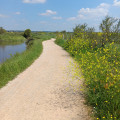
Parking at Menhir de la Conche Verte, along the RD80 between Brem-sur-Mer and Olonne-sur-Mer.
(S/E) Head into the forest towards the menhir. Cut across the first forest path and continue, leaving the megalith on your left.
(1) At the next crossroads, turn right to climb the dune and rejoin the forest lane you crossed earlier. Turn left. This lane winds its way through the dunes, cutting across them at the shortest point. After the first bump, take the track that crosses it at right angles on the right. Follow this path until you reach Chemin de la Chesnaye. Turn right and follow the path
(2) Pass under the RD80 road to the south of Sainte-Émilienne. Return to the left for about 100 metres, then turn right onto the small road that leads towards the marshes.
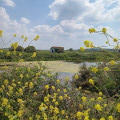
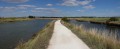
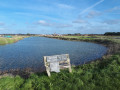
(3) Once past the last trees, the landscape opens up onto a canvas of ponds and dykes. The path continues through this landscape where nothing catches the eye except the groups of birds that find refuge there. The bell towers of Brem, the Ile d'Olonne and Olonne mark the edge of the marshes, while two groups of wind turbines beat the air on either side of the Auzance.
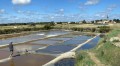
Follow the path between the ponds until you reach the Vertonne. This small coastal river criss-crosses the marshes from south to north before joining the Atlantic Ocean to the north of the Forest of Olonne. It is unique in that it is also connected to the old salt marshes of Olonne by an artificial canal. This waterway flows into the inner harbour of Les Sables d'Olonne.
Walk along the riverbank for about a hundred metres, then turn right to join the path that leads to the Pont de la Salaire.
(4) At the crossroads, a gate worthy of a large property stands in the middle of nowhere. This incongruity is a good landmark but leaves one wondering about the need some people feel to mark their territory!
Turn right onto the path that leads into the marsh. The further you go, the less well-maintained the path becomes. Although the trail is clearly visible and difficult to lose, the condition of the path quickly becomes tricky when it is wet and has been used. You will be reminded that the dykes are made of clay, so bring a stick to help you negotiate the most difficult sections.
(5) A small bridge allows you to cross a stream. The path branches off to the left, then to the right shortly afterwards. After 500 metres, it joins a stony path which you take to the left. Follow it to reach the edge of the forest.
(6) At the foot of the dune and the first trees, turn right and follow the path to the edge of the Grenouillère. As soon as possible, join the RD80, cross it, and return along this road for about 200m to find the car park and the Chemin de la Grand-Pointe (take care along this coastal road, which can be very busy in summer).
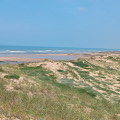
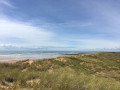
(7) Enter the forest and follow the main path for 1.5 km. It winds through a very diverse forest with many holm oaks before emerging onto the grey dune. A few more metres and you will reach the last coastal dunes and the immensity of the sea is yours.
(8) Remains of the Atlantic Wall welcome you as you descend to the beach. These are some of the remains of the fortifications that blocked the French coastline from Allied troops. Although the remaining bunkers are now on the beach, it should not be forgotten that they were built well back from the top of the dunes and that it is marine erosion that has brought them within reach of the water.
Follow the beach or the path at the top of the dunes, heading north for about 500 metres, until you reach the next beach access point.
For information, naturism is tolerated on this part of the beach. It's up to you whether you want to enjoy a swim in your birthday suit or avoid the area.
(9) When you reach Chemin du Menhir, turn right to return to the forest. Keep following the most direct path to return to the car park, shortly after crossing theGR® 8 (red and white markings) (S/E).



 Visorando Member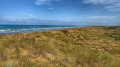

 Moderate