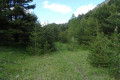
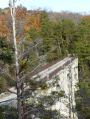
The Buzon Viaduct and the Gap Canal, starting from Les Jaussauds

A lovely walk along the Gap balconies. From the Lac des Jaussauds picnic area, the route descends along the route of the old (and never completed) Gap–La Mure railway line, including a crossing of the Buzon viaduct, recently converted into a cycle route.
It then climbs back up to the Réserve des Manes, passes the Peyre Ossel boulder, and follows the Canal de Gap to the Réserve Georges Serres, offering beautiful panoramic views of the Gap region.

Details

91999629
Creation:
Last update:
Last review:
  • Walking
    Activity: Walking
  • ↔
    Distance: 8.53 km
  • ◔
    Average duration: 2h 55 
  • ▲
    Difficulty: Easy

  • ⚐
    Back to start: Yes
  • ↗
    Ascent: + 154 m
  • ↘
    Descent: - 159 m

  • ▲
    Highest point: 1,147 m
  • ▼
    Lowest point: 1,000 m
  • ⚐ Country: France
  • ⚐
    Areas: Alps, Dauphiné
  • ⚐ City: Gap (05000)
  • ⚑
    Start/End: N 44.602082° / E 6.118709°
  • ❏
    IGN map(s): Ref. 3338ET, 3437OT, 3437OTR
  • Hour-by-hour weather

Photos

Description of the walk

Take the N85 road on leaving Gap towards Col Bayard and Grenoble. At a place called Puymonbeau, turn right onto the D944 towards Ancelle – Saint-Léger (Col de Manse). After about 3 km, and after a second hairpin bend, follow the Route des Jaussauds to the right (small white sign and bus shelter) for 500 m to reach the hamlet.
Park in the small picnic area near the chapel.

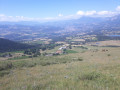
(S/E) Take the dirt track heading south-west (signpost for the Balcons du Gapençais). This follows the route of the old railway line descending towards Gap. The track crosses fields, passes close to the houses of the hamlet of Les Bellons, then continues as a wide path, offering a beautiful view over the Gap basin.
Cross the Buzon Viaduct and continue along the tarmac cycle route, heading south. Follow this shared path to a small bridge, from where a path climbs up to the left.

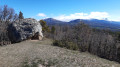
(1) Turn right to cross the small bridge, heading west, ignoring the PR® path that descends opposite. Join the Chemin de Peyre Ossel and follow it for a few dozen metres before taking the path that climbs left into the trees. On the hillside, you’ll reach the Peyre Ossel boulder.

(2) Go round the boulder on the left and continue along the path that crosses the hill. Beautiful panoramic view. Join a track and a signpost.

(3) Turn right towards the Canal de Gap, heading north, and follow the track through the fields to the junction leading to the Peyre Ossel farm.

(4) Take the path opposite, heading north-north-west, to go round the private property and join its access road a little further up.

(5) Turn left to follow the path uphill and reach the D944 road leading to the Col de Manse, at the “Les Mannes” bus stop. Cross the road carefully and continue straight ahead on the small Route des Mannes, heading north-west, until you pass a large left-hand bend, near a house.

(6) Turn right onto a small, inconspicuous path through the hedge, just after the bend, heading north-west. This shortcut leads out onto the road near the Réserves de Manes (fenced off).

(7) Continue right along the road to reach the hamlet and, a little further up, the Canal de Gap (information sign).

(8) Turn right onto the path that follows the canal, heading east. The canal alternates between open sections and sections that run underground.

(9) Continue along the canal, heading north, ignoring the path leading up to the Bayard plateau. Cross the Torrent du Buzon at a hairpin bend, then reach the tarmac road Côte du Ros.

(10) Cross the small road and continue straight ahead along the Canal du Drac. Then cross the Chemin de Bayard road and follow the canal to a large hairpin bend.

(11) Head down the old Col de Manse road to pass under the D944 through a small tunnel, decorated with a modern mural. Continue along the canal, heading east, until you reach the Route des Jaussauds at the hamlet.

(12) Follow the canal path opposite towards the Georges Serres Nature Reserve. Cross the old railway track again before reaching the reservoir.

(13) Turn right to go down the small road by the lake, then right again to return to the hamlet. Return to the small picnic area (S/E).


Waypoints

  1. S/E : km 0 - alt. 1,141 m - Les Jaussauds picnic area - Viaduc du Buzon (Gap)
  2. 1 : km 2.47 - alt. 1,000 m - Bridge over the railway line
  3. 2 : km 2.55 - alt. 1,021 m - Peyre Ossel boulder
  4. 3 : km 2.8 - alt. 1,014 m - Crossroads with farm track
  5. 4 : km 3.09 - alt. 1,028 m - Crossroads – footpath
  6. 5 : km 3.3 - alt. 1,047 m - Junction with the Peyre Ossel path
  7. 6 : km 3.86 - alt. 1,097 m - Shortcut: Route des Manes
  8. 7 : km 4.09 - alt. 1,126 m - Les Manes Reservoir
  9. 8 : km 4.26 - alt. 1,143 m - Signpost and information board - Canal de Gap
  10. 9 : km 4.91 - alt. 1,143 m - Crossroads with the path leading to the Bayard plateau - Buzon (torrent) - Affluent de la Luye
  11. 10 : km 5.92 - alt. 1,143 m - Côte du Ros junction
  12. 11 : km 6.93 - alt. 1,147 m - Oursatas Torrent (Chemin des Trenières) - Oursatas (torrent) - Affluent du torrent du Buzon
  13. 12 : km 7.5 - alt. 1,141 m - Junction with the Route des Jaussauds
  14. 13 : km 8.08 - alt. 1,144 m - Georges Serres Reserve (Jaussauds Reserve)
  15. S/E : km 8.53 - alt. 1,141 m - Les Jaussauds picnic area - Canal de Gap

Notes

Picnic area in the hamlet of Les Jaussauds, next to the chapel: drinking fountain, picnic table and information board.

The route is partly shaded and presents no particular difficulty. The paths are wide and pleasant, with a few sections through woodland but nothing technical.

Longer alternative route: from Gap: possible start at the junction of Rue Villarobert and Rue du Béal, or from the hamlet of Parassac (Chemin de Hauteville roundabout).

Worth a visit

The Gap Canal (or Drac Canal) draws water from the Drac in the Haut-Champsaur and carries it to the Gap basin, where it is mainly used to supply drinking water to the town of Gap. Each year, around 2,200,000 of water is supplied for human consumption.
Water transfers from the Drac basin to that of the Durance have a long history and address the water shortage in the Gap basin. As early as the 15th century, the royal authorities authorised the diversion of certain streams; yet, the water needs of the Gap basin remained critical. It was not until 1863 that Mr Garnier, the department’s MP, stepped in as concessionaire and launched the works—in which he would invest his entire fortune. As contractors went bankrupt one after another, the State (Ministry of Public Works) took over the project in 1873. According to the authorities, the total cost is said to have reached 10,000,000 francs, or approximately 2 billion euros. Today, this canal supplies drinking water to over 40,000 residents and also enables the generation of around 8,000,000 kW of electricity per year.

The Georges Serre reservoir, known as ‘des Jaussauds’, is situated in the hamlet of the same name. It is fed by the waters of the Drac (Champsaur) at the exit of the Col de Manse tunnel, at an altitude of around 1,140 metres, on a level stretch of land. The original topography corresponds to a former marshy basin in morainic terrain, resting on a substrate of Jurassic black marl. It was constructed following four years of studies and after a procedure declaring it to be in the public interest “on 15 June 1961”. It was first filled with water in 1963.
The structure consists of a compacted earth dam, approximately 450 metres long. Its height at the highest point is around 12 metres. The dam is of a homogeneous type, with a downstream abutment made of draining materials in the area of greatest height.
This reservoir supplies drinking water to Gap (3,700,000 m³/year) with a reserve capacity of 20 to 30 days, provides irrigation (1,100,000 m³/year) and generates electricity once priority uses have been met (turbine operation at Pont Sarrazin).

The Émile Didier reservoir, known as “des Manes”, is familiar to all residents of Gap as it is clearly visible from the A85 on the bends of the Col Bayard. Fed by the Charance canal, this 150,000 reservoir is intended for the irrigation of a 2,246 ha area. However, its current operation is deemed insufficient by users, who are often faced with supply disruptions. This is due to the incomplete nature of the initial project, which envisaged a “Les Manes / La Garde” water link. Every ten years, the reservoir is drained and inspected by authorised experts.

Notre-Dame des Jaussaud is a small rural chapel situated in the heart of the hamlet, right next to the picnic area.

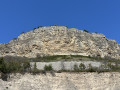
The Buzon viaduct is a civil engineering structure built between 1913 and 1929 for the planned Gap–La Mure railway line (known as the ‘Champsaur line’), which was never put into service. This masonry viaduct, approximately 100 metres long, features five semicircular arches, each with a span of 15 metres. The deck, straight and horizontal, is flanked by narrow pavements and parapets: metal in the centre and masonry at the ends.
Abandoned for decades and even partially blown up – needlessly – during the Second World War, the structure nevertheless survived. Since the 1950s, it has supported the main water supply pipeline for the town of Gap. On the left bank, the absence of embankments led to the construction of a concrete footbridge approximately 20 metres long, extending from the abutment. However, a landslide caused significant rockfall from this abutment, leading to the closure of the viaduct to the public in 2013. Following major consolidation and restoration work, the viaduct was incorporated into the V64 cycle route (Grenoble – Gap – Marseille). It reopened to the public at the end of 2025.

The Peyre Ossel erratic boulder, also known as the “Pierre des oiseaux”, consists of conglomerate sandstone containing quartz pebbles, fragments of rhyolite and ophiolite in shades of red and purple: a Verrucano rock formed during the Permian–Triassic period. This slightly rounded prismatic boulder covers an area of 743 m² and weighs approximately 2,000 tonnes.
The site of the Pierre de Peyre Ossel was listed by the decree of 9 May 1914:“Erratic boulders, of great interest both for their origin and their location, on the edges of high moraines in the vicinity of Gap, are threatened with destruction as a result of the construction of a railway line from La Mure to Gap. The most interesting of all and the most threatened, as it lies barely 200 m from the site of a planned viaduct with a span of 130 m, is situated 3 km from Gap, on the great Bumats moraine and on the right bank of the Buzon torrent. It is a magnificent, slightly rounded prismatic block of quartzite, originating from the Tête de Gaulent, a mountain situated on the border between the districts of Embrun and Briançon”(Extract from a note by the Prefect of the Hautes-Alpes in 1911, addressed to the Under-Secretary of State for Fine Arts).
The archives also mention negotiations with the owner regarding compensation linked to the listing:“the owner of this natural monument, having been approached, is demanding 300 francs to consent to its listing, claiming that the railway contractors would pay him much more.”(Note from the Prefect in 1911).
As the site is listed, it remains open to the public. However, as it is situated on private property and vehicle access is prohibited, it is recommended that visitors walk there and respect the site: do not leave any litter, do not light fires and avoid causing any damage.

The Buzon torrent, a small, deeply incised tributary of the Luye, flows down from the Bayard plateau and is joined by the Oursatas torrent.

Always be cautious and plan ahead when you're outdoors. Visorando and the author of this route cannot be held responsible for any accidents occurring on this route.

The GR® and PR® markings are the intellectual property of the Fédération Française de Randonnée Pédestre.

Reviews and comments

3.7 / 5
Based on 1 review

Reliability of the description
3 / 5
Ease of following the route
4 / 5
Route interest
4 / 5
diggi
diggi

Thank you for your review, MichelJ.
I think the walk along the Gap Canal, from the Manes nature reserve to the Jaussauds nature reserve, is also worthwhile for understanding the vital importance of water (especially given the current climate change).

Machine-translated

MichelJ
MichelJ

Overall rating : 3.7 / 5

Date of your route : Apr 01, 2026
Reliability of the description : ★★★☆☆ Average
Ease of following the route : ★★★★☆ Good
Route interest : ★★★★☆ Good
Very busy route : No

The real highlight of the hike is the Buzon Viaduct and the Peyre Ossel rock formation, along with the history associated with each of these sites.

Machine-translated

Other walks in the area

For more walks, use our search engine .

The GPS track and description are the property of this route's author. Please do not copy them without permission.