Country:

 City:
City:


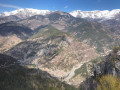
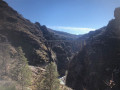
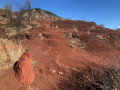
Coming from Daluis via the Route des Grandes Alpes, follow the road and pass the Pont de la Mariée on your right. Go through the tunnel and park 200m further on, on the right. Carefully make your way to the Pont de la Mariée , the starting point where an unnumbered marker is located.
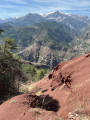
(S/E) Take the staircase, comprising 198 steps. Follow the signs for Pont de Cante. At the top of the steps, stay on the ascending path, which is wine-coloured and very well marked with reddish stones. After about a hundred metres, the path levels out. Continue to the junction at marker 10a. Yellow markings.
(1) Continue straight ahead towards Pont de Cante. Descend into a wooded area. Continue to the next crossroads, where the yellow markings end.
(2) Turn left: a landmark on a tree – a right-angled yellow marker indicating a bend. Follow this magnificent wooded path, which gradually descends and joins the River Cante. Continue to the end of the path, which finishes at the river.
(3) Cross the River Cante and cross it again immediately, so as to get past the bend and find yourself back on the right bank. After this wet section, the little-used path is clearly marked by a few cairns. Continue to the large boulder blocking the river.
(4) Cross the Cante a few metres before the boulder (see photo). Return to the left bank, follow it and, shortly afterwards, walk along the foot of a cliff before reaching a bridge. Here you will find yellow markings.
(5) Leave the bridge on your left and continue straight ahead. Leave the valley and climb for about 400 metres through a beautiful wooded area.At the end of the path, stone walls serve as a reminder of traditional mountain farming. Walk past a hamlet and continue to the tarmac road at the hamlet of Terrassettes. End of the yellow markings.
(6) Follow the ascending tarmac road. At thefirst junction, turn right (signposted ‘La Vigière’), and continue along the road for about fifty metres
(7) Caution here: do not take the track that branches off to the left at a 180° angle. Continue for about 20 metres, leave the road, and head into the field, following the faint tracks as best you can. Use the Visorando app. The path has completely disappeared. Head towards a huge stone cairn visible in the distance. Walk alongside it on the right. Cross the wooded area, then head back into a field towards the Chapelle Saint-Joseph.
(8) Continue due north on the ascending tarmac road to marker 88. Carry on straight ahead along the poorly maintained track. The track disappears; cut across the fields, heading north, to reach a cleared area with a cistern.
(9) Turn right, follow the Roche Trouée signposting, and walk alongside the rest area. Then veer left until you reach the Mont Richarmet crossroads.
(10) Turn right and follow the path leading out of the wooded area. Continue to the summit of Mont Richarmet.
(11) Turn back to return to the previous junction.
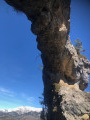
(10) Turn right at a 180° angle. Look out for the final signpost for Roche Trouée. Follow the cairns marking the path to reach Roche Trouée.
(12) Pass under this natural limestone arch, strangely sculpted by erosion, then descend to reach marker 92.
(13) Here, rejoin the yellow markings, turn right towards Sauze-Vieux, and pass marker 91. Cross a large pine forest. Continue to marker 90.
(14) Now follow the signs for Pont des Roberts. Via a series of hairpin bends, reach and pass marker 95, then a track suitable for vehicles.
(15) Take this track to the right for a few metres, then leave it to the left onto the footpath. Continue the descent along this path, which is sometimes paved with a slanting street. Reach the junction at marker 12.
(16) Keep left and continue the descent; after marker 13, you will reach Pont des Roberts, where the yellow markings end.
(17) Cross over and join the D2202; cross it with great care. Take the Route du Tramway opposite. Follow this road, always with care, which is the former route of the tramway closed in 1932. Continue along this road, which also passes through tunnels and ends at the Pont de la Mariée car park (S/E).

 Visorando Member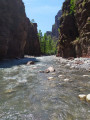

 Very difficult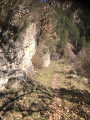
 Difficult
 Easy
Easy