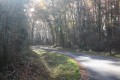
The Bois de Fenis from Villexavier

A pleasant hike around Villexavier through the vineyards and the Bois de Fenis. It is an opportunity to discover peaceful landscapes with varied colours throughout the year and beautiful examples of built heritage. The path on either side of the Maine River enhances the end of the route.

Details

1464726
Creation:
Last update:
Last review:
  • Walking
    Activity: Walking
  • ↔
    Distance: 8.71 km
  • ◔
    Average duration: 2h 35 
  • ▲
    Difficulty: Easy

  • ⚐
    Back to start: Yes
  • ↗
    Ascent: + 32 m
  • ↘
    Descent: - 31 m

  • ▲
    Highest point: 88 m
  • ▼
    Lowest point: 56 m
  • ⚐ Country: France
  • ⚐ District: Villexavier (17500)
  • ⚑
    Start/End: N 45.36987° / W 0.437793°
  • ❏
    IGN map(s): Ref. 1533SB, 1534SB
  • Hour-by-hour weather

Photos

Description of the walk

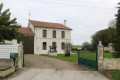
The parking area is located in the Salle des Fêtes car park. Alternatively, you can park opposite the town hall on the main avenue.

(S/E) Take the main avenue of Villexavier on the left. Turn right onto Rue du Chemin des Combes a little further on. This street quickly becomes a path. Continue straight ahead until you reach a T-junction. Then turn right and continue for about 50 metres.

(1) At the next junction, turn left onto Chemin du Frêne. Turn onto the first path on the right and continue until you reach a small road at a place called Chez Mocat. Turn right and then immediately left, then drive straight through the village until you reach a T-junction.

(2) Turn left onto the street, which quickly becomes a path. This path winds a little, then passes by a vineyard on the left before reaching a T-junction. Turn right onto Allée de la Cendronne. Continue until you reach a junction after the locality on the left.

(3) Turn left onto the path that heads north-west along the edge of the Bois de la Bauche. Continue straight ahead until you reach the road at a place called Chez Ménard. When you get there, turn right and carefully follow the road until you reach the second house on the right.

(4) Turn left and continue to the end of the road, passing a house on your right. Turn right onto Allée du Trochon and continue straight ahead on the road that follows. This road soon runs alongside a vineyard on the right-hand side. Continue to the next crossroads.

(5) Turn right to go around the vineyard. Continue straight ahead until you reach a path that leads from the Route de Chalons to a place called Chez Ménanteau. At this point, a second path joins on the left.

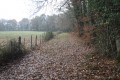
(6) Turn immediately left onto the path and follow it through the Bois de Fenis. Continue until you reach a crossroads. Turn right onto the path that goes around a large clearing to the north before re-entering the woods and then reaching the edge. Go to the next crossroads.

(7) Turn left onto a path that runs along the edge of the Bois de Fénis, then a little further along the edge of a large copse. At this point, the path comes to a crossroads. Turn right towards a place called Chez Guiet and arrive at the corner formed by the Allée de Chez Guiet and the Chemin Bas.

(8) Turn right and continue straight ahead on the small road to a place called La Touche. Cross it, with the houses on your left, and continue to a place called Solférino, which is located on either side of the Jonzac road (D19).

When you get there, cross carefully and continue straight ahead on the road called Chemin du Fis, which crosses the Maine river further on. Shortly afterwards, the route comes to a T-junction.

(9) Turn left and immediately enter a small wood. Continue along the path until it joins the D154 road. Turn left and follow the road to the nearby junction with the D19 road (Jonzac road).

Cross the D19 with caution and continue straight ahead on the D154 until the next crossroads. Turn right onto the main avenue and cross the village. At the end of the village, the route arrives at the car park on the right (S/E).

Waypoints

  1. S/E : km 0 - alt. 64 m - Car park at the village hall
  2. 1 : km 0.39 - alt. 71 m - Chemin du Frêne
  3. 2 : km 1.14 - alt. 78 m - T-junction
  4. 3 : km 1.99 - alt. 68 m - Crossroads - Cendronne (cours d'eau) - Affluent du Maine
  5. 4 : km 2.73 - alt. 80 m - Chez Ménard
  6. 5 : km 3.71 - alt. 85 m - Crossroads
  7. 6 : km 4.36 - alt. 88 m - Triple junction
  8. 7 : km 5.53 - alt. 73 m - T-junction
  9. 8 : km 6.33 - alt. 81 m - Chez Guiet
  10. 9 : km 7.38 - alt. 57 m - Crossroads of roads and a path after the - Rochette (cours d'eau) - Affluent de la Seugne
  11. S/E : km 8.71 - alt. 64 m - Car park at the village hall

Notes

This hike covers varied terrain and requires sturdy footwear.

This hike is not marked. It is therefore advisable to follow the directions in the description and on the map, while also paying close attention to the landscape. The waypoints (with their GPS coordinates and distance from the starting point) are helpful for hikers who are new to the route.

Hike completed by the author on 2 December 2019

Worth a visit

Villexavier
Its inhabitants are called Villa saverien and Villa savériennes, from the ancient name Villa savero.

Places and monuments
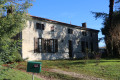
Château de la Faye
The seigneury of La Faye belonged to the Guinanson family in the 15th century.
It was seized and sold in 1683 to Claude-Louis de Saint-Simon-Montbléru. Claude-Anne de Rouvroy, Marquis, then Duke of Saint-Simon, Field Marshal and Deputy of the Nobility of Angoumois at the Estates General of 1789, emigrated and La Faye was sold as national property.
The château, built in 1666, was partially destroyed in the 19th century: it was U-shaped and the current château is the former right wing.
The main building is low with a broken roof pierced by tall dormers with volutes and a semi-circular pediment protruding above the broken roof. The large pavilion with a high hipped roof is covered with slate.
On 26 February 2010, the château was listed as a historic monument.
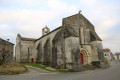
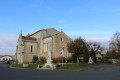
The Romanesque Church of Saint-Christophe is listed in its entirety as a historic monument by decree of 23 July 2003.
This large, imposing 12th-century church was built on a classic Latin cross plan.
Having suffered little damage over the centuries, only a few restorations in the 18th and 19th centuries have altered its appearance: raising of the choir; replacement of the bell tower with a campanile; addition of buttresses.
The last restoration campaign in 1996-1997 involved the complete renovation of the roof and reinforcement of the masonry.
Inside, the nave is vast, high and wide, with ribbed vaults resting on columns supported along their entire length by a stone bench on the floor.
The vaults of the chevet rest on a double broken chevron band running around the apse and choir.
The choir balustrade is made of 18th-century wood.
The high altarpiece is carved, painted and gilded 18th-century wood, with statues of angels and Renaissance rings (Saint John and Saint Christopher).
18th-century wooden statue of Saint Emerance.
Contemporary stained glass windows by Jean Moret.
Bronze bell, 1525.
A Romanesque inscription from 1205 on the south-east side of the apse. "In the year 1270, Louis, King of France, died, giving his soul to the august King of Kings."
To the east of the apse, an engraving of a horseman similar to that in the church of Moings.
Source: Wikipedia (excerpts) and website http://ch.lerolle.free.fr/eglises17/vill... (excerpts)

Reviews and comments

3.3 / 5
Based on 1 review

Reliability of the description
3 / 5
Ease of following the route
3 / 5
Route interest
4 / 5
victorien didier
victorien didier

Overall rating : 3.3 / 5

Date of your route : Mar 08, 2026
Reliability of the description : ★★★☆☆ Average
Ease of following the route : ★★★☆☆ Average
Route interest : ★★★★☆ Good
Very busy route : No

The transition from point 4 to point 5 no longer exists.

Machine-translated

Other walks in the area

For more walks, use our search engine .

The GPS track and description are the property of this route's author. Please do not copy them without permission.