Country:
 City:
City:


Start: Winterscheid Kirche bus stop
Winterscheid is located on a ridge called the Nutscheid, which stretches between the Sieg river in the south and the Bröl and Waldbrölbach streams in the north. The ridge reaches its westernmost point at the confluence of the Bröl and Sieg rivers. The eastern border lies on the Waldbröl/Schladern line. Its highest peak, the Hohes Wäldchen, reaches 378 metres. With more than 1,500 hectares of forest, the Nutscheid is one of the largest contiguous forest areas in the Bergisches Land. Until 1604, the border between the Duchy of Berg and the Homburg domain ran along the ridge of the Nutscheid. Since 1932, the Oberbergischer Kreis and Rhein-Sieg districts have bordered each other here.
(S) This stage begins at the Winterscheid Kirche stop. We follow the K, walk past the Raiffeisenbank out of the village and approach St. Peters Chapel.
(1) Before reaching it, we turn left onto an asphalt road until we reach a forester's lodge and enter a large forest area. We now walk down the Herrnsteiner Totenweg.
The Counts of Herrnstein in Bröltal used to take their dead to the cemetery in Winterscheid along this path.
After a short distance, we pass a striking wayside cross and continue downhill on a wide path.
(2) During the winter months, you can sometimes catch a glimpse of Herrnstein Castle on the left in the Bröltal valley. Finally, our path climbs steadily uphill again. Soon we come to a wooden trestle and a plaque commemorating the hard life of the farmers in earlier times.
The farmers used to put down the sacks filled with grain that they carried from Hatterscheid to the Herrnstein mill to rest.
(3) The Cologne Trail continues uphill for a while until we reach a road, where we turn left. We stay on this road for a short while and leave it at the next left-hand bend, continuing straight ahead onto a wide forest path. The pleasant, shady path winds gently over the heights of the Nutscheid.
(4) Finally, we head towards the L86 and cross it. At the next fork, we continue straight ahead until we reach a crossroads where the Kölner Weg turns left.
(5) Here it is worth making a short detour to the right. Immediately in front of us, we see the small group of houses of Schneppe; in the distance, the Westerwald and Siebengebirge mountains offer a magnificent panoramic view. We then return to the Kölner Weg and continue our hike. We reach the Nutscheid-Höhenweg, an ancient Roman road.
It is doubtful whether the Romans actually built this trade route, as it does not correspond to their engineering principles. The "Nutscheider Straße", as it is referred to in the Mercator calendar of 1644, experienced its heyday from the 12th to the 19th century. Alongside the Brüderstraße from Cologne to Siegen, the road via the Nutscheid was the most important trade route in the southern Bergisches Land. With the construction of railway lines and modern roads in the 19th century, trade shifted to the river valleys, which had been developed in the meantime.
We now stroll along a particularly charming section of the route: on the left, deciduous forest spreads out, while the path on the right is lined with spruce, oak, pine and birch trees. A little later, we walk through another dense forest area and finally reach a crossroads.
(6) On the left, we notice a modern crucifix, cross the intersection and walk towards Altenherfen. In this section, we walk along a forest-lined road that joins the L317.
(7) We turn left onto the L317 and follow it for a short distance. Tall pine trees sway to the left and right of the road. After about 250 metres, the L317 disappears to the left.
(8) However, we turn right and continue on the Nutscheid-Höhenweg. From here, the ground becomes extremely uneven and difficult for a few hundred metres. The Kölner Weg therefore winds its way along forest paths for a short time, but returns to a gravel path after a few hundred metres.
(9) After a while, we reach Altenherfen, the central village on the "Herchener Höhe", a collection of several small hamlets in the municipality of Windeck.
the St. Martin's Church was built in Altenherfen in 1972. Altenherfen also has a distinguished history: on 19 October 1795, the farmers of the Herchener Höhe attacked a troop of invading French soldiers, but paid for their courage with four lives.
In Altenherfen, we leave the old Höhenweg trail. Before the former Landhaus Höhe, we turn right, then left shortly afterwards and walk through the small village, which soon disappears behind us. At the end of a pasture, we turn right, walk along a slightly sloping field path towards a forest and continue to a crossroads.
(10) At this junction, we turn right. The shady hiking trail cuts deeper and deeper into the valley of the Rieferather Bach stream.
(11) After a while, we cross the Lüttershausen - Rieferath road and continue straight ahead in a quiet stream valley, which finally widens shortly before Rieferath.
(12) In Rieferath, we turn left onto the road Auf dem Rübenkamp, stroll through the village and come to a bridge.
(13) Behind it, we immediately turn right onto Altenherfener Straße and cross Ottersbacher Straße a little later. We continue straight ahead and now climb steeply uphill. The path winds its way through beech and then mixed forest, continuing to climb. Finally, we leave the forest and a clear view of the Westerwald and the Siegtal valley opens up before us.
(14) Before Gerressen, we reach Gerressener Straße, which initially passes the village on the right and then turns left into the village at a fork.
(15) The road takes us past several half-timbered houses. At the next fork, we continue straight ahead into In der Frömmerhardt and walk out of the village again. There we stroll through meadows and pastures with a magnificent view of the mountains towering beyond the Sieg. Finally, a small forest joins us on the right, and we walk downhill on a quiet asphalt road.
(16) On the left, we notice a cemetery with a chapel. A few steps further on, the path branches off to the right from the road as an inconspicuous trail, runs along the slope through coniferous woods and leads to the Catholic Church of St. Peter.
It is a three-nave quarry stone building with a late Romanesque, four-storey west tower and central nave, which probably date from the late 12th century. The choir was built in the late Gothic period (14th/15th century). The side aisles are more recent. Inside the church is a trachyte baptismal font in early Gothic style.
(17) Before the church, the path turns right and leads us across the old cemetery, at the end of which we turn left. A staircase takes us to Siegtalstraße. The imposing Protestant church towers above us. We have reached our destination for this stage, Herchen.
Herchen can look back on a long history: the name of the Catholic Church of St. Peter appeared in documents as early as 1131. Countess Mechtildis von Sayn had a Cistercian convent built in Herchen in 1248, but it was dissolved in 1581. All that remains of the convent today is a quarry stone wall and the convent fountain.
During the Reformation, Herchen became Protestant. After the death of the last Reformed pastor in 1638, the Protestant parish was filled by Jesuits appointed by the Blankenberg bailiff. However, St. Peter's continued to be used by the Protestant community. The Protestant church on Siegtalstraße was built in 1879.
Herchen, originally called Herchingen, benefited greatly from the failed uprising of Cologne weavers in 1371. The weavers fled Cologne, found a new home in Herchen and made the town famous with their "Herchinger Tuchen" (Herchen cloth).
Many well-known artists spent long periods of time in Herchen. The novelist Josef Winckler (1881-1966) is said to have written his famous novel "Der tolle Bomberg" in Herchen. The opera composer and creator of the fairy tale opera "Hansel and Gretel", Engelbert Humperdinck (1854-1921), also often stayed at the Lequis villa in Herchen (at the end of Am Knippen street). Hanns Dieter Hüsch (1925-2005), cabaret artist, writer and actor, created lasting memories in Herchen as part of the Windecker Matinéen. Since his first appearance there on 30 August 1992, many well-known cabaret artists have been guests of the Förderkreis Windecker Matinée.
(E) Turning left onto Siegtalstraße, it is only about 200 metres to the Siegtaler Hof, where you can stop for refreshments or stay overnight. However, if you decide to stay overnight or stop at the Parkhotel Löwenburg, you must turn right and follow the K for a few metres until you reach the small road branching off to the right called In der Au.
 Association / Club / Walk leader
 Tourist office
 Visorando Member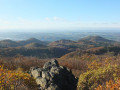
 Difficult