


Refine your search for walks in Iguzki
Iguzki walks


 Visorando Member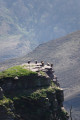
 Association / Club / Walk leader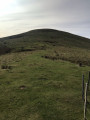
Walks near Iguzki
 The Alkurruntz tour from Urdax
 11.03 mi
 +2,680 ft
 -2,677 ft
 7h 25
7h 25
 Difficult
 Departure from Urdazubi/Urdax (Navarre)
From the beautiful little Navarran village of Urdax, we set off to conquer Alkuruntz. There are several picnic spots to choose from and the view is magnificent on both the French and Spanish sides.
Ainhoa – Col des Veaux
 10.75 mi
+4,462 ft
-2,995 ft
8h 50
Difficult
Departure from Ainhoa (Pyrénées-Atlantiques)
10.75 mi
+4,462 ft
-2,995 ft
8h 50
Difficult
Departure from Ainhoa (Pyrénées-Atlantiques)
Thefirst stage of a challenging hike linking Ainhoa to the Esteben farm at the Col des Veaux, via Mondarrain and Artzamendi. The return route is described in a second stage.
As well as the numerous 360° views offered by the various peaks climbed during this hike, you may also come across many birds of prey, horses, sheep and cows roaming freely.
Crossing the Baïgura massif from Ossés to the leisure centre
5.92 mi
+2,533 ft
-1,959 ft
4h 55
 Average
Departure from Ossès (Pyrénées-Atlantiques)
Average
Departure from Ossès (Pyrénées-Atlantiques)
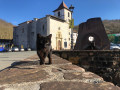
There are many ways to tackle the Baïgura. The simplest is to set off from the Mendionde leisure centre via the discovery trail. The route is signposted and there is an information board at the start.
I suggest doing the full traverse of the massif from south to north, starting from Ossès. For this, you’ll need two cars.
In my opinion, the paths are much more varied and rarely used, with many running along ridges offering magnificent views of the mountains and villages of the Basque Country.
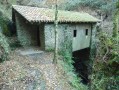
Moulin de l'Enfer and Palacio de Azkolegi
 12.90 mi
+3,143 ft
-3,182 ft
8h 40
Difficult
Departure from Baztan (Navarre)
12.90 mi
+3,143 ft
-3,182 ft
8h 40
Difficult
Departure from Baztan (Navarre)
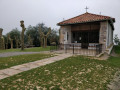
A lovely walk through the heart of the Bastan valley, starting from the Etchebertzekoborda restaurant and passing by the beautifully restored “Moulin de l’Enfer” and the Palacio de Aizkolegi (at the top of the Bertiz estate).
Ascent to La Rhune from the station at Col de Saint-Ignace
 3.32 mi
+2,418 ft
-2,966 ft
3h 40
Average
Departure from Sare (Pyrénées-Atlantiques)
3.32 mi
+2,418 ft
-2,966 ft
3h 40
Average
Departure from Sare (Pyrénées-Atlantiques)
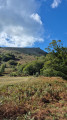
From the Rhune mini-train station, this hike climbs to the summit at 905 metres. The trail crosses moors, pastures and small woods, offering progressive views of the Basque Coast and the Pyrenees. Along the way, pottoks and mountain birds punctuate the ascent. At the summit, the 360° panorama reveals the ocean on one side and the Pyrenean mountain range on the other, rewarding your efforts with a spectacular natural spectacle.
Around Bera
4.49 mi
+886 ft
-1,476 ft
2h 50
 Easy
Departure from Bera (Navarre)
Easy
Departure from Bera (Navarre)
A ridge route above the town of Bera, taking you from the Col de Lizuniaga, on the French-Spanish border, to Bera.
The Haute Route des Pyrénées is not yet very high at this point.
From the summit of La Rhune to Sare
 4.30 mi
+36 ft
-2,772 ft
2h 00
Easy
Departure from Ascain (Pyrénées-Atlantiques)
4.30 mi
+36 ft
-2,772 ft
2h 00
Easy
Departure from Ascain (Pyrénées-Atlantiques)
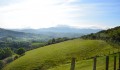
After reaching the summit of La Rhune via the little train (a lovely climb), we head back down towards the village of Sare. A lovely stretch through the woodland, occasionally passing horses roaming freely.
From Ascain to Hendaye
10.64 mi
+1,079 ft
-1,158 ft
5h 50
Average
Departure from Ascain (Pyrénées-Atlantiques)
A lovely stage with a seaside feel and the end of the journey in sight.
In the footsteps of the old Ascain-Sare tramway
 4.54 mi
+669 ft
-430 ft
2h 40
Easy
Departure from Ascain (Pyrénées-Atlantiques)
4.54 mi
+669 ft
-430 ft
2h 40
Easy
Departure from Ascain (Pyrénées-Atlantiques)
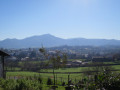
Did you know that a tramway used to run through the hinterland from the coast (Hendaye, Ciboure) to Sare via Ascain? That was before the car became popular in 1936. This hike takes you along its route, based on available archives. The landscape has preserved the memory of this journey, which you can discover during this excursion under the watchful eye of Mont Esnaur.