


Refine your search for walks in Gare de Saint-Denis
Gare de Saint-Denis walks


 Île Saint-Denis
 Visorando Member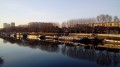
 3.73 mi
 +26 ft
 -52 ft
 1h 45
1h 45
 Easy
Easy
 Departure from Épinay-sur-Seine (Seine-Saint-Denis)
In the footsteps of the Impressionists, an urban route mostly along the banks of the Seine, through the Parc Départemental de l'Île Saint-Denis. At the end of the route, the Basilica of Saint-Denis adds a superb touch of heritage to this short walk.
From Saint-Denis to Asnières-sur-Seine
8.75 mi
+30 ft
-30 ft
4h 05
 Moderate
Departure from Saint-Denis (Seine-Saint-Denis) (Seine-Saint-Denis)
Moderate
Departure from Saint-Denis (Seine-Saint-Denis) (Seine-Saint-Denis)
A walk from station to station around Villeneuve-la-Garenne, along the Seine and then to Île Saint-Denis via the park’s water sports centre, passing by the Chantereine Farm (visiting hours are in the afternoon only); a walk without too much distance or elevation gain.
Walks near Gare de Saint-Denis
From Saint-Denis to Le Bourget via Georges Valbon Park
 5.93 mi
+66 ft
-33 ft
2h 45
Easy
Departure from Saint-Denis (Seine-Saint-Denis) (Seine-Saint-Denis)
5.93 mi
+66 ft
-33 ft
2h 45
Easy
Departure from Saint-Denis (Seine-Saint-Denis) (Seine-Saint-Denis)
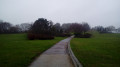
Starting from one of the masterpieces of Gothic art in Île-de-France, the Basilica of Saint-Denis, this urban route crosses a vast park where lawns alternate with flowerbeds, woodland and lakes. There is a commemorative aspect to the commune of Le Bourget, which was the scene of fierce fighting in 1870–1871.
From the Basilica of Saint-Denis to Notre-Dame de Paris
 17.04 mi
+554 ft
-528 ft
5 days
Easy
Departure from Saint-Denis (Seine-Saint-Denis) (Seine-Saint-Denis)
17.04 mi
+554 ft
-528 ft
5 days
Easy
Departure from Saint-Denis (Seine-Saint-Denis) (Seine-Saint-Denis)
This urban itinerary, comprising five short stages, links two masterpieces of Gothic art in the Île-de-France region. It offers an opportunity to discover a rich and diverse heritage: medieval remains, 17th-century mansions, industrial and modern architecture, street art, and more. The purely urban sections are interspersed with a walk along the Canal Saint-Denis and a stroll through several parks and gardens, including those of La Villette and the Buttes Chaumont.
Historical route through Saint-Denis and walk along the canal
 3.91 mi
+62 ft
-13 ft
1h 50
Easy
Departure from Saint-Denis (Seine-Saint-Denis) (Seine-Saint-Denis)
3.91 mi
+62 ft
-13 ft
1h 50
Easy
Departure from Saint-Denis (Seine-Saint-Denis) (Seine-Saint-Denis)
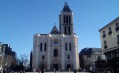
The first stage of this urban journey consists of two distinct sections. The first section, the historical trail, invites us to trace the passage of time from the legend of Saint-Denis and the city’s origins right up to the 21st century, with the help of some twenty richly documented information points. Next, we follow the Canal Saint-Denis along its pedestrian quay back to Paris.
The Parc des Chanteraines and the Promenade Bleue
 3.77 mi
+79 ft
-36 ft
1h 50
Easy
Departure from Gennevilliers (Hauts-de-Seine)
3.77 mi
+79 ft
-36 ft
1h 50
Easy
Departure from Gennevilliers (Hauts-de-Seine)
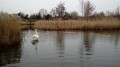
An itinerary almost entirely surrounded by greenery in a densely urbanised area! The circular paths within the park are complemented by a walk along the banks of the Seine. The charming Jardin Ombre et Lumière (Shadow and Light Garden) and the reed beds of the lake are sure to delight enthusiasts.
Along the water’s edge through various parks north of Paris
10.99 mi
+180 ft
-141 ft
5h 15
Moderate
Departure from Épinay-sur-Seine (Seine-Saint-Denis)
A walk that follows the water’s edge, starting from Épinay-sur-Seine station, with a view of Fort de la Briche from the Île Saint-Denis Departmental Park. The route passes by the Basilica of Saint-Denis, then through Madeleine Riffaud Park, before heading into the Coulée Verte green corridor alongside the ponds of the Georges Valbon Departmental Park.
From the Galatea Statue to the Church of Notre-Dame de Deuil
 1.34 mi
+49 ft
-0 ft
0h 40
Easy
Departure from Deuil-la-Barre (Val-d'Oise)
1.34 mi
+49 ft
-0 ft
0h 40
Easy
Departure from Deuil-la-Barre (Val-d'Oise)
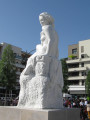
This route across Deuil-la-Barre from south to north connects Place de la Nation in the renovated Galathée district to Place de l'Église in the historic town centre. It takes about 40 minutes at a leisurely pace.This pleasant walk through numerous public gardens takes you to Place de l'Église (or Place de Victimes du V2), which is also the starting point for several hikes on the Côte de Deuil trails.This route is recommended by the association Les Sentiers de la Côte de Deuil.
From Épinay to the Pont de Bezons via Argenteuil and Parc Lagravère
 5.92 mi
+105 ft
-131 ft
2h 50
Easy
Departure from Épinay-sur-Seine (Seine-Saint-Denis)
5.92 mi
+105 ft
-131 ft
2h 50
Easy
Departure from Épinay-sur-Seine (Seine-Saint-Denis)
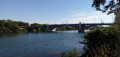
An urban route that starts on the towpath along the banks of the Seine and then climbs higher into Argenteuil. After crossing to the other bank, the route follows the river through Parc Lagravère.
On the Argenteuil plateau, where the mills meet
9.24 mi
+889 ft
-784 ft
5h 00
 Difficult
Departure from Épinay-sur-Seine (Seine-Saint-Denis)
Difficult
Departure from Épinay-sur-Seine (Seine-Saint-Denis)
A route with a slight elevation gain, starting at the banks of the Seine and the railway line, then climbing towards Parc de la Butte d'Orgemont. Pass by Moulin d'Orgemont and Moulin de Sannois, through the Buttes du Parisis regional forest and Fort de Cormeilles.
⚠️ Please note! This hike is not marked, so be sure to follow the description, map and compass.
The fish route in Paris
 4.43 mi
+108 ft
-144 ft
2h 10
Easy
Departure from Paris
4.43 mi
+108 ft
-144 ft
2h 10
Easy
Departure from Paris
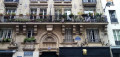
Until the advent of the railway, fishmongers brought fish to Paris from the ports of the North Sea and the English Channel in horse-drawn convoys. Their route through Paris, as far as Les Halles, has left its mark in the names of a number of lanes that this urban itinerary more or less follows, with a few detours through streets and alleyways that deserve it.
Les Grandes Carrières, Les Épinettes and Les Batignolles
 4.64 mi
+7 ft
-62 ft
2h 10
Easy
Departure from Paris
4.64 mi
+7 ft
-62 ft
2h 10
Easy
Departure from Paris
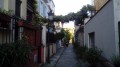
A journey through the northern districts of Paris in a new light, with the old Petite Ceinture railway line as a common thread. The many flower-filled passages, squares and gardens allow us to forget the hustle and bustle of the capital for a while.