


Refine your search for walks in Gare de Ponthierry-Pringy
Gare de Ponthierry-Pringy walks


 Bois de Sainte-Assise on the Seine side
 Visorando Member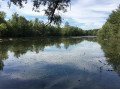
 4.53 mi
 +66 ft
 -66 ft
 2h 10
2h 10
 Easy
Easy
 Departure from Saint-Fargeau-Ponthierry (Seine-et-Marne)
A varied walk through woods that will then take you along ponds and the banks of the Seine.
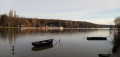
From Ponthierry to Corbeil, left bank, right bank
 11.34 mi
+26 ft
-43 ft
5h 15
11.34 mi
+26 ft
-43 ft
5h 15
 Moderate
Departure from Saint-Fargeau-Ponthierry (Seine-et-Marne)
Moderate
Departure from Saint-Fargeau-Ponthierry (Seine-et-Marne)
The first part of this walk from station to station follows the left bank of the Seine, keeping as close to the river as possible. You cross to the right bank after the Coudray lock and veer off slightly before rejoining the Seine on paths running alongside the water (the route may need to be adjusted depending on flood levels). The walk ends with a stroll through the historic centre of Corbeil, which boasts some beautiful heritage sites.
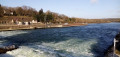
From Melun to Ponthierry via the Vives Eaux dam
 8.09 mi
+69 ft
-118 ft
3h 45
Moderate
Departure from Melun (Seine-et-Marne)
8.09 mi
+69 ft
-118 ft
3h 45
Moderate
Departure from Melun (Seine-et-Marne)
A walk from station to station during which you spend most of the time along the banks of the Seine, either on small tarmac roads or on shaded footpaths. The Collegiate Church of Notre-Dame in Melun and the church at Boissettes add a touch of heritage to this walk.
Walks near Gare de Ponthierry-Pringy
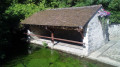
From Boissise-le-Roi to Boutigny-sur-Essonne via the Chemin de l'École
 17.05 mi
+492 ft
-436 ft
6 hrs
17.05 mi
+492 ft
-436 ft
6 hrs
 Very difficult
Departure from Boissise-le-Roi (Seine-et-Marne)
Very difficult
Departure from Boissise-le-Roi (Seine-et-Marne)
A walk from station to station showcasing the full diversity of southern Île-de-France! For the first two-thirds of the route, the path crosses back and forth over the River École, with its old mills and countless wash houses. You then wander across a plateau with its typical heathland landscape. The walk concludes with a route that is mainly through woodland. A castle and a few Romanesque or Gothic churches add to the rich heritage of this walk.
The banks of the Seine from Le Plessis-Chênet to Évry
 7.95 mi
+66 ft
-112 ft
3h 45
Moderate
Departure from Le Coudray-Montceaux (Essonne)
7.95 mi
+66 ft
-112 ft
3h 45
Moderate
Departure from Le Coudray-Montceaux (Essonne)
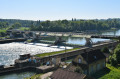
The banks of the Seine and the town of Corbeil have a rich historical and industrial past, which is highlighted on this walk. Among other things: Kings and Queens of France, famous figures, historical events, and prestigious industrial establishments. It is also a walk where, despite increasing urbanisation, nature and beautiful landscapes are still very much present.
From Melun to Bois-le-Roi via the GR®1
9.74 mi
+384 ft
-328 ft
4h 50
Moderate
Departure from Melun (Seine-et-Marne)
This stage is the shortest on theGR®®1. It offers a chance to discover Melun’s historical heritage. With no elevation gain, it is ideal for families. This walk serves as a warm-up for the Forest of Fontainebleau, which will be more challenging to traverse. The walk can be divided into three sections: an urban first and third section passing through Melun, Vaux-le-Pénil, Chartrettes and Bois-le-Roi, separated by a short wooded stretch.
From Mennecy to Corbeil-Essonnes via Robinson Park
 8.16 mi
+102 ft
-135 ft
3h 50
Moderate
Departure from Mennecy (Essonne)
8.16 mi
+102 ft
-135 ft
3h 50
Moderate
Departure from Mennecy (Essonne)
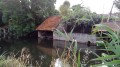
This last stage of the journey along the Essonne offers many opportunities to play leapfrog with the river. It is obviously the stage with the most urban sections. The town of Corbeil-Essonnes reveals its rich religious, civil and industrial heritage.
Along the Seine from Corbeil to Juvisy
 8.46 mi
+13 ft
-23 ft
3h 55
Moderate
Departure from Corbeil-Essonnes (Essonne)
8.46 mi
+13 ft
-23 ft
3h 55
Moderate
Departure from Corbeil-Essonnes (Essonne)
A walk from station to station with a relatively straightforward route, as it mainly follows the right bank of the Seine. Apart from the approach from the starting station and the approach to the finishing station, the route stays as close as possible to the river.
Following the Essonne
 97.78 mi
+3,153 ft
-3,136 ft
10 days
Moderate
Departure from Corbeil-Essonnes (Essonne)
97.78 mi
+3,153 ft
-3,136 ft
10 days
Moderate
Departure from Corbeil-Essonnes (Essonne)
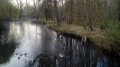
Named after Acionna, the Gallo-Roman goddess of rivers, the Essonne flows through the north of the Loiret department and the south of the Île-de-France region. The first five stages follow its course downstream, while the last four follow it upstream. These nine stages are accessible by train. One stage, which is not accessible by train, forms a circular route upstream. The route alternates between paths along the river, passages through woods and those across cultivated plateaus.
From Corbeil to Ballancourt via Villeroy Park and the Fontenay Marshes
 12.46 mi
+354 ft
-302 ft
6h 00
12.46 mi
+354 ft
-302 ft
6h 00
 Difficult
Departure from Corbeil-Essonnes (Essonne)
Difficult
Departure from Corbeil-Essonnes (Essonne)
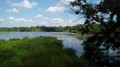
A walk from station to station starting in Vieux Corbeil (large mills, cathedral). After following the Seine, the route climbs before descending to Moulin Galant, then follows the Essonne. The walk concludes with a stroll through Villeroy Park, set in a wooded landscape, followed by an exploration of the Fonteanay Marshes and their birdwatching hides.
From Bois-le-Roi to Le Vaudoué
 17.81 mi
+797 ft
-823 ft
10 hrs
Very difficult
Departure from Bois-le-Roi (Seine-et-Marne) (Seine-et-Marne)
17.81 mi
+797 ft
-823 ft
10 hrs
Very difficult
Departure from Bois-le-Roi (Seine-et-Marne) (Seine-et-Marne)
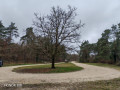
This stage of the GR®1 connects Bois-le-Roi to Le Vaudoué. It is the only stage that does not end at a train station. This hike is unique in that it crosses the Forest of Fontainebleau and its many beautiful rocks. There are several points of interest along this section, which is entirely forested: the tree at Carrefour des Longues Vallées, the rocks at Cuvier Chatillon, the viewpoint at Gorges d'Apremont and Gorges de Franchard (worth visiting if you don't mind walking a little further), as well as the Chapel of Prieuré Notre-Dame de Franchard and the church at Vaudoué.
Walk in the north of the Forest of Fontainebleau
 7.02 mi
+397 ft
-377 ft
3h 35
Moderate
Departure from Bois-le-Roi (Seine-et-Marne) (Seine-et-Marne)
7.02 mi
+397 ft
-377 ft
3h 35
Moderate
Departure from Bois-le-Roi (Seine-et-Marne) (Seine-et-Marne)
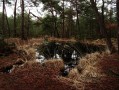
From Bois-le-Roi to Fontainebleau, walk between forest and rocks far from the beaten track
A grand tour of the Fontainebleau Forest
 11.73 mi
+545 ft
-538 ft
5h 50
Difficult
Departure from Bois-le-Roi (Seine-et-Marne) (Seine-et-Marne)
11.73 mi
+545 ft
-538 ft
5h 50
Difficult
Departure from Bois-le-Roi (Seine-et-Marne) (Seine-et-Marne)
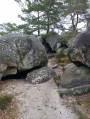
The Fontainebleau Forest is one of the most beautiful forests in France thanks to its varied landscapes and, above all, its sandstone blocks. This hike, which passes through the Cuvier-Châtillon rocks, the Apremont gorges and the rocks of Mont Ussy, will allow you to appreciate all its beauty but also its fragility, due to both natural erosion and that caused by heavy human traffic, given its proximity to the Paris region.