


Refine your search for walks in Gare de Nogent-l'Artaud-Charly
Gare de Nogent-l'Artaud-Charly walks


 Around the Marne from Nogent-l'Artaud
 Visorando Member
 11.59 mi
 +591 ft
 -574 ft
 5h 50
5h 50
 Moderate
 Departure from Nogent-l'Artaud (Aisne)
A bucolic walk between the Marne and the vineyards around Nogent-l'Artaud, visiting a few wash houses, some of which evoke La Fontaine's Fables.
Circular route between Nogent-l'Artaud and Pavant
 7.27 mi
+571 ft
-571 ft
3h 50
Moderate
Departure from Nogent-l'Artaud (Aisne)
7.27 mi
+571 ft
-571 ft
3h 50
Moderate
Departure from Nogent-l'Artaud (Aisne)
A route that allows us to enjoy views of the first Champagne vineyards, walk along the Dhuis Aqueduct and pass by a deer farm.
The Marne Valley between the Champagne vineyards and the Dhuys Aqueduct
 14.24 mi
+1,040 ft
-1,047 ft
7h 25
14.24 mi
+1,040 ft
-1,047 ft
7h 25
 Difficult
Departure from Nanteuil-sur-Marne (Seine-et-Marne)
Difficult
Departure from Nanteuil-sur-Marne (Seine-et-Marne)
Discover the south-facing hillsides on the right bank of the Marne, covered with Champagne vineyards, then those on the north-facing left bank with their deciduous woods and the Dhuys Aqueduct.
The journey is enhanced by passing through several pretty wine-growing villages.
From Château-Thierry to Nogent-l'Artaud along the right bank of the Marne
 11.03 mi
+988 ft
-991 ft
5h 55
Moderate
Departure from Château-Thierry (Aisne)
11.03 mi
+988 ft
-991 ft
5h 55
Moderate
Departure from Château-Thierry (Aisne)
Take a stroll through La Fontaine country, passing by the First World War memorial and ending up between the sky and the Champagne vineyards.
From Saacy-sur-Marne to Nogent-l'Artaud via the Dhuis
 9.47 mi
+705 ft
-689 ft
5h 00
Moderate
Departure from Saâcy-sur-Marne (Seine-et-Marne)
9.47 mi
+705 ft
-689 ft
5h 00
Moderate
Departure from Saâcy-sur-Marne (Seine-et-Marne)
A walk that will introduce you to the first vineyards of Champagne and various structures of the Dhuis aqueduct.
Moderator update as of 24/09/2020: Please note! Issue regarding private property between (11) and (12). See description for an alternative route
From Nanteuil-sur-Marne to Château-Thierry
 Association / Club / Walk leader
 19.64 mi
+1,699 ft
-1,693 ft
6 hrs
19.64 mi
+1,699 ft
-1,693 ft
6 hrs
 Very difficult
Departure from Saâcy-sur-Marne (Seine-et-Marne)
Very difficult
Departure from Saâcy-sur-Marne (Seine-et-Marne)
End of this Paris region section of the “Via Colombani”, a detour from the Way of Saint Columbanus which crosses no fewer than five European countries.
The identification of the Way of Saint-Colomban provided an opportunity to highlight his major role in the monastic foundations of early Christian Europe. The European Columbanian associations then set about mapping this monk’s route across Europe, marking the major sites along the way with a bronze plaque.
Circular walk between Nogent-l’Artaud and La Chapelle-sur-Chézy
 12.46 mi
+607 ft
-604 ft
6h 15
Difficult
Departure from Nogent-l'Artaud (Aisne)
12.46 mi
+607 ft
-604 ft
6h 15
Difficult
Departure from Nogent-l'Artaud (Aisne)
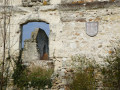
A circular route comprising half farmland and half woodland, also passing through a few large Briard farms and some unusual livestock farms (deer, pheasants), skirting a beautiful pond in a very wild setting, and ending at the ruins of a 13th–14th-century abbey.