


Refine your search for walks in Gare d'Évry-Val de Seine
Gare d'Évry-Val de Seine walks


 Remarkable trees of the royal hunts of Sénart
 Visorando Member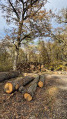
 12.37 mi
 +157 ft
 -157 ft
 5h 50
5h 50
 Moderate
 Departure from Évry (Essonne) (Essonne)
Some of these trees have probably seen the royal hunting parties pass by! This hike is partly like a treasure hunt. The remarkable trees are usually located a few dozen metres from the forest paths and require a little effort to discover. But the beauty of these specimens quickly makes you forget the difficulties. The route is further enhanced by passing close to two 18th-century castles.
The banks of the Seine from Le Plessis-Chênet to Évry
 7.95 mi
+66 ft
-112 ft
3h 45
Moderate
Departure from Le Coudray-Montceaux (Essonne)
7.95 mi
+66 ft
-112 ft
3h 45
Moderate
Departure from Le Coudray-Montceaux (Essonne)
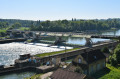
The banks of the Seine and the town of Corbeil have a rich historical and industrial past, which is highlighted on this walk. Among other things: Kings and Queens of France, famous figures, historical events, and prestigious industrial establishments. It is also a walk where, despite increasing urbanisation, nature and beautiful landscapes are still very much present.
Walks near Gare d'Évry-Val de Seine
From Corbeil to Ballancourt via Villeroy Park and the Fontenay Marshes
 12.46 mi
+354 ft
-302 ft
6h 00
12.46 mi
+354 ft
-302 ft
6h 00
 Difficult
Departure from Corbeil-Essonnes (Essonne)
Difficult
Departure from Corbeil-Essonnes (Essonne)
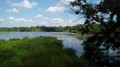
A walk from station to station starting in Vieux Corbeil (large mills, cathedral). After following the Seine, the route climbs before descending to Moulin Galant, then follows the Essonne. The walk concludes with a stroll through Villeroy Park, set in a wooded landscape, followed by an exploration of the Fonteanay Marshes and their birdwatching hides.
Following the Essonne
 97.78 mi
+3,153 ft
-3,136 ft
10 days
Moderate
Departure from Corbeil-Essonnes (Essonne)
97.78 mi
+3,153 ft
-3,136 ft
10 days
Moderate
Departure from Corbeil-Essonnes (Essonne)
Named after Acionna, the Gallo-Roman goddess of rivers, the Essonne flows through the north of the Loiret department and the south of the Île-de-France region. The first five stages follow its course downstream, while the last four follow it upstream. These nine stages are accessible by train. One stage, which is not accessible by train, forms a circular route upstream. The route alternates between paths along the river, passages through woods and those across cultivated plateaus.
Along the Seine from Corbeil to Juvisy
 8.46 mi
+13 ft
-23 ft
3h 55
Moderate
Departure from Corbeil-Essonnes (Essonne)
8.46 mi
+13 ft
-23 ft
3h 55
Moderate
Departure from Corbeil-Essonnes (Essonne)
A walk from station to station with a relatively straightforward route, as it mainly follows the right bank of the Seine. Apart from the approach from the starting station and the approach to the finishing station, the route stays as close as possible to the river.
From Mennecy to Corbeil-Essonnes via Robinson Park
 8.16 mi
+102 ft
-135 ft
3h 50
Moderate
Departure from Mennecy (Essonne)
8.16 mi
+102 ft
-135 ft
3h 50
Moderate
Departure from Mennecy (Essonne)
This last stage of the journey along the Essonne offers many opportunities to play leapfrog with the river. It is obviously the stage with the most urban sections. The town of Corbeil-Essonnes reveals its rich religious, civil and industrial heritage.
From Juvisy to Choisy-le-Roi via Lac Montalbot
 8.58 mi
+16 ft
-20 ft
4h 00
Moderate
Departure from Juvisy-sur-Orge (Essonne)
8.58 mi
+16 ft
-20 ft
4h 00
Moderate
Departure from Juvisy-sur-Orge (Essonne)
A walk that starts in the Port aux Cerises park, with its ponds and Neolithic menhir. You then walk alongside a large lake and cross an urbanised area. The final third of the walk takes place mainly on the towpath along the Seine.
From Quincy to Montgeron along the Yerres
11.29 mi
+171 ft
-302 ft
5h 20
Moderate
Departure from Combs-la-Ville (Seine-et-Marne)
This is an unusual route, as the outward journey is by train from Montgeron station to Combs la Ville-Quincy-sous-Sénart station, and the return journey is on foot along a path that largely follows the banks of the Yerres.
Along the Yerres and Réveillon rivers and through the Bois de la Grange
7.13 mi
+230 ft
-210 ft
3h 30
Moderate
Departure from Brunoy (Essonne)
A pleasant walk along two rivers, the Yerres and the Réveillon. You completely forget the nearby urban environment.
From Brunoy to Combs-la-Ville
 8.11 mi
+348 ft
-279 ft
4h 00
Moderate
Departure from Brunoy (Essonne)
8.11 mi
+348 ft
-279 ft
4h 00
Moderate
Departure from Brunoy (Essonne)
A hike from station to station in a semi-urban environment, following paths through gardens and pleasant riverside trails.
Following the Orge from Sainte-Geneviève-des-Bois to Athis-Mons
 8.52 mi
+184 ft
-269 ft
4h 05
Moderate
Departure from Sainte-Geneviève-des-Bois (Essonne) (Essonne)
8.52 mi
+184 ft
-269 ft
4h 05
Moderate
Departure from Sainte-Geneviève-des-Bois (Essonne) (Essonne)
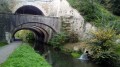
A hike from station to station that constitutes the last stage of this route along the Orge River, ending at its confluence with the Seine. Although the area is highly urbanised, the walkway along the river, which takes us back and forth across it, often offers a bucolic setting.
From Ballancourt-sur-Essonne to La Ferté-Alais via Mondeville
 12.27 mi
+663 ft
-630 ft
6h 15
Difficult
Departure from Ballancourt-sur-Essonne (Essonne)
12.27 mi
+663 ft
-630 ft
6h 15
Difficult
Departure from Ballancourt-sur-Essonne (Essonne)
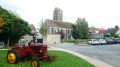
Twenty-ninth stage of the Grand Tour of Île-de-France via the GR®11, linking Ballancourt-sur-Essonne to La Ferté-Alais. Although both towns are located in the Essonne valley, the proposed route passes through the plateau overlooking the valley on the east side, in the Gâtinais Français Regional Nature Park, to the charming village of Mondeville. The GR® then winds its way between valleys, forests dotted with sandstone boulders and agricultural plateaus. This stage is shorter than the previous ones but is not without its difficulties as it still covers steep sections of terrain similar to the Fontainebleau forest, particularly around Mondeville. The route also allows you to discover some unusual sights, such as the Roches du Père La Musique in Ballancourt.