


Refine your search for walks in Église Sainte-Marie-Madeleine (Les Molières)
Église Sainte-Marie-Madeleine (Les Molières) walks


 From Saint-Chéron to Saint-Rémy-lès-Chevreuse, from the Orge to the Yvette
 Visorando Member
 16.45 mi
 +814 ft
 -784 ft
 8h 15
8h 15
 Very difficult
 Departure from Saint-Chéron (Essonne) (Essonne)
Thirty-second and penultimate stage of the Grand Tour of Île-de-France via the GR®11. It starts in Saint-Chéron in the Orge Valley and ends in Saint-Rémy-lès-Chevreuse in the Yvette Valley, thus completing the crossing of the Essonne via its main valleys. After starting off towards the west, the route heads due north across the Hurepoix plateaus.
Grand tour of Île-de-France in 34 stages on the GR®11
 528.35 mi
+22,037 ft
-22,156 ft
34 days
528.35 mi
+22,037 ft
-22,156 ft
34 days
 Difficult
Departure from Paris
Difficult
Departure from Paris
This marked GR® route around the Île-de-France region (with a few forays into neighbouring departments and regions) complements its "little brother", the GR®1, by forming a circular route around Paris, generally with a slightly larger radius.
It follows the same overall pattern: first, a radial section starting from Paris (more precisely from the Pont d'Austerlitz, near the former confluence of the Bièvre and the Seine), going up the entire Bièvre valley, then continuing to Villiers-Saint-Frédéric, in the Yvelines. From there, it is a circular route that loops around the Île-de-France region, close to its borders with neighbouring regions.
The route passes through beautiful regions, often untouched by intensive urbanisation, regional nature parks and other protected natural areas, and takes in some architectural wonders.
Walks near Église Sainte-Marie-Madeleine (Les Molières)
Chemin Charles Péguy: Alternative route via Forges-les-Bains
 Association / Club / Walk leader
 4.03 mi
+210 ft
-302 ft
2h 00
4.03 mi
+210 ft
-302 ft
2h 00
 Not specified
Departure from Limours (Essonne)
Not specified
Departure from Limours (Essonne)
An alternative route to the first section of the Chemin Charles Péguy. It bypasses Limours and instead showcases the Hurepoix region. Discover the beautiful village of Forges-les-Bains and a route through stunning countryside.
Following the Yvette from Saint-Rémy-lès-Chevreuse to Lozère
 8.24 mi
+167 ft
-164 ft
3h 55
8.24 mi
+167 ft
-164 ft
3h 55
 Moderate
Departure from Saint-Rémy-lès-Chevreuse (Yvelines)
Moderate
Departure from Saint-Rémy-lès-Chevreuse (Yvelines)
A hike from station to station where you play leapfrog with the Yvette River! The route is mostly close to the river and crosses a few woods and pretty parks, including the one in the western part of the Paris-Sud University campus.
From Saint-Rémy-lès-Chevreuse to Coignières in the Upper Chevreuse Valley
 14.57 mi
+1,112 ft
-846 ft
7h 40
Difficult
Departure from Saint-Rémy-lès-Chevreuse (Yvelines)
14.57 mi
+1,112 ft
-846 ft
7h 40
Difficult
Departure from Saint-Rémy-lès-Chevreuse (Yvelines)
Thirty-third and penultimate stage of the Grand Tour of Île-de-France via the GR®11, almost entirely in the Yvelines department.It starts in Saint-Rémy-lès-Chevreuse and reaches Coignières after climbing up the Yvette valley and crossing the Haute Vallée de Chevreuse Regional Nature Park with its rich natural and architectural heritage, just a stone's throw from Paris and its inner suburbs.
From Courcelle-sur-Yvette to Versailles via the Étangs de Montbron
 11.30 mi
+883 ft
-669 ft
6h 00
Difficult
Departure from Gif-sur-Yvette (Essonne)
11.30 mi
+883 ft
-669 ft
6h 00
Difficult
Departure from Gif-sur-Yvette (Essonne)
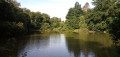
A south-north crossing offering a very varied route. Sections through the forest alternate with stretches across fields. Water features are plentiful, with several rivers—the Yvette, the Marette and the Bièvre—and the Étangs de Montbrond set in their lush green surroundings.
(Warning) The route is cut off at the point (12) due to works on Metro Line 18 (as of March 2026). A diversion is under consideration. Please refrain from undertaking this hike until further notice.
From Courcelle to Lozère via the hillsides of the Yvette
 9.04 mi
+965 ft
-922 ft
5h 00
Moderate
Departure from Gif-sur-Yvette (Essonne)
9.04 mi
+965 ft
-922 ft
5h 00
Moderate
Departure from Gif-sur-Yvette (Essonne)
A hike from station to station, yo-yoing between the Yvette valley and the Saclay plateau, with a few fairly steep hills. After a mostly wooded route with some elevation, you cross Gif-sur-Yvette and then walk along a wetland area framed by two rivers. You climb back up onto the plateau, near the Paris-Saclay University campus. After visiting the old Troche quarry and walking along the edge of the plateau, you descend back into the valley.
The Yvette Valley via the Rigoles de Saint-Aubin and the Mérantaise
8.35 mi
+502 ft
-482 ft
4h 15
Moderate
Departure from Gif-sur-Yvette (Essonne)
This hike starts in Gif-sur-Yvette and takes you to the heights of the Saint-Aubin and Vallée Bonnard channels, following the Yvette river and returning via La Mérantaise, passing through the Bois d'Aigrefoin, the Saint-Aubin communal forest and the Coupières basin.
The hillsides of the Yvette from Le Guichet to Saint-Rémy-lès-Chevreuse
 8.72 mi
+646 ft
-633 ft
4h 35
Moderate
Departure from Orsay (Essonne)
8.72 mi
+646 ft
-633 ft
4h 35
Moderate
Departure from Orsay (Essonne)
A varied hike where you gain altitude. First, you climb up to the Saclay plateau and walk along the university campus before gently descending into the Yvette valley through the forest. We climb back up the other bank and cross the Gif-sur-Yvette forest from east to west. After an urban section, we walk between fields before descending back into the forest to Saint-Rémy-lès-Chevreuse.
The Promenade de l'Yvette
 7.69 mi
+23 ft
-148 ft
3h 35
Moderate
Departure from Palaiseau (Essonne)
7.69 mi
+23 ft
-148 ft
3h 35
Moderate
Departure from Palaiseau (Essonne)
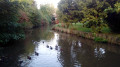
In a highly urbanised environment, this is a green space where you can relax and enjoy a pleasant walk along the Yvette river and the Bassins de Saulx and Balizy.
A hike from station to station with a shorter alternative for motorists.
Chemin Charles Péguy: Palaiseau - Saint-Cyr-sous-Dourdan
 18.90 mi
+794 ft
-804 ft
7 hrs
Very difficult
Departure from Palaiseau (Essonne)
18.90 mi
+794 ft
-804 ft
7 hrs
Very difficult
Departure from Palaiseau (Essonne)
First of the four sections of the Charles Péguy Trail: Palaiseau-Chartres, via Dourdan.
It closely follows in the footsteps of the poet Charles Péguy, who made two pilgrimages in 1912 and 1913, each lasting four days there and back.
Chemin Charles Péguy: overview
58.91 mi
+1,775 ft
-1,549 ft
3 days
Difficult
Departure from Palaiseau (Essonne)
This marked route follows as closely as possible the path taken by Charles Péguy in 1912 and then 1913 from his home in Lozère (Palaiseau) to Chartres, via Dourdan.
The walking route is 94 kilometres long and is marked with blue and white signposts.
The trail was created by the Amitié Charles Péguy association. It received support from the Eure-et-Loir General Council. Visorando was responsible for its first publication on the Internet.