Refine your search for walks in Église Saint-Eugène et Sainte-Cécile
Église Saint-Eugène et Sainte-Cécile walks


 The covered passages of the Montmartre and Saint-Martin suburbs
 Visorando Member
 3.94 mi
 +66 ft
 -33 ft
 1h 50
1h 50
 Easy
Easy
 Departure from Paris
Between grand boulevards and covered passages, a walk through a lively neighbourhood of the capital.
A walk to avoid on Sundays and public holidays when the covered passages may be closed.
The fish route in Paris
 4.43 mi
+108 ft
-144 ft
2h 10
Easy
Departure from Paris
4.43 mi
+108 ft
-144 ft
2h 10
Easy
Departure from Paris
Until the advent of the railway, fishmongers brought fish to Paris from the ports of the North Sea and the English Channel in horse-drawn convoys. Their route through Paris, as far as Les Halles, has left its mark in the names of a number of lanes that this urban itinerary more or less follows, with a few detours through streets and alleyways that deserve it.
Walks near Église Saint-Eugène et Sainte-Cécile
The Bestiary of the Faubourgs of Saint-Martin, du Temple and Saint-Antoine
 5.05 mi
+23 ft
-52 ft
2h 20
Easy
Departure from Paris
5.05 mi
+23 ft
-52 ft
2h 20
Easy
Departure from Paris
A north-south walk through the 10th, 11th and 12th arrondissements of Paris, in search of depictions of animals. Throughout the first half of the route, these are mainly found in murals. The second half offers greater diversity in terms of animal subjects.
In the footsteps of Georges Brassens: La Goutte d'Or, Montmartre and Trinité
 4.72 mi
+272 ft
-305 ft
2h 25
Easy
Departure from Paris
4.72 mi
+272 ft
-305 ft
2h 25
Easy
Departure from Paris
This second section takes us to the old cabaret (Chez Patachou) where Georges Brassens performed in public for the first time. The walk through Montmartre, with its slopes, paths and stairways, is particularly pleasant (best done in the "low tourist season").
Green spaces in Paris’s 9th arrondissement
 3.02 mi
+121 ft
-154 ft
1h 30
Easy
Departure from Paris
3.02 mi
+121 ft
-154 ft
1h 30
Easy
Departure from Paris
The ninth arrondissement of Paris is distinguished by its lively and central character. It has historical links to the world of entertainment, with numerous theatres, cinemas and concert halls. As a shopping district, it is home to department stores, boutiques and iconic covered arcades. It blends Haussmann-style architecture with more recent buildings, whilst remaining a residential area.After the first two arrondissements, the ninth has the least amount of green space. These are mainly local, much-frequented gardens that play an important social role. The area as a whole reflects an old urban fabric, not particularly conducive to the creation of large natural spaces.
The bestiary of Chaussée d'Antin and the Palais Royal
 4.06 mi
+10 ft
-13 ft
1h 50
Easy
Departure from Paris
4.06 mi
+10 ft
-13 ft
1h 50
Easy
Departure from Paris
From Place de l'Opéra to Les Halles, via the Church of Notre-Dame de Lorette and the Palais Royal Gardens, this urban trail explores the1st,2nd and9th arrondissements of Paris in search of animal representations.
The Opera, Parc Monceau and the Chaillot district
 5.15 mi
+105 ft
-36 ft
2h 30
Easy
Departure from Paris
5.15 mi
+105 ft
-36 ft
2h 30
Easy
Departure from Paris
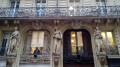
A journey through Haussmannian Paris, discovering the architecture of the second half of the 19th century, with a detour to Parc Monceau and a few sites celebrating Franco-American friendship.
Walk in the Marais
 3.48 mi
+3 ft
-10 ft
1h 35
Easy
Departure from Paris
3.48 mi
+3 ft
-10 ft
1h 35
Easy
Departure from Paris
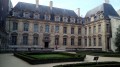
This is an immersion in a historic district of Paris that was largely untouched by Haussmann's urban renewal and has retained many narrow streets, with architecture still dominated by 17th-century mansions. The suggested itinerary winds its way through narrow streets and gardens, allowing you to discover a rich heritage, including the Carreau du Temple, the Hôtel du Grand Veneur, the gardens of the National Archives, the Place des Vosges and the Hôtel Sully.
Sundials and astronomical curiosities in Paris
8.94 mi
+144 ft
-23 ft
4h 15
 Moderate
Departure from Paris
Moderate
Departure from Paris
A long urban trail on the theme of sundials and sites related to astronomy scattered throughout Paris: the Paris meridian, observatories, gnomons, etc. Best done on a sunny day so you can read the time along the way! The sundials are often high up, sometimes hidden by trees that have grown... you may have to search hard to find them.
The Bestiary of the Louvre, the Tuileries and the Orsay
 5.05 mi
+26 ft
-26 ft
2h 20
Easy
Departure from Paris
5.05 mi
+26 ft
-26 ft
2h 20
Easy
Departure from Paris
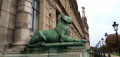
This urban route focuses on the heart of Paris, in a neighbourhood rich in world-famous museums, exploring depictions of animals. In the Tuileries Garden, these are particularly numerous and offer a conflicting view of the animal world, undoubtedly that of their time.
Green spaces in the 10th arrondissement of Paris
 4.49 mi
+75 ft
-33 ft
2h 10
Easy
Departure from Paris
4.49 mi
+75 ft
-33 ft
2h 10
Easy
Departure from Paris
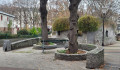
The 10th arrondissement of Paris is characterised by a working-class, cosmopolitan and very lively atmosphere, marked by the presence of the Gare du Nord and Gare de l’Est stations. A densely populated area, it mainly offers small local green spaces. The largest gardens have often been created on former historic, railway or industrial sites, such as the Jardin Villemin or the Square Alban-Satragne. The Canal Saint-Martin, for its part, plays a major role by providing a green promenade and a central hub for socialising. Finally, there are a dozen community gardens and examples of community greening: tree bases and micro-gardens.