Country:

 City:
City:


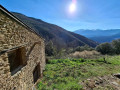
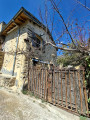
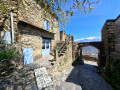
Park at the entrance to the village, on the left, next to Saint-Julien Church.
Part of the route follows the "sentier des bergeries" trail, marked in yellow.
(S/E) Cross the village and take the first street that goes uphill, signposted "sentier des bergeries". Turn left after the town hall. Continue along this street uphill until you reach the edge of the village and then join a track.
(1) Turn right (north) and follow this track for about 400 metres until you reach a sheepfold. Just before the sheepfold, leave the track and take the path that climbs to the right (north-west), signposted "sentier des bergeries". This path climbs through pastoral land and crosses the track several times.
(2) At an altitude of 1,240 metres, take the path that branches off to the left (north-west), signposted "sentier des bergeries". Pass several springs and arrive at Col Diagre, just after a large stable.
(3) At the pass, where three tracks intersect, leave the track on the right and follow the one opposite (northbound) on a path inside the fences. This path immediately climbs to the right in hairpin bends, first eastwards and then northwards.
At an altitude of 1,515 metres, take the path on the right, marked in yellow (do not take the one opposite), which climbs more gently and is more open. The path continues north, runs alongside a stream and arrives at Cortal d'en Broc and the Fontfrède spring.
(4) From the spring, the path, still marked in yellow, then heads south-east, stays on the hillside and takes you to the top of a small hill called El Peiro, then turns left (east) and descends between two old sheepfolds.
(5) From there, leave the marked "sentier des bergeries" trail and continue along the grassy track that heads north and then east, following the yellow cross.
(6) Do not follow the pink arrow on the ground and a cairn indicating a path to the right, but continue along the grassy track to Roca Roja de la Serra Pelada, a pass with a cistern (1675m).
(7) From the pass, the track turns south and descends. After the hairpin bend, pass the entrance to an old red marble quarry, which you can visit by turning left and walking back.
(8) The track then continues to descend. At an altitude of 1580m, leave the track that branches off to the left and continue downhill, first due north and then south-west.
Note: at an altitude of 1579m, the track on the left leads to an old red marble quarry in Serdinya. Promontory, magnificent orry, superb panorama. In the quarry, large slabs of red marble.
(9) Just before the barrier, at the intersection of two tracks, take the path that climbs to the right, marked with a wooden sign saying "Col Diagre". This path, which is like a balcony, climbs slightly.
Note: if you continue left along the track for 300 metres, you will come to the Roque Fumade refuge, which has a water source.
(10) Leave the path that climbs and take the one on the left (west) that runs along a ledge and, after a flat section, descends. This will take you back to the marked path.
(11) At the "sentier des bergeries" sign, follow the yellow marked trail downhill again.
(12) At another fork, take the left-hand path heading north, marked in yellow. Switch to the "sentier de découverte de la réserve naturelle" (nature reserve discovery trail) loop (no signpost here).
(13) At the sign indicating "Roc de la Costa 200m", make a round trip to enjoy a beautiful view. On your return, continue on the marked trail. The trail joins a track.
(14) Turn right at the hairpin bend and continue along the "nature reserve discovery trail" marked by a sign. Follow this route to Jujols. Ignore the turn-off to Flassa and continue along the discovery trail, still heading south. At the entrance to the village, take the lower road which leads back to the car park (S/E).




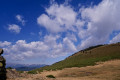
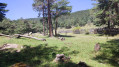
 The itinerary is varied, alternating between wooded sections and open, panoramic areas. Overall, the terrain is quite pleasant. As for the scenery!
 tar(star)star: Sheepfolds galore...We also took a little detour to see two more: at point 4 (altitude 1,756 m), we headed west to reach a small plateau (altitude 1,832 m) via a small path (which exists on OpenStreetMap World). From there, in addition to a sheepfold, you can see the entire snow-covered mountain range in the distance, all the way to Carlit. It only adds 1 km and 70 m of elevation gain, and it's really worth it! There are many points of interest along this route.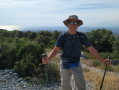
 Visorando Member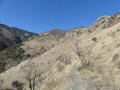

 Easy
Easy 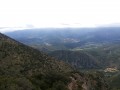
 Moderate