Country:
 City:
City:


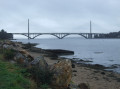
From the Plougastel-Daoulas roundabout on the N165, head towards the hamlet of Le Passage along the banks of the Élorn. On the final descent, park on the right in the Bois du Kerérault car park.
Yellow markings
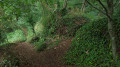
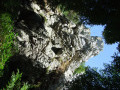
(S/E) With your back to the car park, head towards the information board about the woodland and begin a steep climb through the trees to go round the Rocher de l’Impératrice, an imposing sandstone rock. The climb involves numerous zigzags through this deciduous woodland. Follow the fence on your left, which marks the boundary of this climbing site. Follow the markings carefully, as there are many paths in the area leading to the starting points of the climbs.
At the top, turn right and descend, still zigzagging, until you reach a bench. Note, on the right, a wire fence marking the boundary of an archaeological excavation site for a Palaeolithic rock shelter (dating back approximately 14,500 years). Continue down the path until you reach a crossroads marked by a signpost.
Unmarked
(1) Turn right and follow this flat path which leads to a road.
Yellow markings
(2) Follow this road, passing a property entrance on the left, and continue along a track that leads to a road at Le Froud, the name of the stream that flows into the Élorn.
(3) Continue along the path straight ahead to reach the hamlet of Le Dreff.
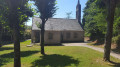
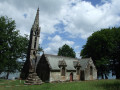
(4) Cross the hamlet and, at the crossroads on the way out, continue straight on along the small dead-end road. Pass a campsite on your left and arrive at the Chapelle Saint-Jean.
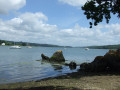
(5) After a visit, head for the banks of the Élorn and follow the left bank to the last houses. Head up to the left along the small road. Before the crossroads, turn right onto Chemin du Figuier, which leads back to the hamlet of Le Dreff.
(4) Turn right and, following the path in the opposite direction to the way out, head towards the Ruisseau du Froud.
(3) Turn right towards the banks of the Élorn and follow them for about a hundred metres. Turn left and rejoin the route you took on the way there. Turn right and, following the route in the opposite direction, rejoin the road you took on the way there.
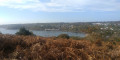
(2) Turn right, follow the small road that passes in front of a lodge and continue along the small stony path to descend to the banks of the Élorn. Follow the foreshore to the left towards the Passage water sports centre. Until 1930, before the construction of the Plougastel Bridge – or Pont Albert Louppe, named after the Finistère councillor who secured its construction – a ferry provided a crossing over the Élorn to reach Brest.
(6) Walk around the little Saint-Languis Chapel and, via the Route du Passage, head straight up to the Bois du Kerérault car park (S/E).






 Visorando Member

 Moderate