Country:
 City:
City:


(S/E) From the suggested parking location (see 'Practical information' below), walk down the hill where the Inn and the cannon will come into view. The cannon was recovered from a wreck (see In the nearby area (E) for more interesting information).
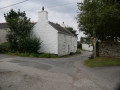
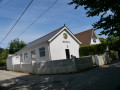
(1) From the cannon, stay on this side of the road, walking down Fore Street, to where the road opens up, near the old chapel. Turn right, along the lane. This appears to be the back lane of the houses, but will lead into a track; keep following. The track then divides, straight on or left. For this route, turn left (straight on was not checked) onto the road, then turn right. A stream will appear on the right with a road to the right. Just past the road, see the old 'clapper bridge' which led to a mill. Continue along the road, as it bears left, ignore the right-hand track and carry straight on up the hill, 'Fort Hill', until the farm track starts to level out and veers to the right.
(2) The designated footpath enters the farm field (Note: At the top of the Hill is an Iron Age fort; at the time of plotting this route, access was restricted, and only parts of the exterior were visible). Follow the designated markers, where visible, handrailing the field's hedge. Be mindful of how the gates were left. At the end of the field system, meet a junction. Turn right, over the Railway bridge.
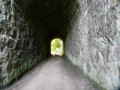
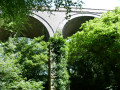
(3) Turn right and follow the track, which leads into Old Mill Lane. Follow Old Mill Lane to a remote hamlet/farm, and on to the railway embankment tunnel. (Info: The embankment was part of the original wooden railway viaduct, which transported copper and tin ore to the port of Hayle.) The more modern viaduct is more visible after the tunnel.
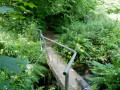
(4) Carry on the track, looking for a railing and path down to the stream with a small bridge.
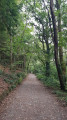
(5) Turn left and cross the bridge and follow the path, passing a weir, a part of what was once water extraction from the stream. Keep following the path to a lane, passing some remote houses.
(6) Follow the country lane to your left, up the hill to the village of Penponds.
(7) Turn right and follow the lane, Higher Penponds Road. The last house on the left, a white thatched cottage, was once the home of Richard Trevithick (See: In the nearby area, (B) for more interesting information).
(8) Continue along the lane to the main road, turning right. When it is safe to do so, cross the road and use the pavement back to the start (S/E).
 Visorando Member

 Moderate