


Refine your search for walks in Saint-Beaulize
Saint-Beaulize walks


 The Corniches of the Cirque de Saint-Beaulize
 Visorando Member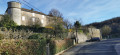
 3.25 mi
 +830 ft
 -837 ft
 2h 15
2h 15
 Moderate
 Departure from Saint-Beaulize (Aveyron)
Located on the south-western slope of the Larzac Plateau at an altitude of 530 m, the village of Saint-Beaulize is dominated by a cirque formed by high limestone cliffs (reaching 860 m) commonly known as molaires.
The Causse and the banks of the Sorgue from Cornus
9.90 mi
+1,093 ft
-1,106 ft
5h 30
Moderate
Departure from Cornus (Aveyron)
A very beautiful spring walk (May, if possible) to enjoy the flowers on the Causse, but it is best to avoid days that are too hot. Beautiful green landscapes. The paths are varied, sometimes through woodland, sometimes open. The elevation gain does not seem significant but is spread over two or three steep sections, with the rest following the contour lines more or less.
Causse du Larzac in Sainte-Eulalie-de-Cernon
 4.32 mi
+1,099 ft
-1,125 ft
2h 55
Moderate
Departure from Sainte-Eulalie-de-Cernon (Aveyron)
4.32 mi
+1,099 ft
-1,125 ft
2h 55
Moderate
Departure from Sainte-Eulalie-de-Cernon (Aveyron)
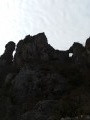
Starting from the Causse du Larzac, you will discover the colossal rocks that dominate the Cernon valley, while approaching the old railway line several times, which today is used for tourist activities thanks to the rail bikes of Sainte-Eulalie-de-Cernon.
You can explore the fortified Templar village of Sainte-Eulalie-de-Cernon and climb back up the other side of the valley.
The Abbé Coste trail
7.56 mi
+1,132 ft
-1,132 ft
4h 30
Moderate
Departure from Viala-du-Pas-de-Jaux (Aveyron)
Built during the time of the Hospitallers, the granary tower of Viala-du-Pas-de-Jaux is the starting point for this circular loop through a sumptuous agropastoral landscape. Formed by karst erosion, the cirque of Saint-Paul-des-Fonts, village of the botanist Hippolyte Coste to whom an area is dedicated, offers a breathtaking spectacle.
The Avène Reservoir
 6.86 mi
+1,043 ft
-1,043 ft
4h 05
Moderate
Departure from Ceilhes-et-Rocozels (Hérault)
6.86 mi
+1,043 ft
-1,043 ft
4h 05
Moderate
Departure from Ceilhes-et-Rocozels (Hérault)
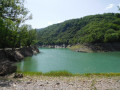
Here is a brief overview of the Avène Reservoir, starting from Ceilhes-et-Rocozels, first climbing up Mont Redon, south of the village. After the Rouvignac chapel and the holiday lodges, the route approaches the left bank of the Orb, which feeds the Bouloc lake, developed for outdoor leisure activities (water sports, camping).
⚠️ 11/05/2026:In winter and spring, and after heavy rain, when the reservoir is full, the walk may be impassable between points 8 and 10. It is possible to avoid walking along the banks by following the route shown on the IGN map between points 7 and 10.
The Jure Stream
 5.73 mi
+1,060 ft
-1,060 ft
3h 35
Moderate
Departure from Ceilhes-et-Rocozels (Hérault)
5.73 mi
+1,060 ft
-1,060 ft
3h 35
Moderate
Departure from Ceilhes-et-Rocozels (Hérault)
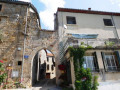
From Ceilhes-et-Rocozels, in Haut-Languedoc, near the ‘border’ with Aveyron, here’s an opportunity to head for the hills, in the Monts d’Orb State Forest, towards the Rocher du Canari on the edge of the Tesserièyres Plateau. The Ruisseau de Jure will then serve as your guide back to the village, which lies on the banks of the Orb, a coastal river regulated by the Avène Reservoir.
The Cirque de Tournemire and the Sentier des Échelles via Roquefort
 12.78 mi
+3,048 ft
-3,064 ft
6 hrs
12.78 mi
+3,048 ft
-3,064 ft
6 hrs
 Very difficult
Departure from Tournemire (Aveyron)
Very difficult
Departure from Tournemire (Aveyron)
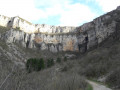
This route, which circles the Soulzon valley, will take you to two legendary sites:
- the Cirque de Tournemire and its spectacular cliffs.
- the Combalou plateau, whose underground chambers house the famous Roquefort caves. The trail winds its way through cliffs, ledges and rocky outcrops, offering impressive views.
Between the two, there is a truly unique route around the Roquesquatres mountain and a short passage through the woods along the Soulzon.
Tournemire and the cliffs of Larzac
 10.52 mi
+1,165 ft
-1,145 ft
5h 50
Moderate
Departure from Tournemire (Aveyron)
10.52 mi
+1,165 ft
-1,145 ft
5h 50
Moderate
Departure from Tournemire (Aveyron)
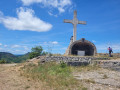
A beautiful hike on the Causse du Larzac to admire the Cirque du Brias, commonly known as the Cirque de Tournemire. It is surrounded by one of the most beautiful cliffs on the western edge of the Larzac, from the top of which you can enjoy a vast panorama. The best time to visit is May/June to admire all the flowers on the causse.
Continue towards Viala-du-Pas-de-Jaux with its magnificent restored hospital tower.
The circular Quarry Loop starting from L’Hospitalet-du-Larzac
7.40 mi
+653 ft
-643 ft
4h 00
Moderate
Departure from L'Hospitalet-du-Larzac (Aveyron)
A short walk of around ten kilometres through the fields and the Larzac. With a bit of luck, you’ll be able to watch aerobatic displays, admire a menhir and walk through a pretty deciduous woodland dotted with daffodils in the right season. To round off the walk, enjoy a free visit to the Archaeology Museum in L’Hospitalet-du-Larzac.
The ladder trail around Roquefort-sur-Soulzon
 3.64 mi
+1,640 ft
-1,640 ft
3h 05
Moderate
Departure from Roquefort-sur-Soulzon (Aveyron)
3.64 mi
+1,640 ft
-1,640 ft
3h 05
Moderate
Departure from Roquefort-sur-Soulzon (Aveyron)
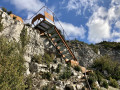
This walk offers an original perspective on the Roquefort region from above, between Lévézou, the Tournemire cirque, an old sheepfold and the Larzac plateau. The final section passes close to the Roquefort caves and crosses the village's main street to return to the starting point.
The Mont Grand circular loop from Versols
 5.61 mi
+1,243 ft
-1,243 ft
3h 40
Moderate
Departure from Versols-et-Lapeyre (Aveyron)
5.61 mi
+1,243 ft
-1,243 ft
3h 40
Moderate
Departure from Versols-et-Lapeyre (Aveyron)
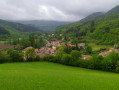
A half-day walk that takes you from the medieval centre of the village of Versols and its castle (dating from the 11th century, with 15th- and 16th-century additions) through pastures, heaths and forests to discover the panoramic views offered by the climb up Mont Grand (677 m). Return to Versols via Notre-Dame du Cayla, a local place of pilgrimage, believed to date back to the 12th century.
Descent of the Canallettes to the source of the Durzon
 6.80 mi
+663 ft
-676 ft
3h 40
Moderate
Departure from Nant (Aveyron)
6.80 mi
+663 ft
-676 ft
3h 40
Moderate
Departure from Nant (Aveyron)
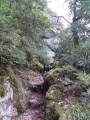
Starting from Larzac, crossing the Domaine de la Maison des Forestiers, visiting a prehistoric shelter, you will descend to the source of the Durzon, then climb back up through the Pas de la Mule forest.
⚠️20/10/2025: The Canalettes fault site is closed annually from 1 October to 30 November by municipal decree.
The Canalettes loop
 5.41 mi
+269 ft
-282 ft
2h 45
5.41 mi
+269 ft
-282 ft
2h 45
 Easy
Departure from Nant (Aveyron)
Easy
Departure from Nant (Aveyron)
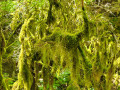
A beautiful and very varied hike. On the agenda are three caves, including the "illuminated" cave, a lavogne, a beautiful natural arch and the famous canalettes (or canoles).
⚠️20/10/2025: The Canalettes fault site is closed annually from 1 October to 30 November by municipal decree.
From the Orb to the Escandorgue via Tibet
 10.46 mi
+1,670 ft
-1,644 ft
6h 15
Moderate
Departure from Roqueredonde (Hérault)
10.46 mi
+1,670 ft
-1,644 ft
6h 15
Moderate
Departure from Roqueredonde (Hérault)
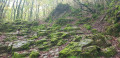
This hike starts in Roqueredonde and takes you to the Orb river and the Tibetan Buddhist temple Lerab Ling, where you can take a short meditation break. The route then enters the Escandorgue National Forest, where the charm of the forest paths contrasts with the chaotic dolomitic landscape of the Causse. Finally, the route follows ancient paths worn by passing flocks of sheep.
The Sylvanès trail
 7.20 mi
+892 ft
-883 ft
4h 05
Moderate
Departure from Sylvanès (Aveyron)
7.20 mi
+892 ft
-883 ft
4h 05
Moderate
Departure from Sylvanès (Aveyron)
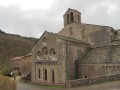
Through a coniferous forest, we discover the Russian Orthodox Chapel nestled in the heart of the woods, in an idyllic green setting. Time to pause and meditate on this magical place. Superb views. The trail is mainly woodland, which is pleasant in hot weather.
The Avène Spa-Goer’s Getaway
2.42 mi
+312 ft
-325 ft
1h 25
Easy
Departure from Avène (Hérault)
This is a short circular loop through the pine forest, perfect for unwinding after the showers, baths, compresses and mist treatments.
During the climbs and descents – which are quite substantial – gaps in the pine forest offer glimpses, in the distance, of the spa complex and the surrounding hills.
Upper Orb Valley – From Avène to Rieussec via Peyreguille
 7.91 mi
+1,923 ft
-1,923 ft
5h 20
Moderate
Departure from Avène (Hérault)
7.91 mi
+1,923 ft
-1,923 ft
5h 20
Moderate
Departure from Avène (Hérault)
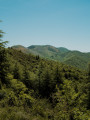
Avène is not just a cosmetics brand; it is also a thriving spa village in the upper cantons of the Hérault. Influenced by both the ocean and the Mediterranean, the Monts-d’Orb present striking contrasts from one slope to the other. From the Orb valley to the dry Rieussec valley via Peyreguille, the route—lovely and wooded, and therefore often shaded—alternates between south- and north-facing slopes. No fewer than six passes and four valleys are strung together in this way. Added to this is a well-preserved heritage (mill, Saint-André Chapel, etc.).
Plateau and forests above Labeil
 8.58 mi
+1,181 ft
-1,181 ft
5h 00
Moderate
Departure from Lauroux (Hérault)
8.58 mi
+1,181 ft
-1,181 ft
5h 00
Moderate
Departure from Lauroux (Hérault)
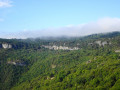
The hike combines sections of well-known routes (Haute Vallée de la Lergue, Corniches de Lauroux, Forêt de l'Escandorgue) with unmarked paths. A GPS is highly recommended. In clear weather, the views are superb, overlooking the Cirque de Labeil. There is a wide variety of landscapes and environments.
The source of the Durzon and the Canalettes
 7.65 mi
+791 ft
-781 ft
4h 10
Moderate
Departure from Nant (Aveyron)
7.65 mi
+791 ft
-781 ft
4h 10
Moderate
Departure from Nant (Aveyron)
Important: access to the Canalettes is prohibited from 1 October to 30 November 2025.
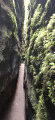
This is a very interesting route, particularly in relation to the Canalettes site. These are two canoles, faults carved into the limestone of the causses due to erosion. These fractures are particularly deep at this location.This hike also takes you to the source of the Durzon, which takes the form of a resurgence. Similarly, the steep Pas de la Mule pass, although short, is another special feature of this circular.
Short route around the Dourdou in Brusque
 3.38 mi
+387 ft
-394 ft
1h 55
Easy
Departure from Brusque (Aveyron)
3.38 mi
+387 ft
-394 ft
1h 55
Easy
Departure from Brusque (Aveyron)
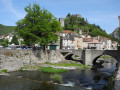
A short family hike in the upper Dourdou valley, in southern Aveyron, where water meets stone and the slopes are stony.
But above all, it is the village of Brusque, from ‘bruscas’ (heather), crowned by the ruins of its9th-century castle on its rocky outcrop, with its winding alleyways.
Maliver Route
 5.02 mi
+1,732 ft
-1,703 ft
3h 50
Moderate
Departure from Brusque (Aveyron)
5.02 mi
+1,732 ft
-1,703 ft
3h 50
Moderate
Departure from Brusque (Aveyron)
At the summit of Maliver (alt. 901m), there is a stunning viewpoint and an information board about the Haut Dourdou valley.
This route can be combined with the Dent de Saint-Jean route.
The Dourdou valley, the ridges and the summit of Merdelou
 10.72 mi
+2,756 ft
-2,746 ft
7h 20
10.72 mi
+2,756 ft
-2,746 ft
7h 20
 Difficult
Departure from Brusque (Aveyron)
Difficult
Departure from Brusque (Aveyron)
Varied landscapes and numerous viewpoints. A few very steep climbs! Orientation table at the summit.
A few sections on roads in the valley and on tracks along the ridges (tracks built for the installation and maintenance of the wind turbines)
Rich and varied flora: in late April, a carpet of daffodils at the summit; in late June, a profusion of gentians, large daisies and… wild strawberries.