A walk through Soissons through the ages

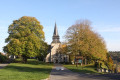
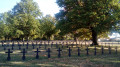
With a history stretching back two thousand years, the city of Soissons boasts a wide variety of architecture: Gallo-Roman ruins, Gothic abbeys and churches, Renaissance and Louis XIII pavilions, Art Deco buildings, and more. This urban hike invites you to discover this rich heritage! There are also several memorials in this city, which was on the front lines of the First World War.

This walk is part of a multi-day hike: Paths of remembrance from the Great War

Details

1579732
Creation:
Last update:
Last review:
  • Walking
    Activity: Walking
  • ↔
    Distance: 7.36 km
  • ◔
    Average duration: 2h 10 
  • ▲
    Difficulty: Easy

  • ⚐
    Back to start: Yes
  • ↗
    Ascent: + 21 m
  • ↘
    Descent: - 25 m

  • ▲
    Highest point: 57 m
  • ▼
    Lowest point: 40 m
  • ⚐ Country: France
  • ⚐ District: Soissons (02200)
  • ⚑
    Start/End: N 49.369193° / E 3.338079°
  • ❏
    IGN map(s): Ref. 2611O
  • Hour-by-hour weather

Photos

Description of the walk

Starting point and access: Soissons train station.
- TER - Line between Paris-Nord and Laon.
Take the Place de la Gare exit on the side of platform 1 (direction Paris to Laon; if coming from the opposite direction, take the underground passage).

(S/E) When you leave the station, cross the square and go straight towards the town centre along Avenue du Général de Gaulle. Cross a river (the Crise on the map) and walk along the left-hand side of Parc de la République for about 100 metres.

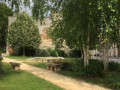
(1) Enter the park and turn left immediately. At the fork (stele), go right. Walk briefly along the river and go around the playground on the left. Leave the park and you will come to a roundabout with a modern sculpture of the famous broken vase in the centre.

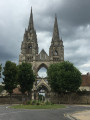
Then take the second right, Rue Racine (no entry). At the crossroads, turn left into Avenue Thiers (dead end). At the end, go through the pedestrian gate on the right to access the abbey and climb a few flights of steps. At the top, turn left and, facing the former arsenal building, turn left again to reach the site of the church nave (now destroyed), at the foot of the two remaining towers.

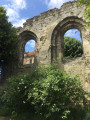
(2) Facing the towers, head diagonally to the left towards the former cloister (incorrectly marked as "chapter house" on the map), two wings of which are well preserved. At the back, at the corner of the two wings, climb the stairs leading to the former refectory (if the door is closed, go around the building on the left). Exit via the stairs on the other side and turn right. A staircase on the right allows you to make a quick return trip to visit the cellar. Reach the front of the church.

With your back to the façade, go straight ahead and go through the exit gate. Cross the roundabout, go straight ahead for about 30 metres and, at the crossroads, turn right onto a wide boulevard that slopes slightly downwards (Boulevard Jeanne d'Arc, not signposted here).

At the next crossroads, turn right into the one-way street, with the cathedral clearly visible. At the end, take the second left, Rue des Déportés et fusillés. Walk along a car park to reach the front of the cathedral.

(3) With your back to the façade, turn left and head down a gravel path towards a fountain. When you reach the fountain, turn left onto Rue de l'Évêché. Walk along a car park on your right and note the remains of Gallo-Roman ramparts at the end.

At the end of the cathedral, turn right towards the square and, at the corner of the market hall, turn right onto Rue des Chaperons Rouges (note the grey-zinc building on the right-hand side).

At the crossroads, turn left onto Rue Charles Desboves. At the next crossroads (note the Maison des Syndicats and the Art Deco building further on), turn left again onto Rue du Marché. At the end, cross the perpendicular street, enter Place Fernand Marquigny and head for the war memorial.

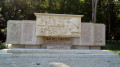
(4) Walk around the monument (preferably clockwise), which is decorated with historical scenes from various periods. Then cross the square towards the east, i.e. away from the cathedral. Cross Rue Saint-Martin and enter Square Saint-Pierre, opposite the chapel of the same name.

Go around the chapel on the right and walk along a ruined wall on your right. At the end of the chapel, go down a flight of steps on the right and leave the square. Turn left and walk past the monument in honour of British soldiers. Continue and, shortly afterwards, turn left up Rue du Mont Revers.

At the crossroads, turn right onto Rue du Commerce. Then take the first left, Rue du Griffon. At the end, turn right onto Rue du Beffroi (note the Art Deco façade of the cinema on the right-hand side).

(5) At the roundabout, turn left onto Rue du Collège. Cross Place du Cloître on the left-hand side and, on the opposite side, at no. 22, note the Egyptian-style decorations on the front of a hairdresser's.

Turn left onto Rue de la Buerie, then right onto Rue de la Trinité. At the end, turn right onto Rue de l'Échelle du Temple. Take the first right onto Rue des Paveurs. At the end, cross Rue Saint-Christophe and turn left onto the square of the same name.

Pass the monument in honour of the reconstruction cooperatives, cross the car park and continue to the end of the square.

(6) Then turn right. At the crossroads, take Rue Quinette on the left. At the corner of the Chamber of Commerce and Industry, turn right onto the one-way street (not signposted here; Rue Porte Hozanne on the map). Go straight ahead and walk along the left side of the Red Cross building. Then continue along Rue Richebourg.

At the end, cross a street and then the Grand Place (stele). On the other side, continue down the middle of Rue de la Paix. At the next crossroads, continue straight ahead between Saint-Léger Abbey on the left and the Town Hall on the right. Walk along a car park and you will come to a roundabout.

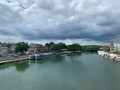
Turn left onto Avenue du Mail. After about 50 metres, cross the avenue at the pedestrian crossing and continue along a gravel path. Turn right, go under the bridge and walk along the Aisne. Just before the footbridge, leave the towpath and go up to the right onto the quay.

(7) Make a quick return trip to the Passerelle des Anglais for a view over the Aisne.

(7) With your back to the river, go straight ahead into Rue de la Bannière. Take the first left, Rue Notre-Dame. At the end, cross Rue des Feuillants and go through the small gate between the Pavillon de l'Arquebuse (Louis XIII style) on the left and a large gate on the right.

At the end of the gravel path, turn right to rejoin a street. Follow it to the right and, at the crossroads, turn left onto Rue des Feuillants. Walk past an old public meeting hall on your right.

(8) At the next crossroads, turn left onto Rue Saint-Martin. Go straight ahead and pass a small triangular square on your right. Continue straight ahead onto Rue des Charliers (cobbled).

At the end (view of the Abbaye Saint-Jean-des-Vignes on the right), turn left onto Avenue Thiers. Go around the roundabout on the right (monument to the 1870 war).

After crossing Avenue de la Division Leclerc, turn right into Parc de la République. Continue straight ahead, keeping Avenue du Général de Gaulle on your left. Before reaching the memorial you passed on the way in, exit the park on the left.

(1) Turn right and go straight up Avenue du Général de Gaulle to the station (S/E).
Waypoints

  1. S/E : km 0 - alt. 56 m - Gare de Soissons
  2. 1 : km 0.86 - alt. 45 m - Parc de la République
  3. 2 : km 1.5 - alt. 57 m - Location of the former nave of the church - Abbaye Saint-Jean-des-Vignes
  4. 3 : km 2.44 - alt. 46 m - Cathédrale Saint-Gervais et Saint-Protais (Soissons)
  5. 4 : km 2.86 - alt. 47 m - War memorial
  6. 5 : km 3.46 - alt. 47 m - Roundabout
  7. 6 : km 4.13 - alt. 47 m - Place Saint-Christophe
  8. 7 : km 5.32 - alt. 43 m - Passerelle des Anglais - Aisne (l')
  9. 8 : km 5.96 - alt. 47 m - Crossroads
  10. S/E : km 7.36 - alt. 56 m - Gare de Soissons

Notes

Train timetables: consult the SNCF website.

For motorists:
It is of course possible to park in the station car park, located along Rue de Belleu, on the Place de la Gare side and next to platform 1. However, as the route between the station and Parc de la République is not particularly interesting, it is recommended that you park in one of the many car parks dotted around the circular city centre (saving you around 1.7km):
- Place Mantoue, at the foot of the cathedral (3).
- Place Fernand Marquigny, where the war memorial is located (4).
- Place Saint-Christophe, just before (6).
- Grand Place, between (6) and (7).
- Place de l'Hôtel de Ville, between (6) and (7).
- At the chevet of Saint-Léger Abbey, between (6) and (7).

Good trainers are sufficient for this urban route.

Toilets on the right just before the exit of the Saint-Jean-des-Vignes Abbey site.

Bars, restaurants and shops along the route, mainly in the cathedral district (3) and Rue Saint-Martin (8), and to a lesser extent Avenue Charles de Gaulle and Place de la Gare, between (S/E) and (1).

A detailed map is required (at least the one accompanying this description).

Conditions of access to the Saint-Jean-des-Vignes Abbey site:
Opening hours:
- Opening: 9 a.m. on weekdays; 10 a.m. on weekends and public holidays.
- Closing time: 5:00 p.m. from November to February; 6:00 p.m. from March to October.
Recommendations:
Several areas are closed to the public due to the risk of falling rocks: please respect the barriers and signs on site.

Hike completed by the author on 2 December 2018.

Worth a visit

Founded around 20 BC, the first capital of the Frankish kingdom, 80% destroyed during the First World War, Soissons has a turbulent history spanning two millennia, which cannot be summed up by the single episode of the vase broken before Clovis's eyes, which everyone learned about in primary school. See an overview ofthe history of the city of Soissons.

From the station (S/E) to Saint-Jean-des-Vignes Abbey (2):
- Parc de la République (1).
- Modern sculpture of the famous broken vase, at the roundabout at the park exit.

Saint-Jean-des-Vignes Abbey (2):
Founded in 1076, the church was rebuilt in the 13th-15th centuries in the Gothic style. It was dismantled stone by stone at the beginning of the 19th century. The site is open to visitors (see access conditions in the practical information section). Of particular interest are:
- The location of the nave of the old church.
- The two towers on the façade, which escaped demolition.
- The cloister, two wings of which have been preserved.
- The refectory, which has been completely restored.
- The cellar, on the floor below, which hosts temporary exhibitions.
- The former abbot's residence, which houses an information centre on the history of the town (free visit, entrance on the left before leaving the site).

Saint-Gervais and Saint-Protais Cathedral (3):
Built in the Gothic style, it was erected between the end of the 12th century and the end of the 15th century. Of note:
- The nave, which is impressive in size.
- The stained glass windows in the choir, dating from the 18th century.
- In the left arm of the transept, a painting by Rubbens from 1625 depicting the adoration of the shepherds.

From the cathedral (3) to the war memorial (4):
- Remains of Gallo-Roman ramparts, Rue de l'Évêché.
- Market hall (1911).
- Art Deco buildings around the market hall.

War memorial (4):
Erected in 1926 on Place de Marquigny at the foot of the cathedral, this monument recounts history beyond the First World War. It features:
- At the top, four allegorical figures carrying a flame.
- At the four corners, statues of two soldiers, a 12th-century bourgeois and a Frankish soldier.
- South side: a scene depicting the evacuation of the city.
- West side: an allegory of victory with two poilus looking fierce and determined.
- North side: the scene of the broken vase under the gaze of Clovis.
- East side: the entry into the city of Joan of Arc and Charles VII on 23 July 1429.

From the war memorial (4) to Place Saint-Christophe (6):
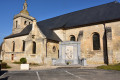
- Saint-Pierre Chapel (12th century).
- British Memorial, at the bottom of Square Saint-Pierre. Monument erected in 1928 in tribute to the soldiers of the British Empire who fought in the First World War.
- Le Clovis cinema, Art Deco style, 12 Rue du Beffroi, shortly before (5).
- Egyptian motifs on the front of a hairdressing salon, 22 Rue du Collège, shortly after (5).
- Monument to the reconstruction cooperatives, Place Saint-Christophe (6). Monument erected in 1935 in tribute to Guy de Lubersac (1878-1932), an aviator during the Great War, who played a major role in coordinating the reconstruction cooperatives after the end of the conflict.

From Place Saint-Christophe (6) to the Passerelle des Anglais (7):
- Former drugstore front, Pue de la Paix.
- Saint-Léger Abbey (13th-14th century). Paid admission to the abbey and museum.
- Town hall.
- Banks of the Aisne.

From the Passerelle des Anglais (7) to the station (S/E):
- Pavillon de l'Arquebuse (1626), in the Louis XIII style.
- Art Deco buildings on Rue Saint-Martin.
- Monument to those who died in the 1870 war (1901), Place de République.

Reviews and comments

4.8 / 5
Based on 8 reviews

Reliability of the description
5 / 5
Ease of following the route
4.7 / 5
Route interest
4.8 / 5
Baladeuse66
Baladeuse66

Overall rating : 5 / 5

Date of your route : Oct 26, 2024
Reliability of the description : ★★★★★ Very good
Ease of following the route : ★★★★★ Very good
Route interest : ★★★★★ Very good
Very busy route : No

A pleasant little walk to discover the historical heritage of the beautiful town of Soissons.
Very beautiful religious buildings.
Be sure to take the guided tours of St Jean des Vignes and the St Médard crypt after your walk.
The banks of the Aisne near the mall are ideal for strolling and picnicking.

Machine-translated

sophieRRando
sophieRRando

Overall rating : 5 / 5

Date of your route : May 13, 2024
Reliability of the description : ★★★★★ Very good
Ease of following the route : ★★★★★ Very good
Route interest : ★★★★★ Very good
Very busy route : No

An interesting route for discovering the town of Soissons and making you want to return to explore the little side streets that have been left out, but you can't see everything on your first visit.
Hidden places that have remained untouched make you want to see them maintained... A city is constantly changing.
Perhaps it's a little early in the season to see the banks of the Aisne come to life... or maybe it's better to visit during the week.

Machine-translated

delph_d2312
delph_d2312

Overall rating : 5 / 5

Date of your route : Apr 19, 2022
Reliability of the description : ★★★★★ Very good
Ease of following the route : ★★★★★ Very good
Route interest : ★★★★★ Very good
Very busy route : No

A lovely way to discover Soissons.
Note that there is a guided tour of the cathedral every Sunday at 2.30 pm, which allows you to climb the tower (tickets available directly from the guide, €5).

Machine-translated

Pizzilune
Pizzilune

Overall rating : 4.7 / 5

Date of your route : Mar 08, 2021
Reliability of the description : ★★★★★ Very good
Ease of following the route : ★★★★☆ Good
Route interest : ★★★★★ Very good
Very busy route : No

By adding a stroll along the canal for a touch of nature, we enjoyed this city tour on a Sunday.

Machine-translated

Chrysalide51
Chrysalide51

Overall rating : 5 / 5

Date of your route : Jun 29, 2020
Reliability of the description : ★★★★★ Very good
Ease of following the route : ★★★★★ Very good
Route interest : ★★★★★ Very good
Very busy route : No

A lovely walk to discover the town of Soissons.

Machine-translated

bcr
bcr

Overall rating : 4.7 / 5

Date of your route : Jan 18, 2020
Reliability of the description : ★★★★★ Very good
Ease of following the route : ★★★★☆ Good
Route interest : ★★★★★ Very good

An interesting route, passing close to the main sights. The route is well described, but it is not easy to follow the map, the route description and the descriptions of the points of interest. The third point could be included in the route description, especially as it is not signposted and you have to pay close attention to the street names.

Machine-translated

philippe02310
philippe02310

Overall rating : 4.7 / 5

Date of your route : Mar 20, 2019
Reliability of the description : ★★★★★ Very good
Ease of following the route : ★★★★★ Very good
Route interest : ★★★★☆ Good

A lovely cultural walk through the town of Soissons, except that the pedestrian gate to the abbey was closed (after enquiring at the abbey, I learned that this was due to a lack of staff). I continued along Rue Racine and then took Rue Saint-Jean to get back on the trail.

Machine-translated

Netra
Netra ★

Hello pounetvachon, and thank you for your comments!

The typo after the full stop (8) has just been corrected.

Machine-translated

pounetvachon
pounetvachon

Overall rating : 4.5 / 5

Date of your route : Mar 02, 2019
Reliability of the description : ★★★★★ Very good
Ease of following the route : Not used / Not applicable
Route interest : ★★★★☆ Good

Small typo in (8) => Rue des Charriers instead of Rue des Charliers.

Otherwise, very good.

Machine-translated

Other walks in the area

For more walks, use our search engine .

The GPS track and description are the property of this route's author. Please do not copy them without permission.