Refine your search for walks in Parc Georges Brassens
Parc Georges Brassens walks


 The Petite Ceinture in the 15th arrondissement, Georges Brassens and the Petite Ceinture in the 14th arrondissement
 Visorando Member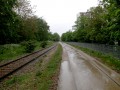
 2.77 mi
 +115 ft
 -0 ft
-0 ft
 1h 20
1h 20
 Easy
Easy
 Departure from Paris
A short walk to relax and get away from it all. First, take the old Petite Ceinture railway line, which runs high above the city. Then stroll through Parc Georges Brassens, which offers a variety of paths and places to stop and rest. Finally, you pass through the 14th arrondissement and follow the Petite Ceinture line to the Porte d'Orléans.
In the footsteps of Georges Brassens: Montparnasse, Plaisance and Brancion
 4.19 mi
+66 ft
-98 ft
2h 00
Easy
Departure from Paris
4.19 mi
+66 ft
-98 ft
2h 00
Easy
Departure from Paris
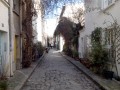
This fourth and final section of our walk dedicated to Georges Brassens takes us to the main places where he lived in Paris, including the famous Impasse Florimont. We walk along a few cobbled and flower-lined passages, cross the public park that bears his name and finish with a section of the old Petite Ceinture railway line.
The wildlife of Grenelle and Vaugirard
 6.07 mi
+125 ft
-20 ft
2h 55
Easy
Departure from Paris
6.07 mi
+125 ft
-20 ft
2h 55
Easy
Departure from Paris
This urban route crosses the 15th arrondissement of Paris from west to east and then from north to south, discovering numerous animal representations. The sculptures in Georges Brassens Park recall the past of the Vaugirard slaughterhouses.
The towers of Beaugrenelle and the squares and gardens of the 15th arrondissement
 6.37 mi
+92 ft
-82 ft
3h 00
6.37 mi
+92 ft
-82 ft
3h 00
 Moderate
Departure from Paris
Moderate
Departure from Paris
A walk through Paris's 15th arrondissement, starting at the Beaugrenelle slab, at the foot of the tall towers of the Front de Seine. Next, we cross Parc André Citroën and stroll through the streets and numerous squares of this arrondissement. We then pay tribute to Georges Brassens, in the street where he lived and then in the large park that bears his name. The walk ends along the disused Petite Ceinture railway line.
The Petite Ceinture in Paris
 36.37 mi
+863 ft
-863 ft
10 days
Easy
Departure from Paris
36.37 mi
+863 ft
-863 ft
10 days
Easy
Departure from Paris
A tour of Paris following the route of the former Petite Ceinture railway line! A highly varied itinerary, reflecting the diversity of the arrondissements it passes through, which focuses on the converted sections of the old railway line, squares and gardens, and the narrow streets and passageways away from traffic.
Denfert-Rochereau – Porte d’Auteuil
8.49 mi
+151 ft
-233 ft
4h 00
Moderate
Departure from Paris
First stage of the Paris ring route via theGR®75, with a few detours. This stage allows you to explore the south-western part of Paris whilst strolling through parks, squares and along the Petite Ceinture.
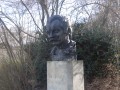
In the footsteps of Georges Brassens in Paris
 18.86 mi
+463 ft
-705 ft
4 days
Easy
Departure from Paris
18.86 mi
+463 ft
-705 ft
4 days
Easy
Departure from Paris
Originally from Sète, Georges Brassens (1921–1981) lived in Paris for around forty years and frequently referred to the city in his songs. This route takes you through Paris, passing by places where Brassens lived or worked, as well as sites that are directly or indirectly linked to some of his songs. Rich in heritage and passing through a variety of neighbourhoods, this city route is not just for die-hard ‘Brassens fans’.