


Refine your search for walks in Nécropole Nationale de la Maison Bleue (Cormicy)
Nécropole Nationale de la Maison Bleue (Cormicy) walks


 Circular around the Côte Cent Huit from Berry-au-Bac
 Visorando Member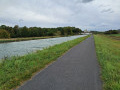
 6.85 mi
 +89 ft
 -108 ft
 3h 15
3h 15
 Moderate
 Departure from Berry-au-Bac (Aisne)
Discover a unique hike steeped in history, starting from Berry-au-Bac. This route invites you to immerse yourself in the landscapes that marked the First World War. By skirting the famous Côte Cent Huit, a major battleground, you will walk in the footsteps of history, where the memory of the vanished hamlets of Sapigneul and La Neuville is omnipresent. The hike is varied, alternating between quiet forest trails, vast stretches of countryside and the tranquillity of the greenway along the canal linking the Aisne to the Marne
Walks near Nécropole Nationale de la Maison Bleue (Cormicy)
Hermonville-Bouconville
 19.00 mi
+591 ft
-640 ft
9h 15
19.00 mi
+591 ft
-640 ft
9h 15
 Very difficult
Departure from Hermonville (Marne)
Very difficult
Departure from Hermonville (Marne)
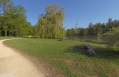
Twenty-fourth stage of the Jura to Hauts-de-France via the Francigena. For this stage, you leave Champagne by crossing the Saint-Thierry massif. Once you reach Cormicy, the terrain becomes a little flatter. You pass through Berry-au-Bac. This is where the Berry-au-Bac National Necropolis is located, which contains 3,972 bodies, 2,014 of which are in individual graves and 1,958 in ossuaries. You then continue on to Corbeny, where you can see the Oratory of Saint-Marcoul. Then you follow the "Chemin des Dames", a major site of remembrance of the Great War, to arrive in the village of Bouconville-Vauclair, where you will find the Abbey of Vauclair, the Château de la Bôve and a network of trenches from the 1914-18 war.
Bouconville-Laon
 14.32 mi
+669 ft
-663 ft
7h 10
14.32 mi
+669 ft
-663 ft
7h 10
 Difficult
Departure from Bouconville-Vauclair (Aisne)
Difficult
Departure from Bouconville-Vauclair (Aisne)
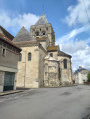
The twenty-fifth stage from the Jura to Hauts-de-France via the Francigena. After passing through the village of Neuville-sur-Ailette, you enter the Domaine du Lac d’Ailette. From every angle, this expanse soothes with the serenity it exudes. Then, the further you go, the more clearly you can make out the silhouette of “the crowned city”, visible for miles around. You arrive in Laon, the departmental capital, with its “airy” cathedral and its numerous openings in the towers, its Templar chapel and its church with the Dutch name Sint Martinus kerk. You will also discover the imposing former episcopal palace as well as the fortifications with their strange leaning tower.