


Refine your search for walks in Museum of Pilgrimage
Museum of Pilgrimage walks


 Santiago de Compostela, the pilgrims’ iconic city
 Visorando Member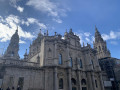
 2.35 mi
 +135 ft
 -115 ft
 1h 10
1h 10
 Easy
Easy
 Departure from Santiago de Compostela (A Coruña)
Santiago de Compostela is known throughout the world. Built on the tomb of St James the Apostle, the city attracts travellers for its famous cathedral, an exceptional monument with breathtaking façades that houses a wealth of relics. But the city of Santiago is home to many other equally magnificent monuments.
Every year, more than three million visitors come to wander through the city’s neighbourhoods, whose Romanesque, Gothic and Baroque architecture make them truly unique.
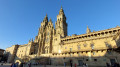
The Way of St James from Villards d’Héria to Santiago de Compostela
 1,231.39 mi
+106,063 ft
-107,326 ft
84 days
1,231.39 mi
+106,063 ft
-107,326 ft
84 days
 Very difficult
Departure from Villards-d'Héria (Jura)
Very difficult
Departure from Villards-d'Héria (Jura)
Do you want to connect with nature, admire its beauty at the slow pace of walking, walk to get to know yourself better, get back to basics, and push yourself to new limits? Set off on an adventure along the Camino de Santiago. That’s what I’m offering you with this route. I set off from my village in the Jura (the first six stages aren’t part of the signposted routes of the Camino de Santiago) to reach Santiago de Compostela in Spain, but there’s nothing to stop you setting off from your own home to join the route at one of the stages, or starting from Le Puy-en-Velay or any other town along the way..
Walks near Museum of Pilgrimage
First Stage Camino Cabo Finisterre - Santiago to Negreira
 Association / Club / Walk leader12.97 mi
+1,470 ft
-1,801 ft
7h 15
Association / Club / Walk leader12.97 mi
+1,470 ft
-1,801 ft
7h 15
 Moderate
Departure from Santiago de Compostela (A Coruña)
Moderate
Departure from Santiago de Compostela (A Coruña)
Time to leave Santiago behind and follow the sun going west. It's more or less downhill as far as Aguapesada, then there's a bit of a climb over Alto do Mar de Ovellas, where we have to go up 210 metros in about 2 km, up to Carballo. Then it's a stroll, crossing the Tambre river and into Negreira.
Camino Santiago de Compostela to Cabo Finisterre
72.33 mi
+7,113 ft
-7,569 ft
5 days
Moderate
Departure from Santiago de Compostela (A Coruña)
This walk can be done as an extention to any Camino de Santiago. It's the older reason people, like the Romans, walked across the top of the Iberian Peninsula, following the Milky Way to the ends of the earth (as it was known). Our recomendation is to go through Muxía rather than head straight to Fisterra (the name of the town). Also, we recommend going the extra 3 km to reach Cape Finisterre. Great scenery and an amazing climax to see the sunset on the Atlantic Ocean from the cape.
Fourteenth Stage Camino Primitivo - Lavacolla to Santiago
6.16 mi
+371 ft
-495 ft
3h 10
Moderate
Departure from Santiago de Compostela (A Coruña)
The final stage of the Camino Primitivo, completing the 308.5 km. An easy walk to finish and still be in time for the Pilgrim's Mass at 12 o'clock midday. The route goes past the Monte do Gozo (Hill of Joy) which gives us a fine view of the three spires of the Cathedral of Santiago de Compostela. From there, it's about an hour to the main door and entrance to the Cathedral and the end of this journey. However, the recommendation is to continue a few days more to Finisterre, on the Atlantic coast.
Second stage Camino Cabo Finisterre - Negreira to Santa Mariña
13.36 mi
+1,299 ft
-768 ft
7h 15
Moderate
Departure from Negreira (A Coruña)
This is an easier stage than the classic 33.6 km from Negreira to Olveiroa, through a really rural environment but with a few uphill climbs. In the first ten kilometers we cross lush forests of pine, chestnut and oak trees, then we go through a clearer patch of land. At the end, there's a small village that is friendly and worth exploring.
O Pino - Santiago de Compostela
12.88 mi
+991 ft
-1,040 ft
6h 45
Moderate
Departure from O Pino (A Coruña)
The seventy-fifth stage of the Way of St James. This stage takes you one last time along peaceful paths and trails through small villages, woodland and countryside. As you draw nearer, the stream of walkers grows denser. Yet amidst the crowd, each person walks alone with their own thoughts. In everyone’s eyes shines the star of Santiago. Arriving in Santiago de Compostela is always a moment of intense emotion, accompanied by numerous rituals.The first must-do is to have your photograph taken in front of the Santiago sign. Once that’s done, you make your way through the outskirts before reaching the historic quarter, where the cathedral stands proudly; there you can place your foot on ‘Kilometre 0’, situated in the centre of the Plaza del Obradoiro, directly opposite the cathedral, It symbolises the end of the pilgrimage, the finishing point of all the routes and, above all, the pride of having succeeded, of having pushed beyond one’s limits, overcome one’s fears and…And then comes the time to return.