


Refine your search for walks in Mès (fleuve)
Mès (fleuve) walks


 Mesquer - Quimiac
 Visorando Member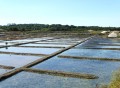
 13.66 mi
 +69 ft
 -66 ft
 6h 20
6h 20
 Easy
Easy
 Departure from Mesquer (Loire-Atlantique)
This route connects the three main areas of the municipality: Mesquer, Quimiac and Kercabellec. It allows you to discover the diversity of the area, first the marshes, then the countryside and the sea, which is particularly present around the Pointe de Mesquer.
Quimiac, between sea and marsh
 9.98 mi
+30 ft
-30 ft
4h 35
9.98 mi
+30 ft
-30 ft
4h 35
 Moderate
Departure from Mesquer (Loire-Atlantique)
Moderate
Departure from Mesquer (Loire-Atlantique)
The hike begins with three beaches and ends at Pointe de Merquel, which marks the entrance to the Bassin du Mès, famous for its salt marshes, mussels and oysters. The landscapes are magical, whether on the sea or marsh side.
Walk in the marshes around Kercabellec
8.17 mi
+36 ft
-36 ft
3h 45
Moderate
Departure from Mesquer (Loire-Atlantique)
Mesquer has a coastline opening onto the Bay of Vilaine and the open sea, but around Kercabellec, a small port between the village and Quimiac, there is a much more secret route between the marshes and the Merquel and Rostu tidal flats. Immerse yourself in this unique landscape where salt and shellfish farming are closely intertwined.
Between thatched cottages and marshes in Saint-Lyphard
 7.45 mi
+26 ft
-26 ft
3h 25
Moderate
Departure from Saint-Lyphard (Loire-Atlantique)
7.45 mi
+26 ft
-26 ft
3h 25
Moderate
Departure from Saint-Lyphard (Loire-Atlantique)
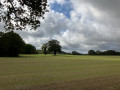
This hike allows you to discover the different faces of Brière: its marshes, its thatched cottages, its flora and fauna. Lots of paths, a few roads, all lined with oak trees, pines, gorse, willows and chestnut trees. Superb!
Le Rostu in the heart of the Mès salt marshes
 4.43 mi
+33 ft
-33 ft
2h 05
Easy
Departure from Mesquer (Loire-Atlantique)
4.43 mi
+33 ft
-33 ft
2h 05
Easy
Departure from Mesquer (Loire-Atlantique)
This hike is located in Mesquer, in the hamlet of Rostu.
The Bassin du Mès is an area where salt marshes have been created for centuries and were once highly developed. They are fed with seawater by channels leading from the "Merquel - Rostu - Pen-Bé" traicts, which are an enclave of the sea between the Pointe de Pen-Bé and the Pointe de Merquel. Oyster and mussel farming have also developed in this area. There are some beautiful views to be discovered.
Les Faillies Brières and Les Crolières de Gras
 5.96 mi
+33 ft
-33 ft
2h 45
Easy
Departure from Herbignac (Loire-Atlantique)
5.96 mi
+33 ft
-33 ft
2h 45
Easy
Departure from Herbignac (Loire-Atlantique)
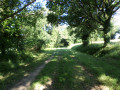
The Mès, a small coastal river in the north of the Guérande peninsula, flows through a low, wide valley consisting mainly of marshes, draining the water into the ocean.
The proposed route allows you to discover the upper part of these marshes and cross them via the Gras bridge, an ancient stone footbridge.
This route should only be attempted when the water level in the marshes allows the paths surrounding them to be used.
Circular route through the marshes: Étier de Boulay, Île de Rostu, Kercabellec
 6.55 mi
+66 ft
-66 ft
3h 05
Moderate
Departure from Mesquer (Loire-Atlantique)
6.55 mi
+66 ft
-66 ft
3h 05
Moderate
Departure from Mesquer (Loire-Atlantique)
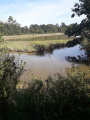
A walk through a varied landscape where the marshes tell the story of their distant origins, shaped by the earth and the ocean, with low, undulating vegetation carved out by small streams, and their domestication by man, with salt marshes and oyster beds, not to mention the iconic cabanes à carrelet (fishing huts).
 Tour of the thatched-roof villages of Saint-Lyphard
18.20 mi
+138 ft
-148 ft
2 hrs
Easy
Departure from Saint-Lyphard (Loire-Atlantique)
Remnants of a time when much of what enabled the people of Bréca to make a living was extracted from the marsh, thatched cottages are still very much in evidence around Saint-Lyphard. There are said to be no fewer than 500 of them.
To discover this exceptional heritage, why not hop on your bike and explore the narrow roads and farm tracks that criss-cross the Saint-Lyphard area? A complete change of scenery is guaranteed!