


Refine your search for walks in Gare de Paris-Saint-Lazare
Gare de Paris-Saint-Lazare walks


 In the footsteps of Georges Brassens: La Goutte d'Or, Montmartre and Trinité
 Visorando Member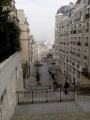
 4.72 mi
 +272 ft
 -305 ft
 2h 25
2h 25
 Easy
Easy
 Departure from Paris
This second section takes us to the old cabaret (Chez Patachou) where Georges Brassens performed in public for the first time. The walk through Montmartre, with its slopes, paths and stairways, is particularly pleasant (best done in the "low tourist season").
In the footsteps of Georges Brassens: Madeleine, Louvre and Cherche-Midi
 5.11 mi
+82 ft
-23 ft
2h 25
Easy
Departure from Paris
5.11 mi
+82 ft
-23 ft
2h 25
Easy
Departure from Paris
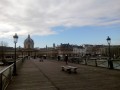
Crossing the Seine on the famous Pont des Arts, this third section takes us from the right bank to the left bank, which Brassens had a marked preference for. It is also an opportunity to visit some of the highlights of Parisian heritage: Place Beauvau and the Elysée Palace, Place Vendôme, the Louvre Museum (with its glass pyramid), the Institut de France, etc.
Crossing Montmartre from Place Clichy to Barbès
 2.91 mi
+262 ft
-249 ft
1h 35
Easy
Departure from Paris
2.91 mi
+262 ft
-249 ft
1h 35
Easy
Departure from Paris
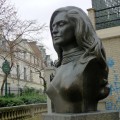
Discover Montmartre hill, via the small paths, the Saint Vincent cemetery, Dalida, the old village, the Basilica, superb views of Paris.
The wildlife of the Opéra and Europe districts
 3.66 mi
+108 ft
-33 ft
1h 45
Easy
Departure from Paris
3.66 mi
+108 ft
-33 ft
1h 45
Easy
Departure from Paris
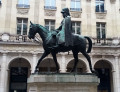
From the Louvre Museum to Place de Clichy, via Place de l'Opéra and Saint-Lazare station, this urban route explores the 1st, 2nd and 8th arrondissements of Paris in search of animal representations.
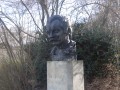
In the footsteps of Georges Brassens in Paris
 18.86 mi
+463 ft
-705 ft
4 days
Easy
Departure from Paris
18.86 mi
+463 ft
-705 ft
4 days
Easy
Departure from Paris
Originally from Sète, Georges Brassens (1921–1981) lived in Paris for around forty years and frequently referred to the city in his songs. This route takes you through Paris, passing by places where Brassens lived or worked, as well as sites that are directly or indirectly linked to some of his songs. Rich in heritage and passing through a variety of neighbourhoods, this city route is not just for die-hard ‘Brassens fans’.
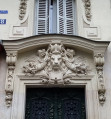
The bestiary of Paris
 146.53 mi
+2,999 ft
-2,625 ft
33 days
Easy
Departure from Paris
146.53 mi
+2,999 ft
-2,625 ft
33 days
Easy
Departure from Paris
This guide brings together around thirty urban routes that allow you to discover representations of animals in the capital: sculptures, building decorations, murals, etc.
The New Athens in Paris’s 9th arrondissement
 4.25 mi
+98 ft
-98 ft
2h 00
Easy
Departure from Paris
4.25 mi
+98 ft
-98 ft
2h 00
Easy
Departure from Paris
Discover the secrets of Paris’s 9th arrondissement.A lively and historic district of the capital, it is a must-see when visiting Paris. With its iconic monuments and magnificent views, this corner of Paris is well worth a visit.