


Refine your search for walks in Fort de Rosemont
Fort de Rosemont walks


 La Roche d'Or
 Visorando Member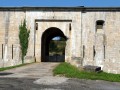
 7.22 mi
 +1,309 ft
 -1,319 ft
 4h 30
4h 30
 Moderate
 Departure from Besançon (Doubs)
An urban hike to discover the hills of Besançon. Natural factors such as soil, climate and altitude, combined with the action of water, have shaped the hills of Chaudanne and Rosemont, which are remarkable natural areas. Let yourself be seduced by the beauty of unspoilt nature, proving that our provincial Besançon has managed to remain a city in the countryside.
The Cabordes Trail
 6.22 mi
+1,795 ft
-1,821 ft
4h 25
Moderate
Departure from Besançon (Doubs)
6.22 mi
+1,795 ft
-1,821 ft
4h 25
Moderate
Departure from Besançon (Doubs)
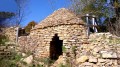
Present on the hills of Besançon since the 16th century, these dry stone constructions without mortar are a reminder of a time when vineyards stretched across the hillsides. A niche, a bench, a fireplace, they allowed the winegrower to store his tools, shelter in case of a storm and perhaps sleep there for a night, as the city gates closed every evening at 10:45 p.m. until 1875. Along the way, you will discover no fewer than five belvederes and the forts of Rosemont and Planoise.
The Rosemont Cabordes
 1.83 mi
+705 ft
-699 ft
1h 25
1.83 mi
+705 ft
-699 ft
1h 25
 Easy
Departure from Besançon (Doubs)
Easy
Departure from Besançon (Doubs)
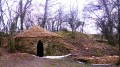
A short, challenging walk to climb up to the Combe des Œillets vineyard huts, these dry-stone structures built without mortar, where winegrowers stored their tools, took shelter during storms and sometimes slept when working late. Return via the Rosemont viewpoint overlooking the upper Doubs valley and the Jura mountains.
Le Rosemont
 3.12 mi
+1,063 ft
-1,063 ft
2h 20
Easy
Departure from Besançon (Doubs)
3.12 mi
+1,063 ft
-1,063 ft
2h 20
Easy
Departure from Besançon (Doubs)
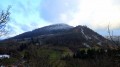
An urban hike, you might say, but one which, as you climb Rosemont and La Roche d’Or, will offer you a wealth of nature just a stone’s throw from the old town and the new town, with its steep cliff-top paths, the beautifully named Combe de l'Oeillet, its old cabordes, and its scree slopes formed by the natural weathering of the cliffs and the piles of stones left by our forebears, who cultivated our Besançon hillsides in terraces.
Le Rosemont and La Roche d'Or via the Combe de l'Œillet
 4.56 mi
+1,457 ft
-1,453 ft
3h 20
Moderate
Departure from Besançon (Doubs)
4.56 mi
+1,457 ft
-1,453 ft
3h 20
Moderate
Departure from Besançon (Doubs)
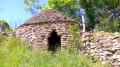
Via the Rosemont ledges, offering views over the Besançon hills topped by the massive, distant silhouette of Mont Poupet, you will climb up to the winegrowers’ huts of the Combe de l’Œillet, these dry-stone constructions built without mortar where winegrowers stored their tools and sought shelter from storms. You will descend back into the valley via these scree slopes, formed by the natural weathering of the cliffs and the piles of stones left by our ancestors who cultivated the terraced hills of the Besançon region. Then, one final effort to climb the Roche d’Or and return via the Chemin de l’Œillet and its houses nestled in the greenery of our city, which knows how to embrace its rural side.
The Cabordes des Équegney
 4.35 mi
+1,093 ft
-1,112 ft
2h 55
Moderate
Departure from Avanne-Aveney (Doubs)
4.35 mi
+1,093 ft
-1,112 ft
2h 55
Moderate
Departure from Avanne-Aveney (Doubs)
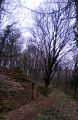
See information from Avanne Town Hall. From there, you’ll climb towards the ‘cabordes’, the dry-stone huts used by winegrowers. Then, at Fort de Planoise – the first rampart of the city of Besançon – you’ll march past the gun emplacements in military formation. You’ll stop at superb vantage points overlooking Besançon and its hills, the southern Doubs Valley and the Jura Mountains. After squeezing through a small tunnel inside a small fort, you’ll enter a wild, moss-covered wood that feels like a haunted forest.
The cabordes of the Combe de l’Œillet
 1.42 mi
+617 ft
-617 ft
1h 10
Easy
Departure from Besançon (Doubs)
1.42 mi
+617 ft
-617 ft
1h 10
Easy
Departure from Besançon (Doubs)
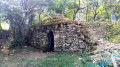
Until the 19th century, Rosemont Hill was cultivated using dry-stone terraces, on which vines, amongst other crops, were grown. The ‘cabordes’ served as shelters for the winegrowers. In the 20th century, these steep slopes were gradually abandoned. This walk allows you to explore the ledges, scree slopes and beautiful panoramic views over the Doubs valley, bearing witness to a landscape shaped by human hands.
The Combe de l’Œillet
 2.99 mi
+715 ft
-732 ft
2h 00
Easy
Departure from Besançon (Doubs)
2.99 mi
+715 ft
-732 ft
2h 00
Easy
Departure from Besançon (Doubs)
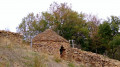
You’ll climb up to the winegrowers’ huts in the Combe des Œillets – these dry-stone structures built without mortar, where winegrowers used to store their tools and take shelter in the event of a storm. Return via the Rosemont cliffs and their views over the upper Doubs valley and the Jura mountains. Just a stone’s throw from the “Rosemont” tram stop, this short, challenging walk will prove – if proof were needed – that Besançon is a city in the countryside!